
Uncovering the Forgotten Victims: The Tragic Story of South Korean Students in the 1981 ‘Samhcheong Education’ Program
Daniel Kim Views
Translation result

MBC’s PD Notebook examines the abuses inflicted on middle- and high-school students who were subjected to Samcheong Training Camp–style “reeducation” under Chun Doo-hwan’s military regime.
In the episode airing on May 5, titled “Forgotten Boys: The 1981 Student Samcheong Training Camps,” PD Notebook documents how 4,701 students nationwide were mobilized for so‑called reeducation between 1981 and 1988.
Reporting began with a handwritten letter that read, “I am a victim of the student Samcheong Training Camp.” Even journalists who have long investigated state violence from the 1980s found the topic unfamiliar, but the team confirmed the letter’s account as accurate.
Teachers urged the students onto buses; some were told they would get to try archery and horseback riding. Victims say the buses instead delivered them to nine training centers across the country — in places such as Gyeongju and Asan — where soldiers subjected them to verbal abuse and beatings.
For ten days, the students endured training that resembled military instruction: obstacle courses, drill, and airborne exercises. Some victims attempted self-harm because they could not withstand the ordeal. There are also accounts of sexual assault against younger or smaller students. Those interviewed by PD Notebook say they still suffer auditory hallucinations and symptoms consistent with post-traumatic stress disorder, even after 45 years.
The selection of students was driven by government quotas. In 1981, the government assigned reeducation quotas to middle and high schools nationwide, and the Ministry of Education pressured school administrators by warning that homeroom teachers and principals would be held accountable if students who were not on the lists later caused problems.
Schools met those quotas by drawing lots or encouraging students to report on one another. Witnesses say the program disproportionately targeted students from poor households or single‑parent families — those least able to resist or protest.
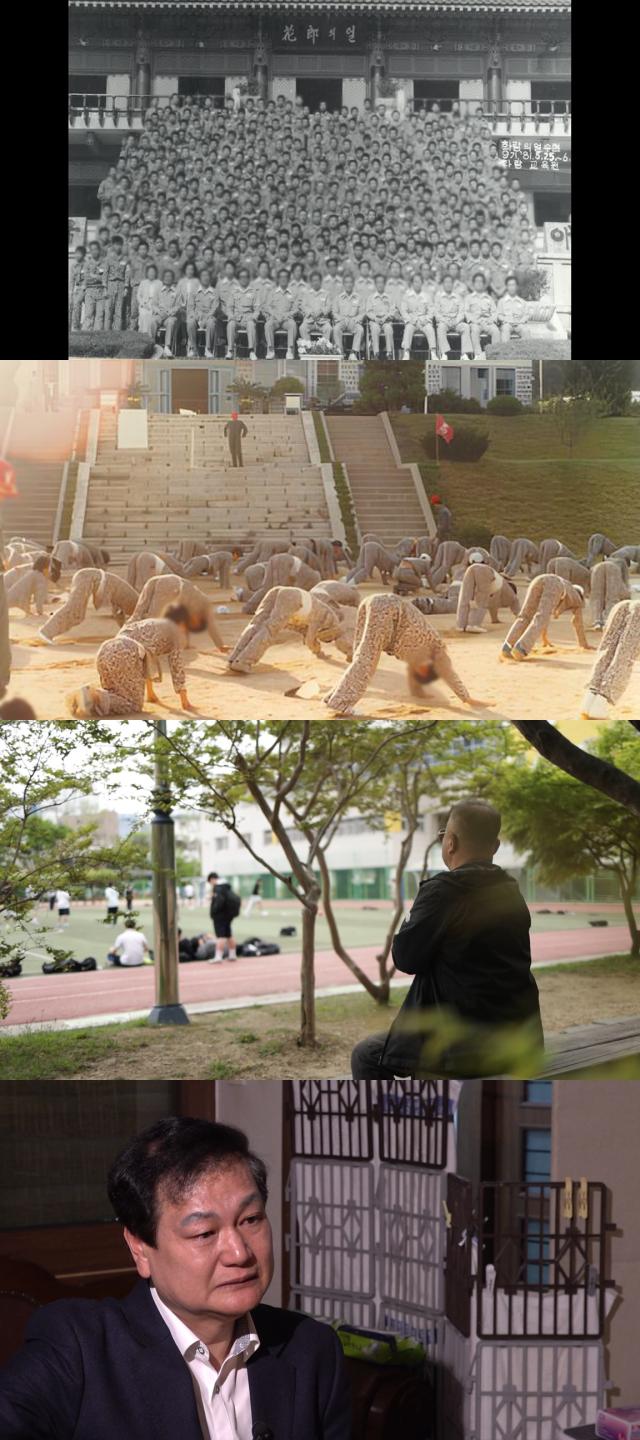
PD Notebook argues the student reeducation went beyond ordinary disciplinary measures and formed part of Chun Doo-hwan’s broader strategy of control. The military, which operated the Samcheong training camps under the 1980 “Special Measures to Eradicate Social Evils,” extended the program to include students. The program also appears aimed at blunting the momentum of the pro‑democracy movement that spread from Gwangju.
One victim recounted being singled out because of participation in the May 18 pro‑democracy movement and being beaten with a pickaxe handle. PD Notebook says this case illustrates how authorities used the pretext of removing “delinquent students” to extend state violence to young people.
After release, many victims were branded as “delinquent.” They were excluded from normal educational and employment opportunities and internalized the shame of state violence, staying silent for decades. Threats from soldiers — “Never speak of this” — helped enforce that silence.
Spurred by a recent investigation by the Truth and Reconciliation Commission, victims filed a state compensation suit. The court acknowledged that schools bore responsibility and that the victims were minors at the time, but it set damages at ₩100,000 (about $75) per day, totaling ₩1,000,000 (about $750). Victims say the ruling reduces 45 years of suffering and life‑long damage to the ten days of forced detention and called the decision devastating.
The boys who were targeted are now elderly, and many of the perpetrators have died. PD Notebook asks how lives were destroyed under violence designed by the state and tolerated by schools, and how the state should be held accountable for that harm.
PD Notebook’s episode “Forgotten Boys: The 1981 Student Samcheong Training Camps” airs tonight, May 5, at 10:20 p.m. KST.











Most Commented