
Translation result.
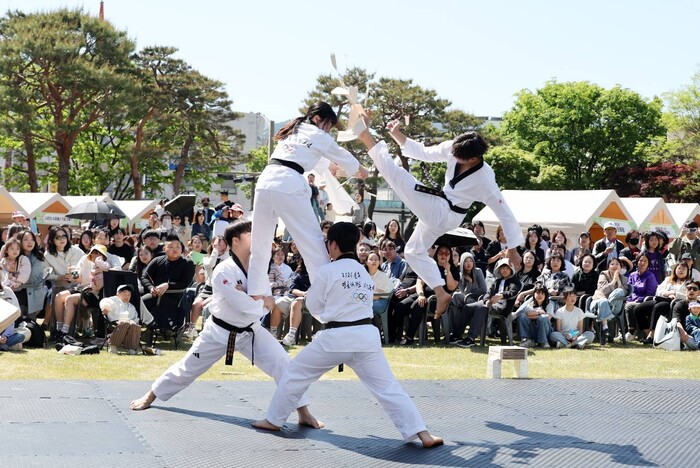
The 104th Children’s Day event at Nosong Square in front of Jeonju City Hall on the 5th was more than a ceremonial observance; organizers designed it as a hybrid gathering that combined children’s rights, experiential activities and policy participation.
The program ran from a 10 a.m. opening ceremony until 5 p.m., drawing roughly 3,000 attendees, according to organizers. The schedule was intentionally crafted to allow children to exercise both their right to participate and their right to play, marking a departure from traditional celebration formats.
Pre-event performances — a taekwondo demonstration and a K-pop dance — set the tone. During the main program, officials recognized 24 people: 16 exemplary children and 8 contributors to child welfare. A child representative read the charter and led a “wish airplane” performance, a symbolic gesture that foregrounded children as active agents rather than passive recipients.
Notably, organizers clearly separated zones for play, hands-on experiences and policy engagement, which distinguished this event from past iterations.
The play area combined age-appropriate inflatables with a natural playground to encourage physical activity. Job-experience booths featured a “Kids Creator” program that reflected younger generations’ fluency with digital environments.
Information and activity booths conveyed policy messages rather than simply entertaining visitors. Campaigns on child rights, prevention of emotional abuse, financial literacy, mental-health screenings and family-friendly services came together as an on-site model of “rights education through play.”
“Vote from the Future,” run by Green Umbrella, invited children to propose and select policy options, effectively turning the venue into a mini civic-participation platform. That approach complements local governments’ moves to convene child policy participation committees and adds an experimental policy dimension.
In the afternoon, magic, bubble and balloon shows and pop-up events encouraged visitors to stay longer. Coupled with food vendors and rest areas, the event operated steadily as a family-oriented, stay-and-play festival.
Families on site said they were impressed that children not only had fun but also exercised choice and participation — feedback that underscores a shift from experience-centered programming toward participatory festivals.
Jeonju plans to continue a “Play Week,” expand child-rights education and broaden opportunities for policy participation under its UNICEF Child-Friendly City framework. Mayor Woo Beom-gi said, “We will continue policies that place children’s happiness among the city’s core values.” Still, observers warn that officials need ongoing evaluation and adjustments to ensure these initiatives become institutionalized rather than one-off events.









Most Commented