Quick access to main page (top) Direct access to main contents Quick access to main page (bottom)

Emergency Room Crisis in South Korea: How One Pregnant Woman’s Tragic Journey Exposes the System’s Flaws

Daniel Kim Views  

Translation result. 기사 Repeated gaps in emergency medical coverage—commonly called the “emergency-room merry-go-round”—are prompting renewed calls for effective government action. The problem has persisted for years, and ongoing patient harm from these transfer failures has drawn increasing criticism.
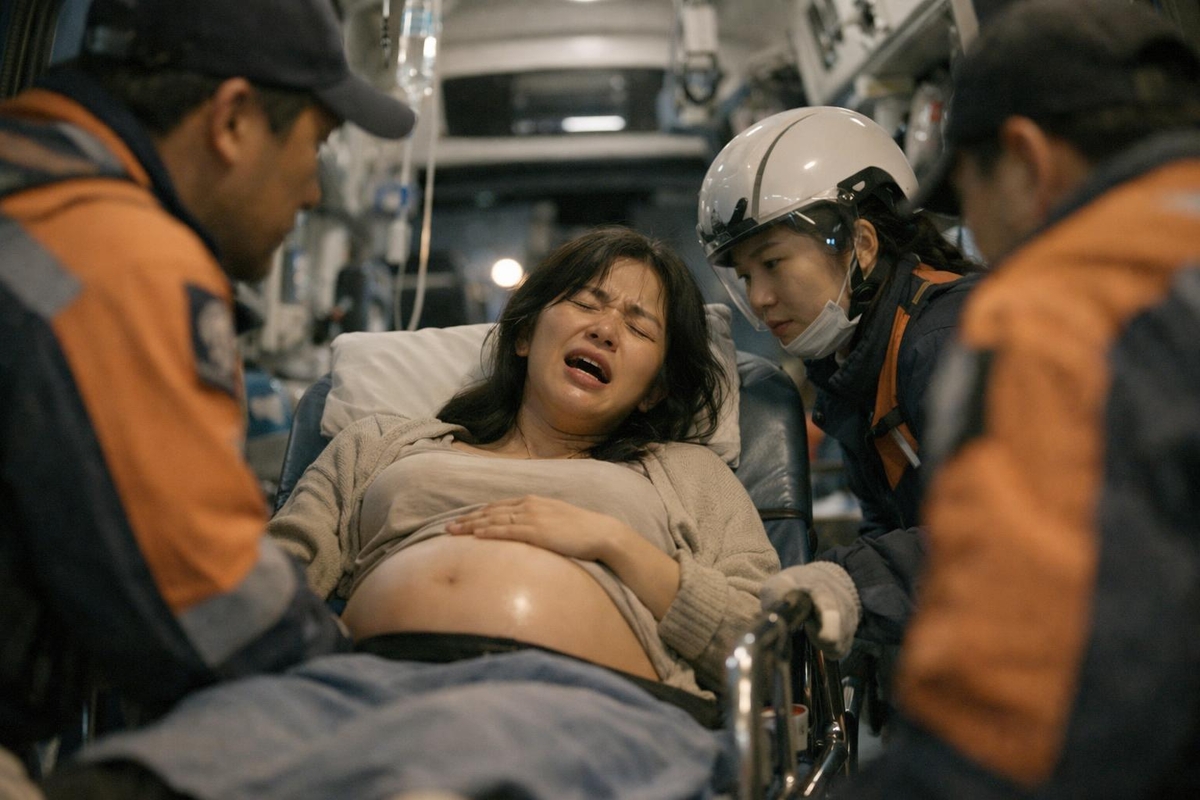
On May 2, fire authorities said that on May 1 a pregnant woman in her 30s in Cheongju, North Chungcheong Province, could not find a hospital able to handle an emergency delivery. She was ultimately transferred to a general hospital in Busan, but the fetus, at 29 weeks, did not survive.

At about 11:03 p.m. on May 1, the woman arrived at an obstetrics clinic in Heungdeok District, Cheongju, where bleeding led to a sudden drop in the fetal heart rate. The clinic determined she required transfer to a higher-level facility and contacted six hospitals in the Chungcheong region; each declined, citing a lack of on-call specialists.

After searching hospitals nationwide, fire authorities found that Busan Dong-A University Hospital could accept her and airlifted her by helicopter. The transfer took roughly 3 hours and 20 minutes, but the fetus did not survive. The mother is reported to be in stable condition.

Politicians have sharply criticized what they call the “emergency-room merry-go-round.” On May 2, Shin Yong-han, the Democratic Party candidate for governor of North Chungcheong, wrote on Facebook that he felt “deep despair” that in 2026 a mother in Chungbuk—the country’s center—had to travel to Busan to give birth, calling the incident not an “accident” but a “death sentence” for Chungbuk’s medical system.

Kim Young-hwan, the People Power Party candidate for governor of North Chungcheong, also posted on Facebook, saying that despite society’s efforts to build systems and organizations, the tragedy shows those efforts remain insufficient.

Lee Jang-seop, the Democratic Party candidate for mayor of Cheongju, described the situation as “tragic” on Facebook and pledged to strengthen the medical safety net so no one in Cheongju loses a precious life because they cannot find a hospital.

Lee Beom-seok, the People Power Party candidate for mayor of Cheongju, said he felt “deep sorrow” and a heavy responsibility, emphasizing that citizens’ lives and safety are the highest priority.

These “merry-go-round” incidents continue. In February, a woman at 28 weeks pregnant with twins in Daegu showed signs of preterm labor but was refused by seven major hospitals that cited a lack of specialists or neonatal ICU bed shortages. About four hours later, she was transferred to Seoul National University Bundang Hospital in Seongnam, Gyeonggi Province, where doctors performed emergency surgery; one twin died and the other survived with brain damage.

Reports later revealed that in October 2025 a high school student in Busan who suffered seizures could not find a hospital offering pediatric neurology care and was shuttled between hospitals for nearly an hour before dying.

Medical professionals point to chronic shortages of specialists and beds in essential fields—obstetrics, pediatrics, and neonatal intensive care—as the recurring root cause.

Daniel Kim
content@tenbizt.com

Comments0

300

Comments0

[Social] Latest Stories

  • Starbucks Korea CEO Fired Over Controversial ‘Tank Day’ Promotion
    Starbucks Korea CEO Fired Over Controversial 'Tank Day' Promotion
  • 25,000 Robots vs. Human Workers: The High-Stakes Battle at Hyundai
    25,000 Robots vs. Human Workers: The High-Stakes Battle at Hyundai
  • Hotel Hygiene Scandal: Cleaner Caught Using Guest Towels to Wipe Toilets
    Hotel Hygiene Scandal: Cleaner Caught Using Guest Towels to Wipe Toilets
  • South Korea’s Tech Giant Kakao Faces First Major Strike in 20 Years
    South Korea's Tech Giant Kakao Faces First Major Strike in 20 Years
  • South Korea’s Aging Crisis: How One Leader Is Redefining ‘Well-Dying’
    South Korea’s Aging Crisis: How One Leader Is Redefining 'Well-Dying'
  • Stop Calling Them ‘Hey You’: South Korea’s New Push for Worker Respect
    Stop Calling Them 'Hey You': South Korea's New Push for Worker Respect

Weekly Best Articles

  • Choi Dong-seok’s Family Bond: How a Simple Engraving Reveals Deep Love for His Children
  • Kwak Sun-hee’s Stunning Wedding Photos: A Celebration of Love and Courage
  • Is ‘I Am a Natural Person’ Just a Big Lie? Comedian Yoon-taek Reveals Shocking Secrets!
  • Health Scare: Why Fans Are Worried About Go Ji Yong’s Dramatic Weight Loss
  • Discover the Winter Gongju Chestnut Festival: A Taste of Korea at H-Mart in the USA!
  • 2026 Spring Wildfire Prevention: How Gyeryong City is Cutting Response Time to 30 Minutes!

You May Also Like

  • 1
    Ukraine’s EU Bid Surges as Hungary Drops Opposition Amid Russian Attacks

    Politics 

    Ukraine’s EU Bid Surges as Hungary Drops Opposition Amid Russian Attacks
  • 2
    Trump Backs Colombia's 'El Tigre' — What It Means for U.S. Relations

    Politics 

    Trump Backs Colombia’s ‘El Tigre’ — What It Means for U.S. Relations
  • 3
    Trump Backs Colombia's Far-Right Outsider—What's at Stake?

    Politics 

    Trump Backs Colombia’s Far-Right Outsider—What’s at Stake?
  • 4
    12.5% Tariff Hit: South Korea Faces New U.S. Trade Penalties

    Politics 

    12.5% Tariff Hit: South Korea Faces New U.S. Trade Penalties
  • 5
    12.5% Tariff Alert: Why the U.S. Is Targeting South Korean Imports

    Politics 

    12.5% Tariff Alert: Why the U.S. Is Targeting South Korean Imports

Popular Now

  • 1
    Marta Kostyuk Makes History at French Open Amid Ukraine Crisis

    Politics 

  • 2
    37 Years in Exile: The Tiananmen Leader Who Just Wants to Go Home

    Politics 

  • 3
    South Korea's Cheongju Airport Faces Crisis as Passenger Numbers Explode

    Politics 

  • 4
    Nuclear Submarine Race: South Korea's High-Stakes Bid for U.S. Fuel

    Politics 

  • 5
    France Finally Admits Complicity in the 1994 Rwandan Genocide

    Politics 

Weekly Best Articles

  • Choi Dong-seok’s Family Bond: How a Simple Engraving Reveals Deep Love for His Children
  • Kwak Sun-hee’s Stunning Wedding Photos: A Celebration of Love and Courage
  • Is ‘I Am a Natural Person’ Just a Big Lie? Comedian Yoon-taek Reveals Shocking Secrets!
  • Health Scare: Why Fans Are Worried About Go Ji Yong’s Dramatic Weight Loss
  • Discover the Winter Gongju Chestnut Festival: A Taste of Korea at H-Mart in the USA!
  • 2026 Spring Wildfire Prevention: How Gyeryong City is Cutting Response Time to 30 Minutes!

Must-Reads

  • 1
    Ukraine’s EU Bid Surges as Hungary Drops Opposition Amid Russian Attacks

    Politics 

    Ukraine’s EU Bid Surges as Hungary Drops Opposition Amid Russian Attacks
  • 2
    Trump Backs Colombia's 'El Tigre' — What It Means for U.S. Relations

    Politics 

    Trump Backs Colombia’s ‘El Tigre’ — What It Means for U.S. Relations
  • 3
    Trump Backs Colombia's Far-Right Outsider—What's at Stake?

    Politics 

    Trump Backs Colombia’s Far-Right Outsider—What’s at Stake?
  • 4
    12.5% Tariff Hit: South Korea Faces New U.S. Trade Penalties

    Politics 

    12.5% Tariff Hit: South Korea Faces New U.S. Trade Penalties
  • 5
    12.5% Tariff Alert: Why the U.S. Is Targeting South Korean Imports

    Politics 

    12.5% Tariff Alert: Why the U.S. Is Targeting South Korean Imports

Popular Now

  • 1
    Marta Kostyuk Makes History at French Open Amid Ukraine Crisis

    Politics 

  • 2
    37 Years in Exile: The Tiananmen Leader Who Just Wants to Go Home

    Politics 

  • 3
    South Korea's Cheongju Airport Faces Crisis as Passenger Numbers Explode

    Politics 

  • 4
    Nuclear Submarine Race: South Korea's High-Stakes Bid for U.S. Fuel

    Politics 

  • 5
    France Finally Admits Complicity in the 1994 Rwandan Genocide

    Politics 

Share it on...