
Food Waste Crisis: How a Restaurant’s Bold Warning on Self-Service Bars Is Changing Dining Culture
Daniel Kim Views
Translation result.
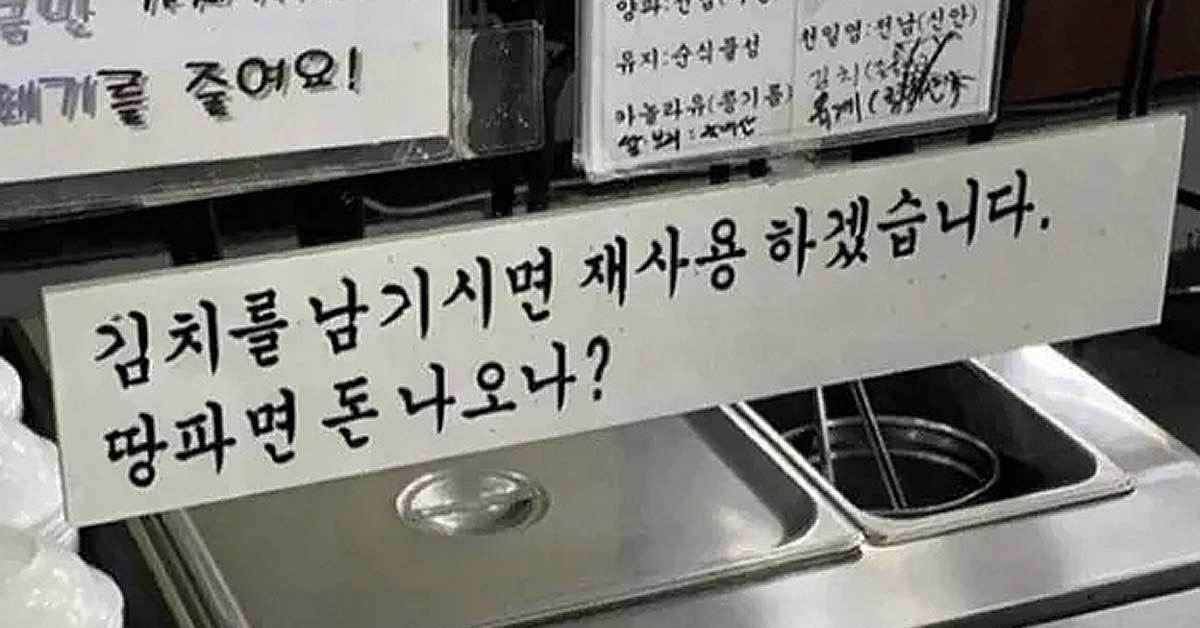
A single sign posted at a self-service side-dish station set off a firestorm on an online forum. The blunt language spread quickly, and reactions split sharply: some applauded the candor, while others said they would never dine there again.
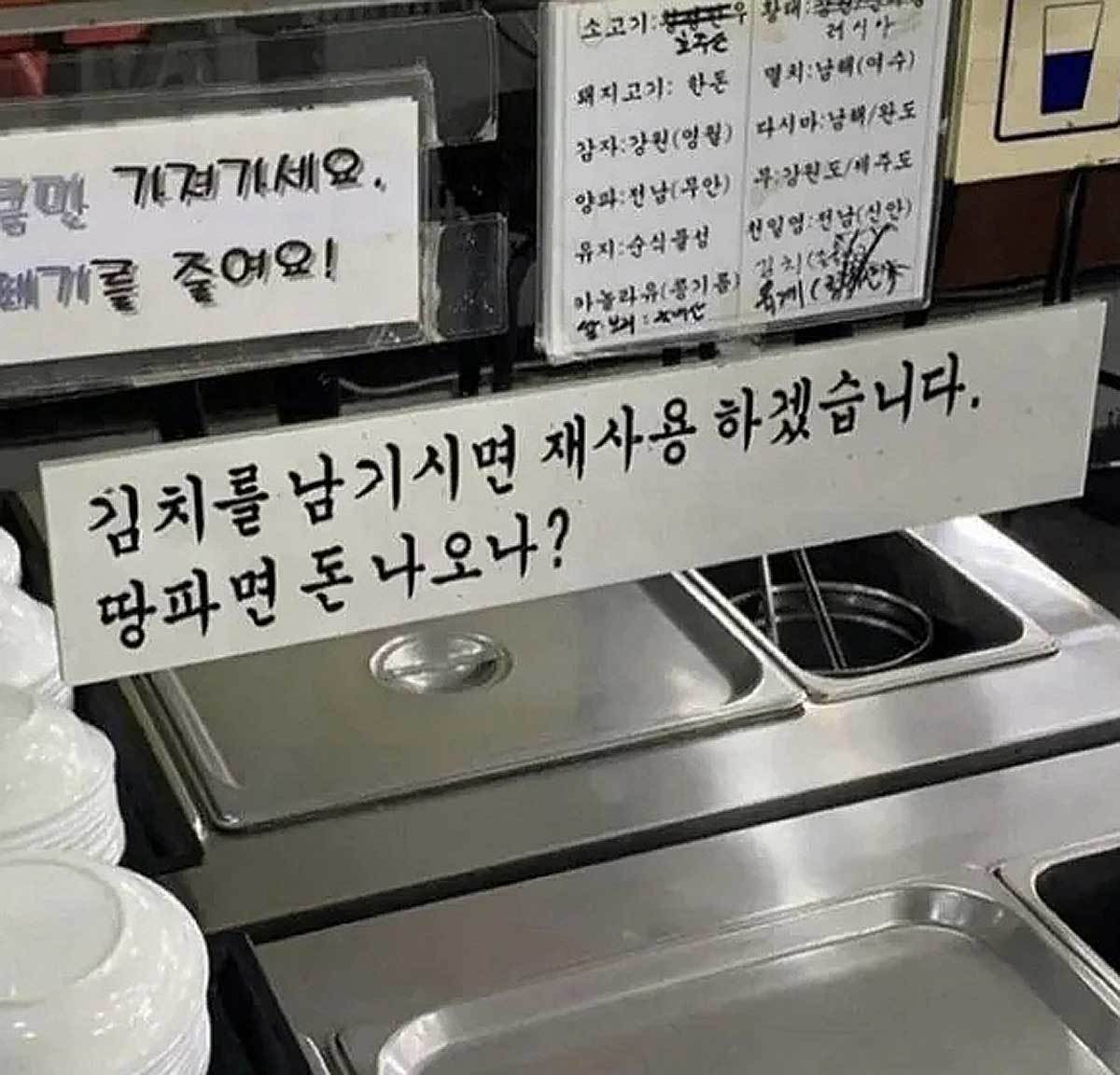
The image first appeared on the Bobaedream forum. The poster nicknamed the restaurant owner a “Teto” owner — a slang term (from “testosterone”) used for someone who is blunt and outspoken, sometimes called “Teto-nam” or “Teto-nyeo.” That short line sparked a broad debate: hundreds of comments turned the post into a wider discussion about dining norms and restaurant practices.
Among small-business owners who have run self-serve stations, many expressed sympathy. Those who have witnessed firsthand how much customers take — and how much they leave behind — say the sign’s bluntness is understandable. Customers frequently pile plates high, leave half uneaten, or refill multiple times only to discard food. That is the daily reality at many self-serve counters.
At the same time, ingredient costs continue to rise while food waste from side dishes remains stubbornly high. In owner forums, complaints about the cost of stocking self-serve side dishes are common. Restaurateurs say habitual waste by some patrons leads to massive daily losses.
Some have even called for changing the operating model. Proposals include charging separately for individual side dishes, as in some other countries, arguing that the expectation that self-serve items are free encourages waste.
But many diners were put off by the wording itself. Even if the restaurant never actually reuses leftovers, the mere existence of such a notice is discomfiting. Foodservice depends on customer trust that establishments provide clean, fresh food. A sign saying leftovers will be reused — even as a deterrent — undermines that trust. Once the doubt of “what if?” takes hold, it’s hard to shake.
Some acknowledged the owner’s frustrations but criticized the choice of language. Using a threatening phrase instead of a polite request such as “Please take only what you need” can damage a restaurant’s reputation. An attempt to highlight a problem could backfire and drive customers away.
Legally, the sign raises red flags. Food sanitation law explicitly forbids reusing leftovers for cooking or sale; violations can lead to business suspensions or even closure.
It’s difficult to determine whether the notice signaled an actual intent to reuse leftovers or was merely a psychological warning to reduce waste. But because the wording touches the sensitive area of food safety and invites multiple interpretations, it could trigger consumer complaints or administrative investigations regardless of intent. A well-intended sign can thus become a legal liability.
This controversy matters beyond one sign because it exposes deeper structural issues in the restaurant sector. Korean dining culture has long prized generous side dishes, and self-serve stations have become both a convenience and a mechanism that can promote waste. Restaurants fear being labeled stingy if they scale back portions, while customers often equate abundance with quality.
The consequences show up in the data. According to the Ministry of Environment, South Korea generates about 15,000 metric tons of food waste per day, with the restaurant industry accounting for a significant share. Waste from self-serve side dishes is only part of that total, but it contributes to rising costs for operators — costs that ultimately translate into higher menu prices for consumers.










Most Commented