Quick access to main page (top) Direct access to main contents Quick access to main page (bottom)

How Raising the Senior Age to 75 Could Save South Korea 603 Trillion Won in Pension Costs

Daniel Kim Views  

Translation result쿠키뉴스
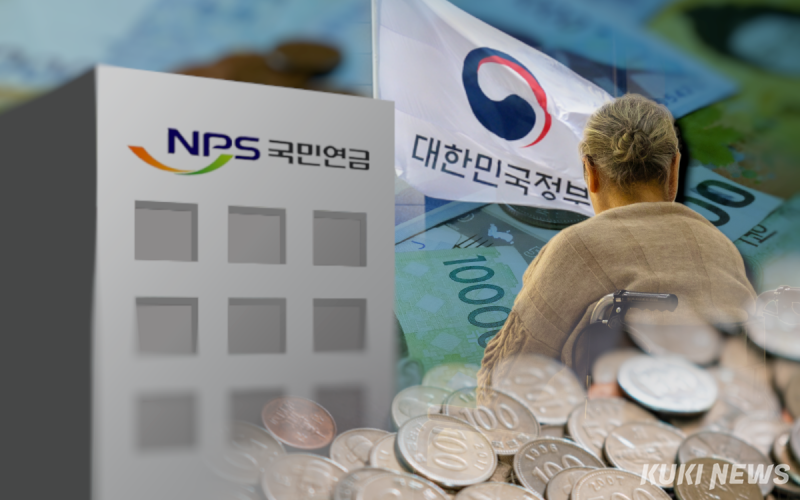
A study found that raising the official age that defines a senior to as high as 75 could cut basic pension spending by up to 603.4 trillion KRW (about $452.6 billion).

According to the Policy Research Information System (PRISM) on the 27th, Hongik University’s Industry‑Academic Cooperation Foundation submitted a report titled “The Silver Age and Public Finances” to the Ministry of Strategy and Finance (now the Office for Budget and Planning) in November of last year.

The report examined the fiscal effects of gradually increasing the senior age threshold from the current 65. It noted that aging has driven a surge in senior-related welfare spending, yet the statutory threshold—set at 65 in the Elderly Welfare Act of 1981—has not been adjusted since.

Specifically, the basic pension paid to the bottom 70% of people aged 65 and over cost 24.3 trillion KRW last year (about $18.2 billion), roughly 0.91% of GDP. If the senior population and inflation continue at their current pace, that annual figure could grow to 58.9 trillion KRW by 2050 (about $44.2 billion).

The report modeled three scenarios for how changes to the senior cutoff would affect basic pension financing. The first scenario raises the cutoff by one year every five years beginning in 2033, moving from 65 to 70 by 2058. Under that plan, 40-year pension costs would total 1,871.6 trillion KRW (about $1.40 trillion), a savings of 203.8 trillion KRW (about $152.9 billion) compared with maintaining the status quo.

The second scenario raises the cutoff by one year every two years starting next year until it reaches 70. Over 40 years, required funding would total 1,702.9 trillion KRW (about $1.28 trillion), reducing costs by 372.5 trillion KRW (about $279.4 billion) versus the current policy. This scenario was proposed by academics and civic groups.

The third scenario links the senior age to remaining life expectancy—defining “senior” as the age at which remaining life expectancy falls to 15–20 years—and allows increases up to a maximum of 75. Under this approach, the age would rise by one year every two years from 65, then shift to one year every five years starting in 2036, reaching 75 by 2056. This option yields the largest savings, an estimated reduction of 603.4 trillion KRW (about $452.6 billion).

The report concluded that faster or larger increases produce greater fiscal savings. It also warned that, as population aging advances, the central government’s share of total fiscal needs is likely to grow—meaning up to 90% of the savings would fall to the national government.

The government has begun to formalize plans to adjust the basic pension. Park Hong-geun, minister of the Planning and Budget Office, said at his first press briefing on the 21st that he could prepare a reform plan within the year. Still, officials expect the government to focus more on strengthening support for low-income seniors than on raising the senior age. President Lee Jae‑myung wrote on X on the 16th of last month, “To reduce elderly poverty, we may need to change the basic pension,” and suggested a progressive approach that provides more support to lower-income seniors—ha-hu-sang-bak. {vi19}

Daniel Kim
content@tenbizt.com

Comments0

300

Comments0

[Social] Latest Stories

  • Starbucks Korea CEO Fired Over Controversial ‘Tank Day’ Promotion
    Starbucks Korea CEO Fired Over Controversial 'Tank Day' Promotion
  • 25,000 Robots vs. Human Workers: The High-Stakes Battle at Hyundai
    25,000 Robots vs. Human Workers: The High-Stakes Battle at Hyundai
  • Hotel Hygiene Scandal: Cleaner Caught Using Guest Towels to Wipe Toilets
    Hotel Hygiene Scandal: Cleaner Caught Using Guest Towels to Wipe Toilets
  • South Korea’s Tech Giant Kakao Faces First Major Strike in 20 Years
    South Korea's Tech Giant Kakao Faces First Major Strike in 20 Years
  • South Korea’s Aging Crisis: How One Leader Is Redefining ‘Well-Dying’
    South Korea’s Aging Crisis: How One Leader Is Redefining 'Well-Dying'
  • Stop Calling Them ‘Hey You’: South Korea’s New Push for Worker Respect
    Stop Calling Them 'Hey You': South Korea's New Push for Worker Respect

Weekly Best Articles

  • Choi Dong-seok’s Family Bond: How a Simple Engraving Reveals Deep Love for His Children
  • Kwak Sun-hee’s Stunning Wedding Photos: A Celebration of Love and Courage
  • Is ‘I Am a Natural Person’ Just a Big Lie? Comedian Yoon-taek Reveals Shocking Secrets!
  • Health Scare: Why Fans Are Worried About Go Ji Yong’s Dramatic Weight Loss
  • Discover the Winter Gongju Chestnut Festival: A Taste of Korea at H-Mart in the USA!
  • 2026 Spring Wildfire Prevention: How Gyeryong City is Cutting Response Time to 30 Minutes!

You May Also Like

  • 1
    Ukraine’s EU Bid Surges as Hungary Drops Opposition Amid Russian Attacks

    Politics 

    Ukraine’s EU Bid Surges as Hungary Drops Opposition Amid Russian Attacks
  • 2
    Trump Backs Colombia's 'El Tigre' — What It Means for U.S. Relations

    Politics 

    Trump Backs Colombia’s ‘El Tigre’ — What It Means for U.S. Relations
  • 3
    Trump Backs Colombia's Far-Right Outsider—What's at Stake?

    Politics 

    Trump Backs Colombia’s Far-Right Outsider—What’s at Stake?
  • 4
    12.5% Tariff Hit: South Korea Faces New U.S. Trade Penalties

    Politics 

    12.5% Tariff Hit: South Korea Faces New U.S. Trade Penalties
  • 5
    12.5% Tariff Alert: Why the U.S. Is Targeting South Korean Imports

    Politics 

    12.5% Tariff Alert: Why the U.S. Is Targeting South Korean Imports

Popular Now

  • 1
    Marta Kostyuk Makes History at French Open Amid Ukraine Crisis

    Politics&nbsp

  • 2
    37 Years in Exile: The Tiananmen Leader Who Just Wants to Go Home

    Politics&nbsp

  • 3
    South Korea's Cheongju Airport Faces Crisis as Passenger Numbers Explode

    Politics&nbsp

  • 4
    Nuclear Submarine Race: South Korea's High-Stakes Bid for U.S. Fuel

    Politics&nbsp

  • 5
    France Finally Admits Complicity in the 1994 Rwandan Genocide

    Politics&nbsp

Weekly Best Articles

  • Choi Dong-seok’s Family Bond: How a Simple Engraving Reveals Deep Love for His Children
  • Kwak Sun-hee’s Stunning Wedding Photos: A Celebration of Love and Courage
  • Is ‘I Am a Natural Person’ Just a Big Lie? Comedian Yoon-taek Reveals Shocking Secrets!
  • Health Scare: Why Fans Are Worried About Go Ji Yong’s Dramatic Weight Loss
  • Discover the Winter Gongju Chestnut Festival: A Taste of Korea at H-Mart in the USA!
  • 2026 Spring Wildfire Prevention: How Gyeryong City is Cutting Response Time to 30 Minutes!

Must-Reads

  • 1
    Ukraine’s EU Bid Surges as Hungary Drops Opposition Amid Russian Attacks

    Politics 

    Ukraine’s EU Bid Surges as Hungary Drops Opposition Amid Russian Attacks
  • 2
    Trump Backs Colombia's 'El Tigre' — What It Means for U.S. Relations

    Politics 

    Trump Backs Colombia’s ‘El Tigre’ — What It Means for U.S. Relations
  • 3
    Trump Backs Colombia's Far-Right Outsider—What's at Stake?

    Politics 

    Trump Backs Colombia’s Far-Right Outsider—What’s at Stake?
  • 4
    12.5% Tariff Hit: South Korea Faces New U.S. Trade Penalties

    Politics 

    12.5% Tariff Hit: South Korea Faces New U.S. Trade Penalties
  • 5
    12.5% Tariff Alert: Why the U.S. Is Targeting South Korean Imports

    Politics 

    12.5% Tariff Alert: Why the U.S. Is Targeting South Korean Imports

Popular Now

  • 1
    Marta Kostyuk Makes History at French Open Amid Ukraine Crisis

    Politics 

  • 2
    37 Years in Exile: The Tiananmen Leader Who Just Wants to Go Home

    Politics 

  • 3
    South Korea's Cheongju Airport Faces Crisis as Passenger Numbers Explode

    Politics 

  • 4
    Nuclear Submarine Race: South Korea's High-Stakes Bid for U.S. Fuel

    Politics 

  • 5
    France Finally Admits Complicity in the 1994 Rwandan Genocide

    Politics