
Incheon Urban Revitalization: Can the New Plans Bridge the Gap Between Old and New Cities?
Daniel Kim Views
Translation result
The 2026 Incheon Local Election Policy Network and the Incheon Ilbo will review key issues across five Incheon regions ahead of the June 3 local elections.
They have identified priorities that span both the older downtown neighborhoods and the newer urban districts and will surface the main topics for debate.
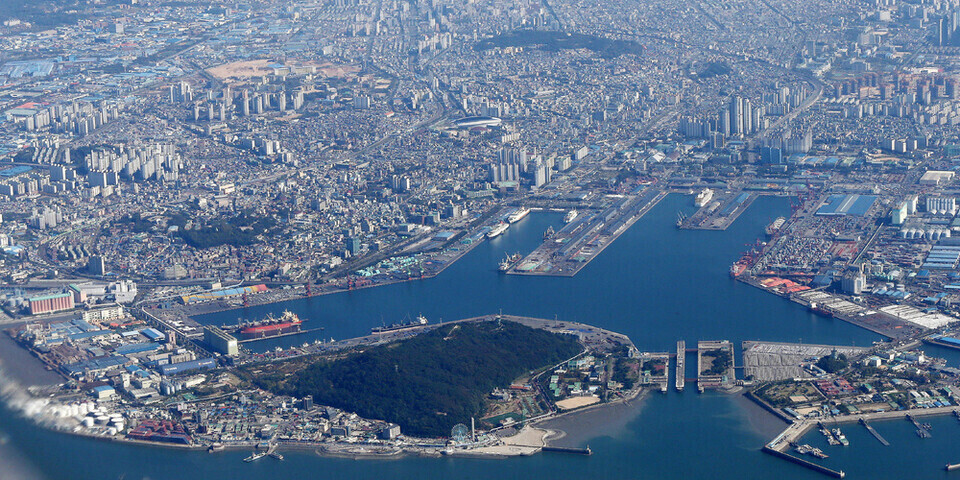
“Revive the neglected old downtown and close the gap with the new districts.” That phrase captures the starting point of Incheon’s balanced-development strategy for its historic neighborhoods.
The strategy seeks to encourage development that draws on each area’s history, culture and industry, while strengthening transportation and everyday infrastructure so these places function again as neighborhoods where people live and linger.
Incheon’s principal old downtown areas—the Jemulpo area (inland parts of Dong and Jung districts) and Bupyeong District—are pursuing various redevelopment projects aligned with that goal. But residents say they have yet to see substantial, felt change.
The inland sections of Dong and Jung, where Incheon’s modernization began, lost much of their inner-port role after new-port construction. Residents and businesses migrated to new towns such as Songdo and Cheongna, leaving these neighborhoods in prolonged decline. Lacking urban rail lines, they have also been sidelined in Incheon’s rail network for years.
The Jemulpo administrative unit will be established in July as part of a government reorganization, but experts warn that without investments to overcome infrastructure and urban-form constraints, disparities may widen.
The Jemulpo Renaissance initiative aims to reverse decline through inner-port redevelopment and mixed-use projects across the old downtown. The proposed Incheon Loop Line 3 is also promoted as a critical element to reconnect the fragmented rail network, and proponents say it must be completed.
Bupyeong’s old downtown has likewise stagnated for years because the presence of U.S. military bases and other installations restricted development.
Under Incheon City’s Camp Market master plan, the park-conversion project is intended to restore to the public spaces that were long off-limits due to military use.
The redevelopment of the 1,113th Engineer Brigade site in Cheongcheon-dong is planned as a large mixed-use project combining housing, office space and cultural facilities. Officials expect it to inject new energy into the Cheongcheon and Sangok neighborhoods.
These projects represent a potential turning point for Bupyeong’s old-downtown recovery and are central to achieving balanced development across the city. With the June 3 local elections approaching, observers will be watching whether these initiatives gain real momentum.
▶Related article: [Injin Net series—Incheon regional issues] ① Eastern area: Old-downtown regeneration has set sail… Now it’s time to deliver on campaign promises
By Haeyun Park and Inara Lee, reporters yun@incheonilbo.com









Most Commented