
Translation result
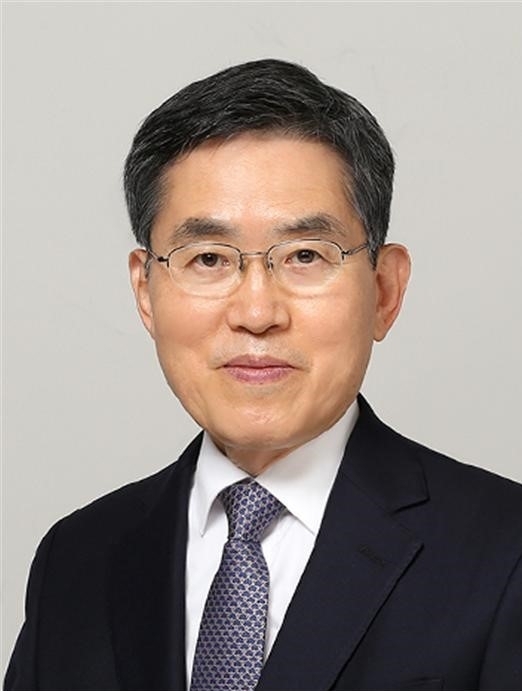 “These days it’s hard to communicate with young people, and it’s difficult to work with them.”
That lament is common among corporate HR managers. In a world that changes at lightning speed, it’s understandable that older generations find younger people’s behaviors unfamiliar. But who has truly closed the door to communication? Are we still measuring 21st-century young people against outdated 20th-century standards?
The students I meet on campus every day look nothing like those stereotypes. They are neither selfish nor unreachable. They take the helm for themselves, adjust course amid unprecedented competition and uncertainty, and keep moving forward. I see the promise of Korea in their eyes—young people who solve problems creatively and, rather than fearing change, willingly embrace it to forge new paths.
Today’s youth are skilled at building connections across boundaries. They cross departmental lines to find the knowledge and people they need, forming interdisciplinary dream teams on their own. I am often struck when they act as catalysts for creative, convergent learning, breaking down even the entrenched walls among faculty. When preparing graduation projects or external competitions, they will seek guidance from professors outside their major if that’s what the problem requires. Their passion for learning dissolves academic silos and creates communication bridges among faculty—this, to me, is the genuine face of today’s young people.
Their relationship with failure is equally revealing. Where older generations may hesitate in the name of caution, young people act and then quickly iterate. For them, failure is not defeat but valuable data—an asset for the next attempt. In an era where uncertainty is constant, such agility and resilience are among their greatest competitive strengths.
Young people also display a strong sense of solidarity that extends beyond the individual. Contrary to claims of rampant individualism, they show gratitude and care for those working behind the scenes. A shy offering of a cold drink to custodians keeping the campus clean in the heat, or an anonymous hand cream and handwritten note sent to someone who cleaned dorms after graduation—these small gestures convey genuine appreciation for unseen heroes. These are spontaneous, sincere acts of communal warmth.
Of course, not every young person is always resilient. Many lose their way or feel isolated amid anxieties about the future. That is why systematic support and a compassionate hand from older generations are necessary. Korea University of Technology and Education (KOREATECH) identifies and assists students in crisis early through an integrated care system called CARE. The Neulpum Mentor program, where seniors reach out to help juniors, is especially popular—mentor applicants exceed openings by three to one. The fact that so many young people empathize with others’ struggles and willingly share their experiences shows that community solidarity remains alive. When someone genuinely believes in and waits for them, young people recover far faster and more robustly than expected.
Watching students move across a campus bright with spring, I ask myself: How much did we truly try to understand them? How much did we respect their language and methods? Just as a tree needs sunlight and time to grow, young people need a soil of trust in which to develop. Our role is not to prescribe their path but to support and encourage them quietly so they can find it themselves.
Young people are not yet complete—and that is their greatest strength. They carry boundless potential. The moment we believe in that potential, they take on challenges with courage. I look into their clear eyes and see, in them, the brightest, clearest hope for our society.
- “The bull market was a jackpot” — Retail investors swept up 23 trillion KRW (approximately 17.25 billion USD) through margin buying… Which KOSPI stocks did they hold?
- Even after transferring more than 76 km (about 47 miles), it cost only the price of two coffees… Riders call the K-transfer “sugoi” and “wonderful”
- “Dad, I’ll come back after winning first in the relay”… A healthy 30-something suffered an acute cerebral hemorrhage—why? [Healthy Time]
- “If I hide my college degree and apply, will it get caught?”… With a projected 700 million KRW (approximately 525,000 USD) bonus, even high school graduates are asking how to apply
- Samsung Electronics union says even 40 trillion KRW (approximately 30 billion USD) in bonuses isn’t enough
- “No wonder I couldn’t digest it”—the betrayal of trusted zero-calorie drinks [Workplace Wake-up Call]
- “They said the Strait of Hormuz would finally open”… Iran re-seals the strait, warning “we will attack any approach”
- “Fired 30,000 employees and the stock jumped?”… While employees suffered, shareholders cheered—what happened?
- North Korea launched multiple ballistic missiles after 11 days… the seventh such launch this year
- Lee Jae-myung administration’s defense reform… the military will introduce a major-branch system [Lee Hyun-ho’s Military! Talk]










Most Commented