
Unlocking History: The Significance of the Gunsan Shell Midden in Ancient Maritime Trade
Daniel Kim Views
Translation result.
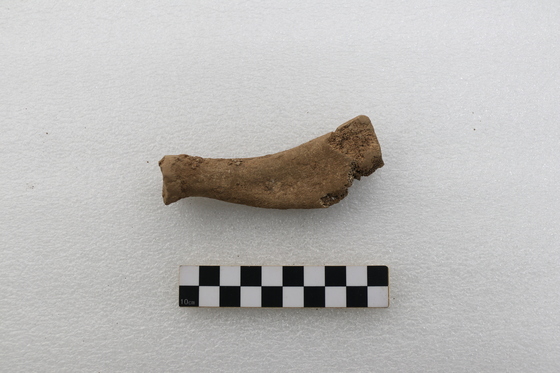
Excavations at the Gaesadong shell midden in Gunsan, North Jeolla Province, have revealed evidence of maritime exchange across the Yellow Sea.
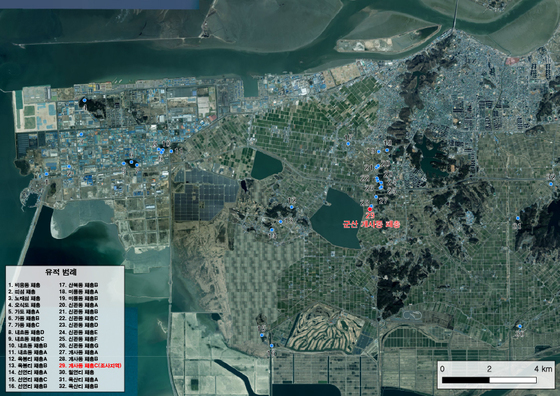
The National Wanju Cultural Heritage Research Institute said on March 27 that its excavation of the Gunsan Gaesadong shell midden, undertaken to study shell-midden culture along North Jeolla’s west coast, yielded a range of archaeological findings. Shell middens—accumulations of discarded shells—are important sources for reconstructing everyday life in the past.
The institute reported a shell layer up to about 50 cm thick (roughly 20 in) in the northeastern portion of the site. Within it, researchers recovered a variety of shellfish and animal bones, along with Mahan-period ceramics, including large storage jars and sieves or steaming vessels (siru), dated to the 2nd–4th centuries CE.
Among the shellfish were oysters, clams, and several types of turban snails; animal remains included dogs, pigs, and seals. The discovery of seal bones is particularly rare in the North Jeolla region and offers important evidence for understanding the diets and coastal livelihoods of local communities at the time.
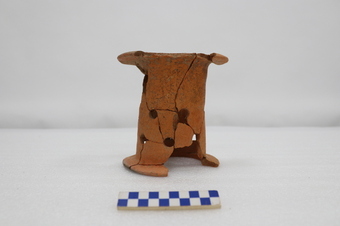
The team also recovered Yayoi-period Japanese pottery that appears to be vessel bases. Similar Yayoi pottery has been found at sites such as Neukdo in Sacheon, and, together with discoveries from the Gun-gok-ri shell midden in Haenam—where bone fragments and other items were unearthed—these finds point to traces of cross-regional interaction. The period from the 3rd century BCE to roughly the 3rd century CE saw the expansion of wet-rice agriculture and Bronze Age cultural practices.
An institute official said that, when viewed alongside Buan Jukmak-dong—a prominent marine ritual site in North Jeolla—these materials suggest the Gunsan area may have functioned as a stopping point in ancient maritime exchange networks.
Although numerous shell-midden sites are distributed along the North Jeolla west coast, systematic archaeological excavation has been limited over the past two decades. Development activity has raised persistent concerns that these sites could be damaged or destroyed.
The institute said it expects this excavation to establish baseline data on Jeonbuk’s shell middens and to serve as a key step toward clarifying patterns of international exchange across the Yellow Sea from prehistoric through ancient periods.














Most Commented