
Unlocking Solar Profits: How Gyeonggi’s RE100 Income Villages Boost Local Earnings by 2030
Daniel Kim Views
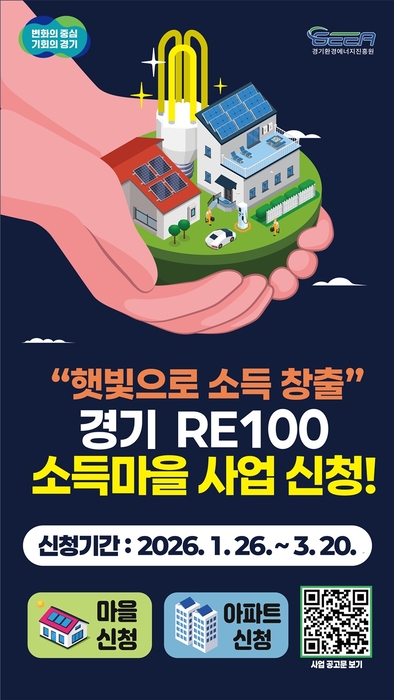
Gyeonggi Province is launching an ambitious initiative called the ‘Gyeonggi RE100 Income Village’ project, which aims to boost residents’ incomes while promoting energy welfare.
The province has set a long-term goal to establish 2,000 income villages by 2030. On the 10th, officials announced they are now recruiting participants to support the first 200 villages this year. This initiative seeks to translate the central government’s renewable energy policies into tangible improvements in local living conditions by channeling profits from solar power back to residents.
At the heart of the ‘Gyeonggi RE100 Income Village’ concept is a structure that returns solar power profits to residents through various means, including direct income, village fund creation, and reduced electricity costs. To ensure the policy’s successful implementation, Gyeonggi Province has allocated 12.8 billion KRW (about 9.6 million USD) this year to lay the groundwork for the project.
The program targets energy-vulnerable communities and apartment complexes in areas lacking city gas supply. For village-based projects, the initiative covers 70% of installation costs, with 30% from provincial funds and 40% from municipal funds. In apartment complexes, the program subsidizes 60% of rooftop solar installation costs, split evenly between provincial and municipal governments, significantly reducing residents’ financial burden.
However, village-level solar projects often face delays of over a year due to complex prerequisites such as resident agreements, permits, and land acquisition. To address these challenges, Gyeonggi Province is implementing a ‘one-stop support system’ led by the Gyeonggi Environmental Energy Agency. This public body will streamline administrative procedures to expedite project timelines and collaborate with the government to utilize public lands within villages for solar power generation.
Early success stories are emerging. In Pocheon’s Machimi village, residents have established a solar power plant through household investments, generating an average monthly income of over 200,000 KRW (about 150 USD) per household. Pilot projects in Suwon and Pyeongtaek, where apartment complexes installed 120 kilowatts (kW) of rooftop solar panels last year, are expected to yield annual savings of about 30 million KRW (about 22,500 USD) in shared electricity costs.
Gyeonggi Province held a preliminary briefing on January 15 to gather input from local authorities. This was followed by a comprehensive briefing on the 26th, attended by over 200 officials and project operators, to outline the project’s direction and support framework.
Villages and apartment complexes interested in participating must submit their project proposals and supporting documentation through their local government to the Gyeonggi Environmental Energy Agency by March 20.
Cha Seong-soo, Director of Gyeonggi Province’s Climate Environment and Energy Bureau, emphasized the province’s commitment to rapidly expanding successful sunlight income village models. He urged active engagement and participation from local governments and residents in the ‘Gyeonggi RE100 Income Village’ project.
Suwon = Reporter Kim Dong-seong estar@etnews.com









Most Commented