
Gori-2 Nuclear Plant License Extension: What Are the Legal Violations Behind the Controversy?
Daniel Kim Views
Here is the converted [translateContent] with numerical and financial data adjusted based on [originContent]:
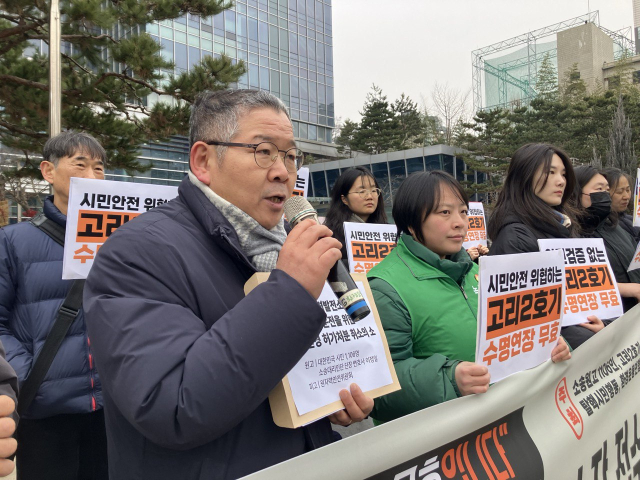
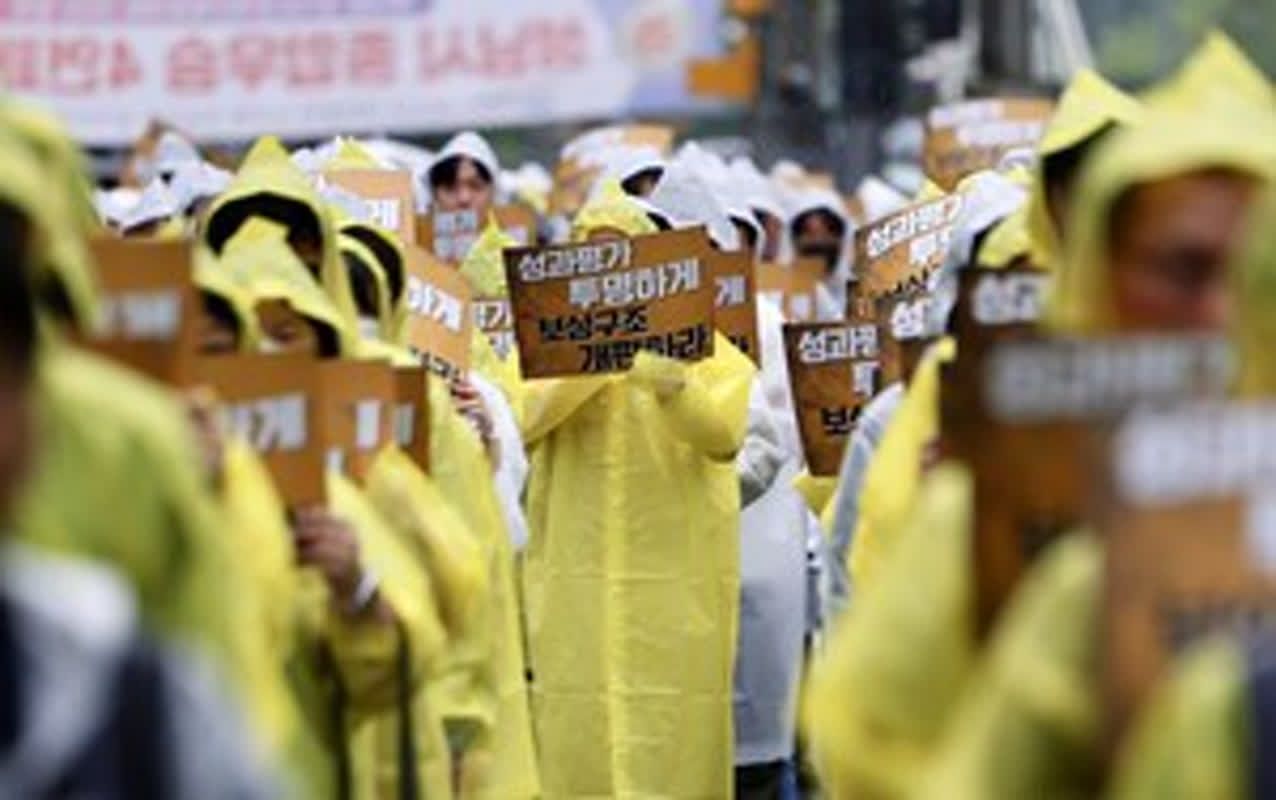
On the morning of the 10th, Kim Sung-won, a man in his thirties who attended high school in Busan’s Gijang district, spoke into a microphone in front of Busan City Hall. He questioned, “If nuclear energy is so clean, affordable, and excellent, why isn’t it being built along the Han River in Seoul? How is it possible in Gijang?” Gijang houses six nuclear power plants, including Shin Kori Units 1 and 2 and Gori Units 1 through 4. Including Uljin, a few kilometers away, the total rises to ten plants.
He commented on the absence of nuclear power plants in the metropolitan area, saying, “How can we suggest that citizens live near aging facilities that pose increasing risks from rapidly changing environmental disasters while continuously producing unmanageable waste?”
He emphasized, “Regardless of age—whether young or old, child or adult—the first condition for anyone to live and thrive here is safety and the right to make their own decisions.” He added, “As one of those individuals, I firmly oppose extending Gori Unit 2’s lifespan.”
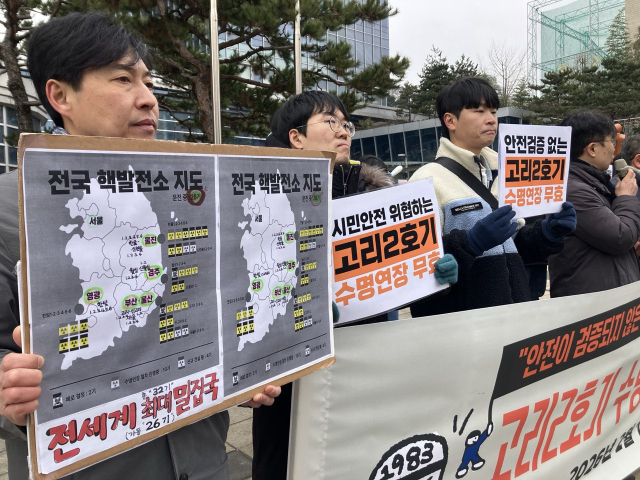
Kim was one of the plaintiffs in a lawsuit filed at the Seoul Administrative Court seeking to cancel the approval for extending Gori Unit 2’s operational lifespan. A total of 1,108 people joined as co-plaintiffs nationwide. They argue that the decision to extend Gori Unit 2’s lifespan, which has operated since 1983 and was set to shut down in April 2023 after 40 years, should be revoked through 2033.
Busan citizens gathered in front of Busan City Hall, while the Seoul area plaintiff group held a press conference in front of the Seoul Administrative Court simultaneously. On the 10th, Pressian conducted phone interviews with lawsuit representatives, attorney Lee Jeong-il and Park Sang-hyun, co-executive chair of the Busan Citizens’ Coalition for a Nuclear-Free Future, to discuss the lawsuit’s key issues. Their responses were summarized in a Q&A format.
@@@
@@@
Pressian: Over 1,000 plaintiffs gathered from across the country.
Park Sang-hyun : We announced the lawsuit preparation on December 15 last year. After about 40 days, we gathered 1,108 plaintiffs nationwide. Within an 80 km radius of Gijang, 391 citizens joined the lawsuit.
The situation in Busan (Gijang, Uljin) is concerning. With Gori Units 2 to 4 lifespans extended, and including Shin Kori Units 3 and 4 in pilot operation or planned, plus SMRs (small modular reactors) pushed by local leaders, the total power capacity reaches 8 GW (gigawatts) in this area alone.
Pressian: The Nuclear Safety Commission decided to extend Gori Unit 2’s lifespan on November 13 last year. What issues warrant cancellation?
Lee Jeong-il: First, there’s a clear legal violation. The ‘Periodic Safety Evaluation’ report was submitted a year past the legal deadline. This crucial report determines whether the plant can continue operating. Korea Hydro & Nuclear Power submitted it on April 4, 2022, while the legal deadline was April 8, 2021.
This violates Article 23, Section 1 of the Nuclear Safety Act. The Commission even filed a complaint against Korea Hydro & Nuclear Power then. Yet, they approved the lifespan extension application. This contradicts Supreme Court precedent, which states that claiming rights after the application period is invalid (2018Du47264).
Pressian: Why did Korea Hydro & Nuclear Power submit the report a year late?
Lee : The problem began when the Yoon Suk Yeol administration (2022-2024) reversed the nuclear phase-out policy. The Moon Jae-in administration (2017-2022) had decided to permanently shut down ten aging nuclear plants, reflecting this in the basic power supply plan. However, the Yoon administration promoted new nuclear plant construction and restarting old ones. Almost immediately, Korea Hydro & Nuclear Power pushed for extending aging plants’ lifespans. President Yoon was elected on March 9, 2022, and Korea Hydro & Nuclear Power submitted the evaluation report on April 4, 2022, explaining the late submission.
Pressian: You pointed out that the safety verification process was extremely inadequate.
Lee: Indeed. The discussions on Gori Unit 2’s lifespan extension progressed rapidly. Take the ‘Accident Management Plan,’ for example. This key document, established after the 2011 Fukushima disaster, examines accident management capabilities and emergency standards. It’s crucial for deciding plant operations and mandated by law. Yet, the Nuclear Safety Commission was discussing Gori Unit 2’s extension before this plan was even approved.
Pressian: What specific errors are present?
Lee: There are figures set without basis. For instance, the atmospheric dispersion factor was defined as 50%. This indicates how radioactive material would spread in a leak. However, regulations state it should be 99.5% or 95%, depending on the situation.
The 50% figure lacks proper justification. Using 95% would exceed the allowable dose limit in the accident management plan, while 50% doesn’t. Commission meeting minutes show two members raised this issue, but the majority vote system means seven members can pass it without addressing concerns.
Pressian: What other significant safety review issues exist?
Lee: Certain required impact assessments in the accident management plan were omitted, violating legal requirements. For example, they didn’t assess ‘unpredictable intentional aircraft collisions,’ which should have been included. There are more such omissions.
The ‘Radiation Environmental Impact Assessment’ issues are even more serious. This crucial report reviews impacts on local residents and the environment. The Nuclear Safety Act mandates using ‘the latest technical standards.’ However, Korea Hydro & Nuclear Power applied outdated U.S. standards from 1978, ignoring newer 1999 standards that account for severe accidents like Three Mile Island and Chernobyl. They also omitted assessments for multiple reactor accidents on the same site, as seen in Fukushima.
@@@
@@@
Pressian: This 43-year-old plant has operated since 1983. Significant safety enhancement costs seem inevitable. Your thoughts?
Lee: The Nuclear Safety Commission has interpreted safety very narrowly, favoring Korea Hydro & Nuclear Power. Replacing aging equipment requires substantial safety measure costs. A narrow safety interpretation allows for more favorable economic assessments.
With only seven years until the 2033 extension, if economically unviable, Korea Hydro & Nuclear Power might abandon it. But claiming “no safety issues” and getting approval means lower safety costs, potentially improving economic assessments despite shorter operation. In Canada and the U.S., aging plants often seek decommissioning when meeting safety standards becomes economically unfeasible.
Pressian: How was the lawsuit preparation process?
Lee: We anticipated these issues around 2024 and monitored closely. In July last year, learning of the Commission’s preliminary work on Gori Unit 2’s extension, we took proactive steps, including information disclosure requests. Most materials weren’t properly disclosed. Despite challenges, activists, experts, and legal professionals collaborated to analyze inadequate reviews and legal violations.
This lawsuit’s core argument is that Korean society must meet minimum legal safety standards before debating nuclear phase-out. We’re legally questioning the appropriateness of extending aging nuclear plant lifespans when these standards aren’t met. We argue that Gori Unit 2’s lifespan extension process must be canceled for violating nuclear safety regulations.










Most Commented