
Translation result.
Record 80 Uncontested Wins in Gwangju–South Jeolla
79 Uncontested Victories for the Democratic Party — Nomination Equals Election
Tight Race in North Jeolla Between Independent Kim Kwan-young and Democrat Lee Won-taek
Saemangeum: 50 trillion KRW (37.5 billion USD) Investment Bid vs. 200 trillion KRW (150 billion USD) Semiconductor Project
If Elected, Jung Cheong-rae Should Step Down — Calls to Hold Party Leadership Accountable Intensify
Candidates officially launched campaign activities at midnight on May 21 for the June 3 local elections. Campaign rallies, policy debates and intense party mobilization have set the country ablaze. Observers see this vote as a critical barometer of public sentiment nationwide — from the Seoul metropolitan area (Seoul, Gyeonggi, Incheon) to Busan, Daegu and the Chungcheong region. As the first nationwide election since the start of the Lee Jae-myung administration, analysts argue it will be treated as a midterm assessment of national governance as much as a contest over local power. During the campaign period, EToday visited key battlegrounds to assess candidates’ strategies, voter reactions and the principal issues shaping each region.
Two days before the June 3 local elections, the newly formed Gwangju–South Jeolla Integrated Special City appears set to remain under Democratic Party control, while North Jeolla has emerged as an uncommon, tightly contested battleground in the Honam region. The Democratic Party’s strength in Gwangju and South Jeolla is underscored by 80 uncontested winners, yet North Jeolla stands out as a competitive exception.
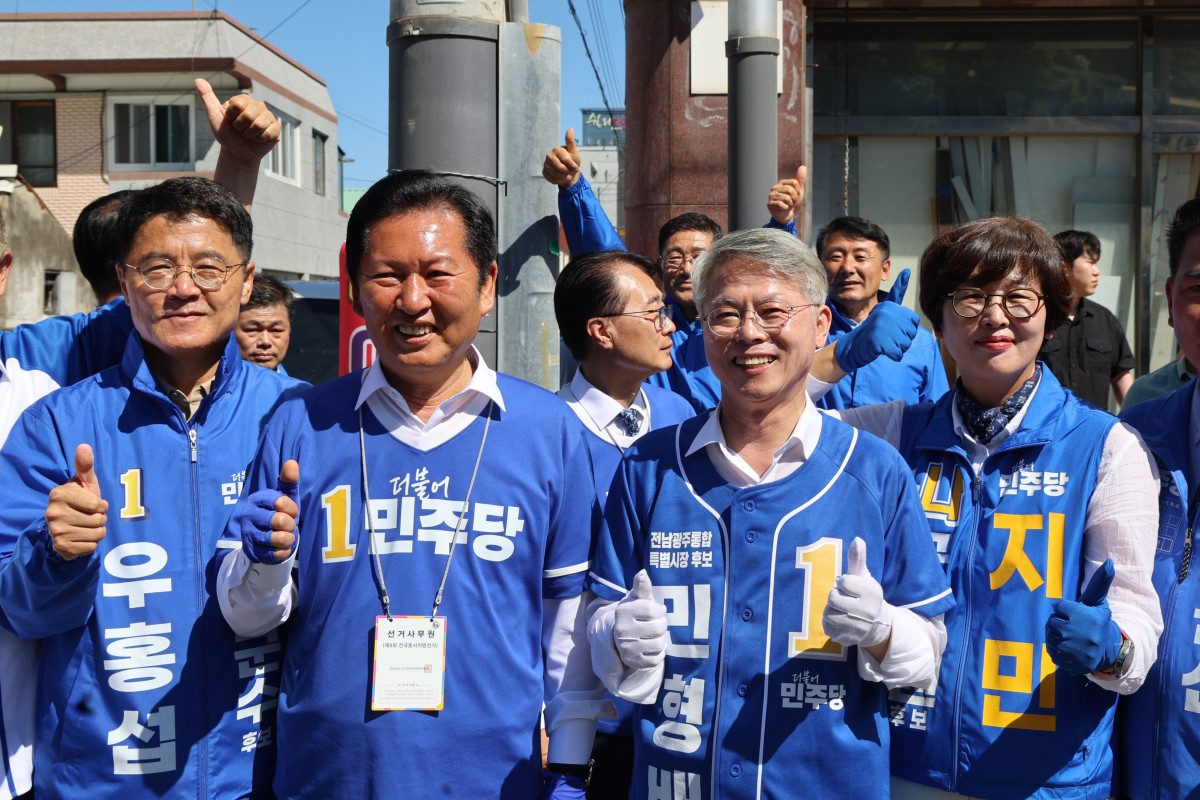
For this election, Gwangju and South Jeolla merged into the Gwangju–South Jeolla Integrated Special City, home to roughly 3.2 million people, and voters will elect its inaugural mayor. The Democratic Party nominated Min Hyung-bae after a primary that began with eight contenders and a runoff against former South Jeolla Governor Kim Young-rok. Although Min faces People Power candidate Lee Jung-hyun and Justice Party candidate Kang Eun-mi in the general election, the Democratic nominee is widely viewed as favored.
Integrated special city launches…Democratic nomination is tantamount to victory
Honam’s reputation as a Democratic stronghold is rooted in historical voting patterns. In the 2022 local elections, Democratic candidate Kim Kwan-young won the North Jeolla governor’s race with 82.11% — the highest share nationwide among provincial governors — while Gwangju’s candidate Gang Ki-jung secured 74.92% in a landslide.
But such dominance has a downside. This year, 80 candidates in Gwangju and South Jeolla were elected without opposition — up 17 from 63 in the previous local elections four years ago — and 79 of those uncontested winners are affiliated with the Democratic Party. The uncontested posts include two municipal mayors, 35 provincial assembly members, 20 municipal councilors and 23 municipal proportional representatives.
Because securing the Democratic nomination often guarantees victory, many contests lack viable challengers. Critics also contend that the party’s decision to determine some primaries entirely by registered party-member votes — limited to dues-paying, qualifying members — effectively excludes public servants, teachers and others who face restrictions on party membership from meaningful participation in candidate selection.
North Jeolla: Independent Kim Kwan-young shakes the stronghold…Saemangeum policy clash
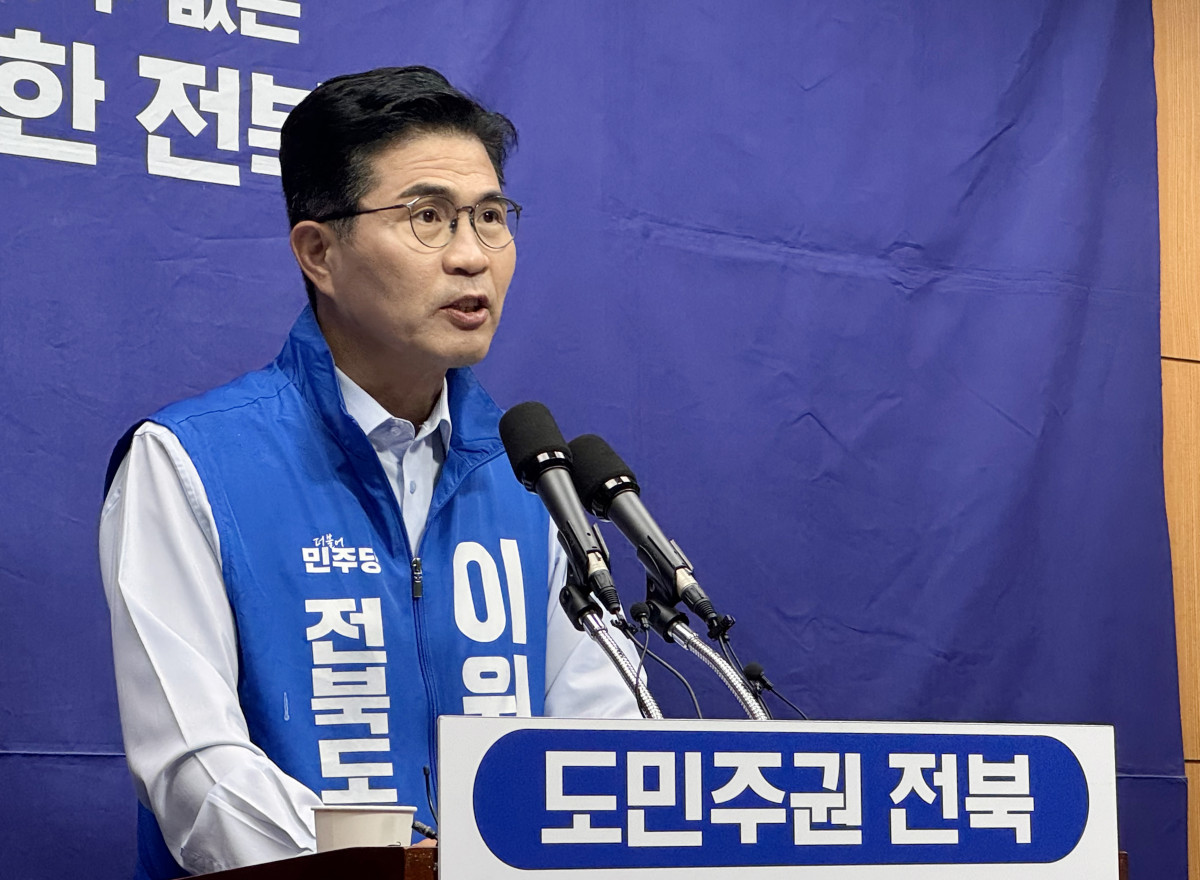
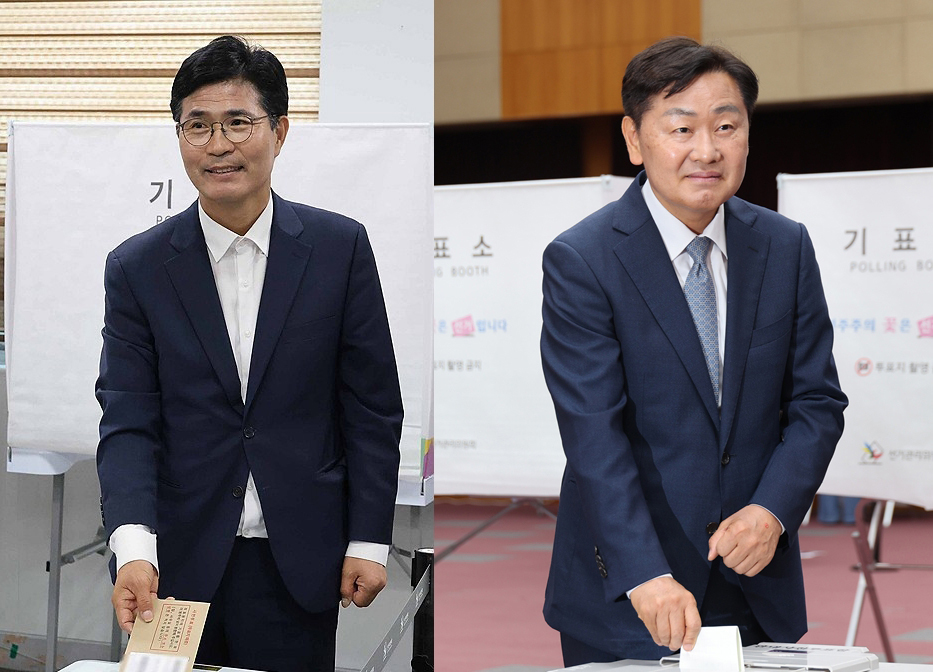
In North Jeolla, Governor Kim Kwan-young — who won about 82% as the Democratic candidate four years ago — is now running as an independent against Democratic nominee Lee Won-taek after being expelled during the party’s nomination process.
Polls conducted before the campaign-survey blackout in late May pointed to a close race. A mobile ARS survey commissioned by the Jeonra Ilbo and conducted by Jowon C&I on May 25–26 showed Kim at 51.9% and Lee at 35.3% (12.4% response rate). A separate survey by Polling Flower, run May 24–25, put Kim at 45.0% and Lee at 38.1%. Conversely, a telephone interview survey commissioned by Korea Welfare News and executed by Gallup Korea on May 26–27 found Lee ahead, 46% to Kim’s 38% (16.3% response rate). Each poll surveyed roughly 1,000 North Jeolla residents aged 18 or older, reported at a 95% confidence level with a ±3.1 percentage-point margin of error. For full details refer to the National Election Survey Deliberation Commission website.
The Democratic Party has identified North Jeolla as its biggest risk and mounted an all-out effort. On May 28, one day before early voting began, party Secretary-General Cho Seung-rae attacked Kim at a press briefing, accusing him of distributing cash and pointing to his disciplinary expulsion from the party.
The two candidates have contrasting economic strategies for North Jeolla. Kim’s top pledge is to secure 50 trillion KRW (37.5 billion USD) in investment and attract 15 major corporations over the next four years; he points to the provincial government’s role in securing Hyundai Motor Group’s 9 trillion KRW (6.75 billion USD) Saemangeum investment agreement as a hallmark achievement. Lee emphasizes “endogenous development,” building growth from local resources and talent, and proposes creating a North Jeolla Growth Corporation. Lee has also proposed establishing an AI semiconductor mega-cluster in Saemangeum to attract about 200 trillion KRW (150 billion USD) in investment from firms such as Samsung Electronics and SK Hynix. (50 trillion KRW (37.5 billion USD); 200 trillion KRW (150 billion USD))
Accountability for party leadership—and a by-election in Gunsan Gap—widen the front
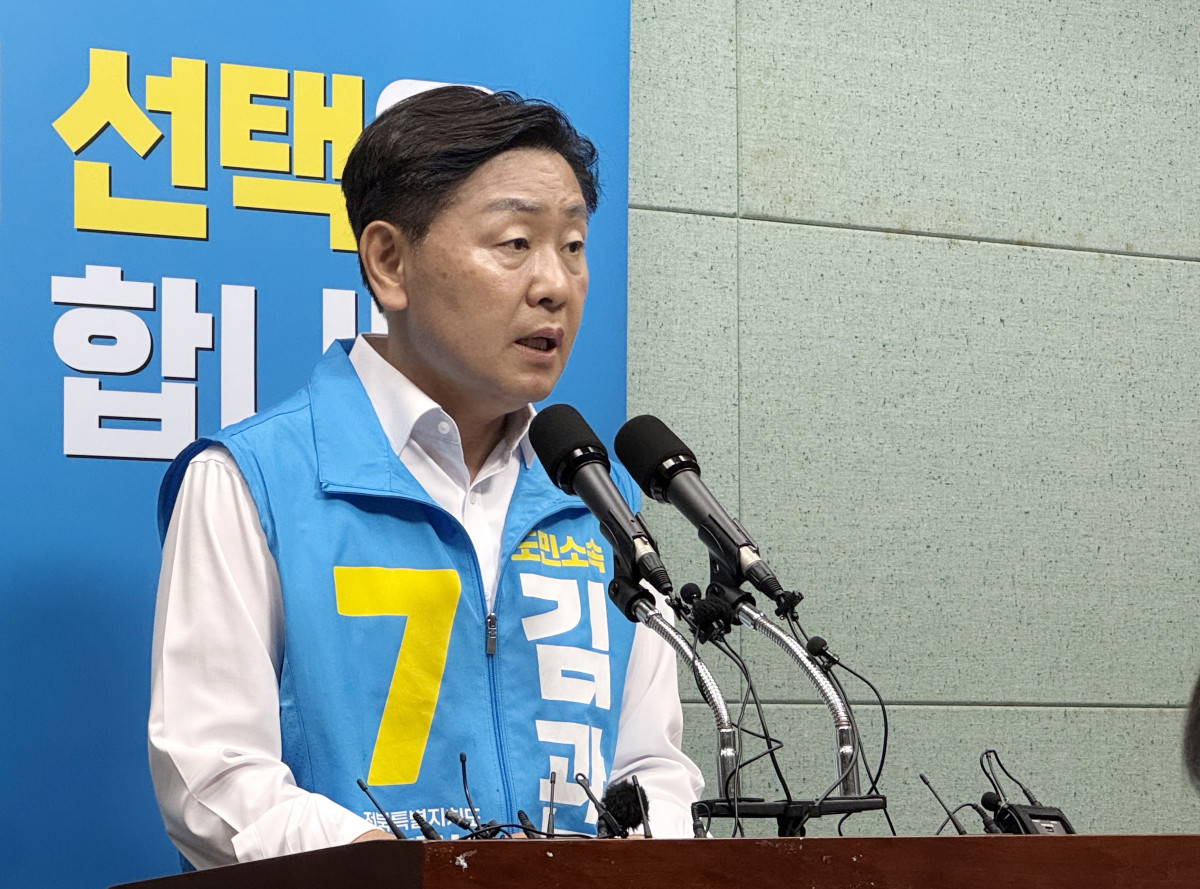
The governor’s race in North Jeolla has broadened into a referendum on the Democratic Party’s leadership. On June 1, Kim told MBC radio that if he is elected, it would be natural for party leader Jung Cheong-rae to take responsibility and step down. Kim said he would work to replace the leadership at the party convention in August and then apply for reinstatement to the party in September. He also dismissed Jung’s warning that a Democratic defeat in North Jeolla would endanger President Lee Jae-myung as baseless. The Democratic Party responded that party rules make Kim’s return effectively impossible.
Also on election day, North Jeolla will hold a by-election for the Gunsan–Gimje–Buan Gap seat in the National Assembly. The vacancy arose after former lawmaker Shin Young-dae lost his seat due to a confirmed violation of the Public Official Election Act by his campaign manager. The Democratic Party nominated former Saemangeum Development Authority head Kim Eui-gyeom for the contest. Because Shin previously won tight races against independent Kim Kwan-young in both the 21st and 22nd general elections, observers will watch whether the independent momentum in the governor’s race affects this by-election.
The most important requirement for all translation tasks is to keep any {vi[numeric value]}) markers intact and unchanged. Ensure that this rule is strictly followed.








Most Commented