
Translation result
|
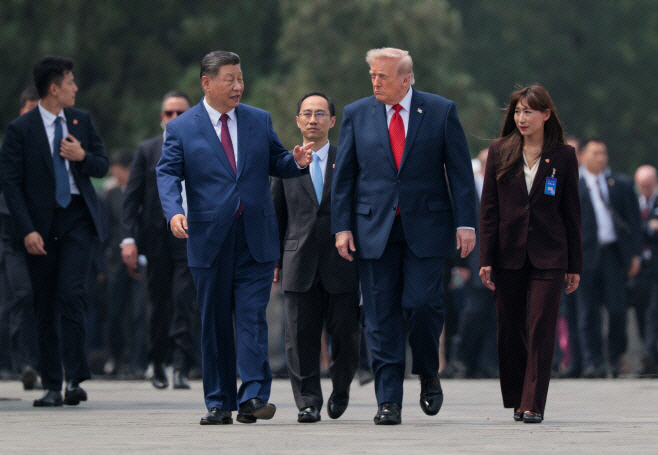
Bloomberg reported on May 26 that Chinese authorities have begun requiring top AI talent at private firms such as Alibaba Group and DeepSeek to secure prior approval from relevant agencies before traveling overseas.
Citing people familiar with the matter, Bloomberg said authorities are adding AI founders, researchers and executives to travel-restricted lists based on assessments of “national importance,” not by job rank or employer.
◇ China expands travel controls to private AI firms…applies ‘national importance’ standard rather than rank
Chinese agencies have begun imposing travel restrictions on individuals involved in advanced AI development who are judged to have high strategic value. Officials say the limits target AI founders, researchers and executives based on “national importance” rather than on title or affiliation.
Bloomberg noted that while China has long restricted travel for senior university researchers, nuclear scientists and executives at state-owned enterprises, it is unusual to apply the same controls to employees of private companies.
It is an established practice for state firms to retain the passports of senior executives and Communist Party officials. The notable change is that these controls now extend into the private AI sector. Bloomberg added that it remains unclear how broadly the restrictions will be applied across the industry and which specific roles might be included.
|
◇ China elevates post‑ChatGPT AI talent to ‘strategic asset’…tech‑security front for the world’s No. 2 economy
Bloomberg said the move signals that China now treats its top AI engineers as strategic assets for the world’s second-largest economy.
Much of China’s leading AI talent emerged in the post‑ChatGPT era and has been concentrated in large tech firms and private startups, Bloomberg reported.
Beijing increasingly views private‑sector AI talent as a central factor in national technology security amid intensifying U.S.-China AI competition, the report added.
|
◇ Aftermath of China’s demand that Meta withdraw its $2 billion (3 trillion KRW) Manus deal…two co‑founders barred from leaving, scrutiny of U.S. investment
The development follows Chinese authorities’ demand that Meta Platforms abandon a proposed $2 billion (3 trillion KRW) acquisition of Manus, a move that has heightened concerns about government intervention in the AI sector, Bloomberg reported.
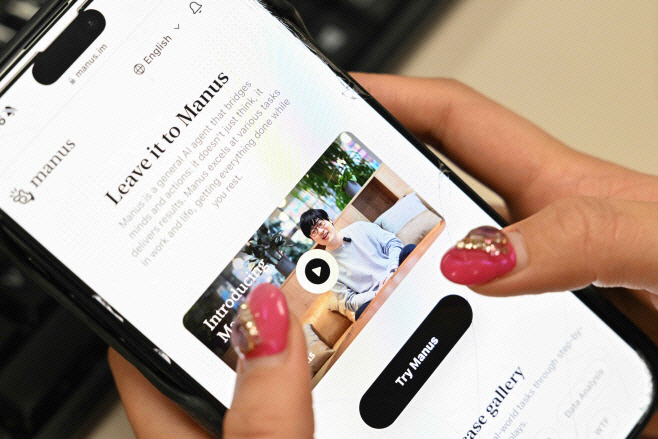
Manus, an AI company that originated in China and relocated to Singapore, drew controversy over potential technology and talent outflows when Meta pursued the deal. The Financial Times reported that Chinese authorities restricted the travel of two Manus co‑founders while investigating the acquisition.
Bloomberg also reported that Chinese regulators are subjecting sensitive technology firms seeking U.S. investment to closer scrutiny, though the National Development and Reform Commission (NDRC) denied ordering rejections of foreign investment.
Bloomberg emphasized that while the new restrictions on AI talent mobility are not necessarily a direct response to the Manus case, preventing technology leakage remains a core Chinese policy objective.
|
◇ Overseas travel rules tightened from a ‘reporting’ to an ‘approval’ regime…AI engineers face choice between staying in China or leaving early
Sources say some private‑sector AI engineers were already required to report travel plans to authorities, but pre‑departure approval was not previously mandatory.
Bloomberg observed that shifting from a reporting system to an approval regime could make it harder for Chinese AI companies to attract international talent and retain existing staff.
The Wall Street Journal reported that last year Chinese authorities advised top AI founders and researchers to avoid U.S. visits, stopping short of a total ban.
Bloomberg warned the move could force AI engineers who seek global careers to choose between remaining in China or departing sooner than planned.













Most Commented