
Translation result
People Power Party figures say the government has overreached
Kim Min-jeon: ‘Tank’ means a container for liquid … Han Ki-ho: Abuse of power
As Starbucks was pulled into a controversy over remarks perceived to belittle the May 18 Democratic Uprising, several government agencies moved to boycott the company. Politicians from the People Power Party have criticized the response as excessive.
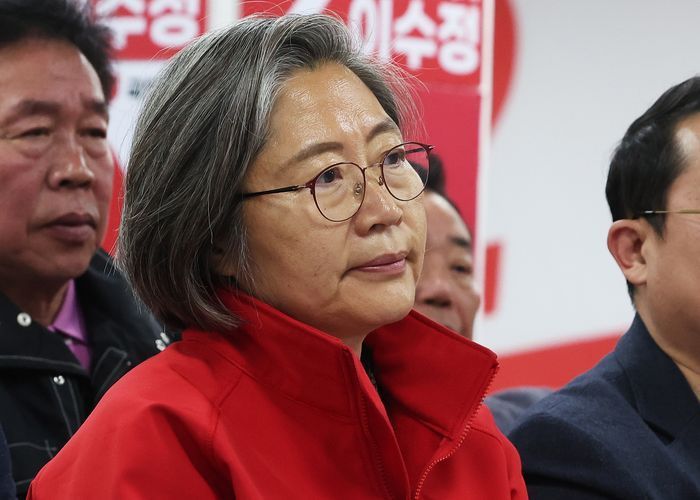
On the 22nd, Lee Soo-jung, chair of the People Power Party’s Suwon-Jeong branch in Gyeonggi Province, took the stage at a campaign rally for People Power mayoral candidate Ahn Gyo-jae and asked, “Should you go to Starbucks or not?” She urged attendees to “go to Starbucks today and post a verification photo.”
She added that no one can order people whether to go to or avoid Starbucks and warned that freedom must never be rolled back, stressing, “This is a liberal democratic market economy.”
Earlier on the 22nd, People Power lawmaker Kim Min-jeon wrote on Facebook that if someone who sells water calls something a “tank,” they obviously mean a container for holding liquid. He asked rhetorically how many households nationwide have water tanks and whether authorities intend to investigate them all, adding, “What is the Ministry of the Interior’s boycott even about?”
On the same day, People Power lawmaker Han Ki-ho posted on social media, calling the sequence of government interventions following the Starbucks marketing controversy an abuse of power.
Han wrote that Starbucks will become a hangout for patriots who support conservatism and liberal democracy and argued that the government’s actions demonstrate South Korea is entering an era of dictatorship.
Meanwhile, on the 18th — the anniversary of the May 18 Democratic Uprising — Starbucks Korea ran a promotion for large-capacity tumblers using the slogans “Tank Day” and “책상에 탁” (roughly “a thud on the desk”). Critics said the phrases evoked the tanks used by martial-law forces during May 18 and recalled the torture death of activist Park Jong-chul, and the controversy quickly escalated.
Shinsegae Group dismissed former Starbucks Korea CEO Son Jeong-hyun and the responsible executives, and Shinsegae Chair Jung Yong-jin issued a public apology. Despite those moves, critical public sentiment has continued to grow.
Government agencies, including the Ministry of the Interior and Safety, said they would stop using Starbucks coffee vouchers and gift certificates for surveys, contests and public-participation events. In April, the Defense Ministry began reviewing whether to terminate its “Hero” welfare agreement with Starbucks Korea and has temporarily suspended beverage support programs for remote military units.
On the 21st, the National Union of Public Officials distributed a notice to its branches titled “Request to Join the Boycott of Starbucks Over Hate Marketing That Belittles the May 18 Uprising,” urging all branches to stop using Starbucks and to participate in the boycott.
© Dailyan Co., Ltd. Unauthorized reproduction and redistribution prohibited.
- Who owns the company? … Performance bonuses ignite a debate over operating profit distribution
- [June 3 Picks] Han Dong-hoon asks Ha Jung-woo, Who do you consider the principal enemy?
- [June 3 Picks] People Power Party calls Kim Yong-nam’s alleged front-person loan business a deception against the public
- SpaceX succeeds in test launch of its giant Starship rocket, an all-time record at 124 m (about 407 ft)
- A government-level boycott of Starbucks is like the Nazi boycott of Jewish shops, Cho Gap-je says










Most Commented