
2026 Pyeongtaek By-Election: Kim Yong-nam vs. Jo Guk – Who Will Prevail in This Tight Race?
Daniel Kim Views
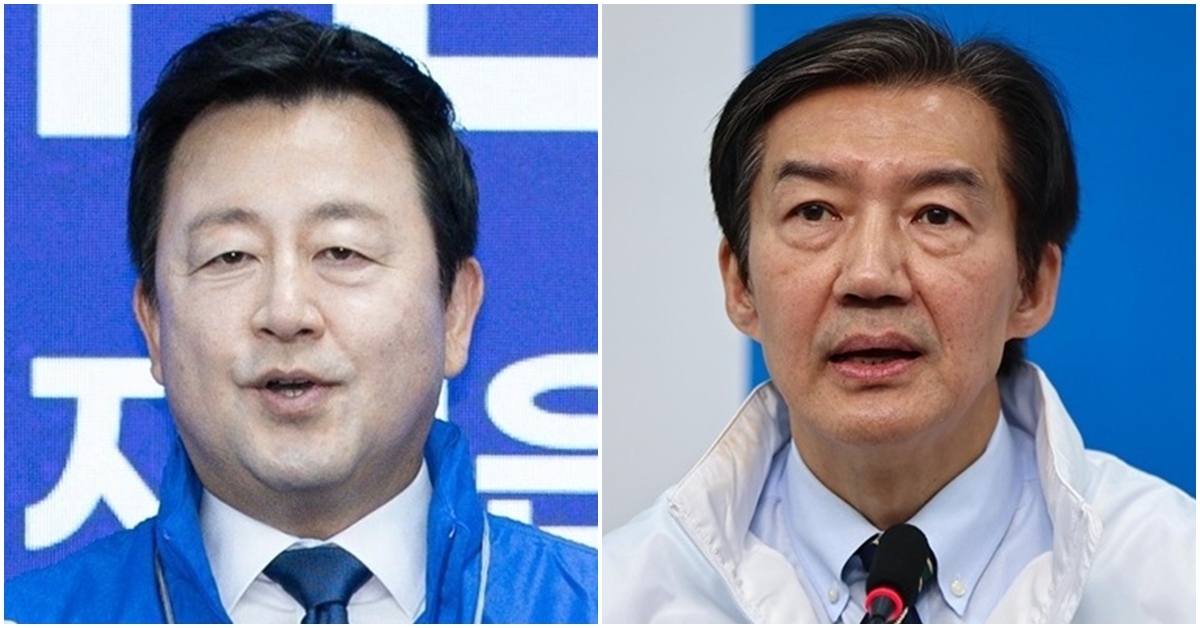
A new poll indicates that the five-way race in the Pyeongtaek, Gyeonggi, parliamentary by-election has tightened into a close contest between Democratic Party candidate Kim Yong-nam and Innovation Party candidate Jo Guk. People Power Party candidate Yoo Ui-dong trails both, shifting the campaign dynamic toward competition among progressive-leaning contenders.
News1 commissioned Gallup Korea to survey 501 Pyeongtaek residents aged 18 and over on May 12–13; the results were released on May 14. The candidate preference poll (95% confidence level, margin of error ±4.4 percentage points) showed Kim Yong-nam leading with 29%, followed by Jo Guk at 24%, Yoo Ui-dong (People Power Party) at 20%, Hwang Kyo-ahn (Freedom and Innovation Party) at 8%, and Progressive Party candidate Kim Jae-yeon at 4%.
Kim’s lead over Jo is 5 percentage points—within the poll’s margin of error—while his 9-point advantage over Yoo falls outside that margin.
Among respondents who said they were likely to vote, Kim received 30%, Jo 28%, and Yoo 21%, narrowing the gap between Kim and Jo to 2 percentage points.
On whether the progressive camp (Kim Yong-nam, Jo Guk, Kim Jae-yeon) should unify behind a single candidate, 46% opposed and 29% supported the idea.
Within Democratic Party supporters, opposition to unification (49%) exceeded support (36%). Innovation Party backers overwhelmingly favored unification (74% to 17%). By ideological grouping, conservatives and moderates mostly opposed unification, while progressives narrowly supported it (47% vs. 43%).
When asked which progressive candidate they would prefer as a unified nominee, Kim and Jo tied at 32% each, with Kim Jae-yeon at 9%. Innovation Party supporters strongly favored Jo (85%), whereas conservatives and moderates tended to prefer Kim.
Head-to-head scenarios suggest a unified progressive ticket led by Kim would be more competitive against Yoo than one led by Jo. In a Kim vs. Yoo matchup, support was 54% to 34% (a 20-point gap); in Jo vs. Yoo it was 48% to 38% (a 10-point gap).
Opposition to unifying the conservative camp also exceeded support (38% vs. 30%). However, among People Power Party supporters, 59% favored conservative unification and 25% opposed it; among conservatives, 47% supported unification versus 35% opposed. For a unified conservative candidate, Yoo led with 59% preference compared with Hwang’s 19%.
Asked whether they would continue to back their current choice, 69% said they would and 30% said they might switch.
Approval of President Lee Jae-myung’s job performance stood at 72% positive compared with 22% negative. In this local election, 55% said they would support the ruling party to back the government’s agenda, while 32% said they would support the opposition to check the administration. Party support rates were Democratic Party 48%, People Power Party 22%, Innovation Party 6%, Progressive Party 4%, and Reform Innovation Party 2%.
The survey was conducted via computer-assisted telephone interviewing (CATI) using randomly generated wireless virtual numbers; the response rate was 10.0%. For more details, see the Central Election Survey Deliberation Commission website.














Most Commented