
Translation result.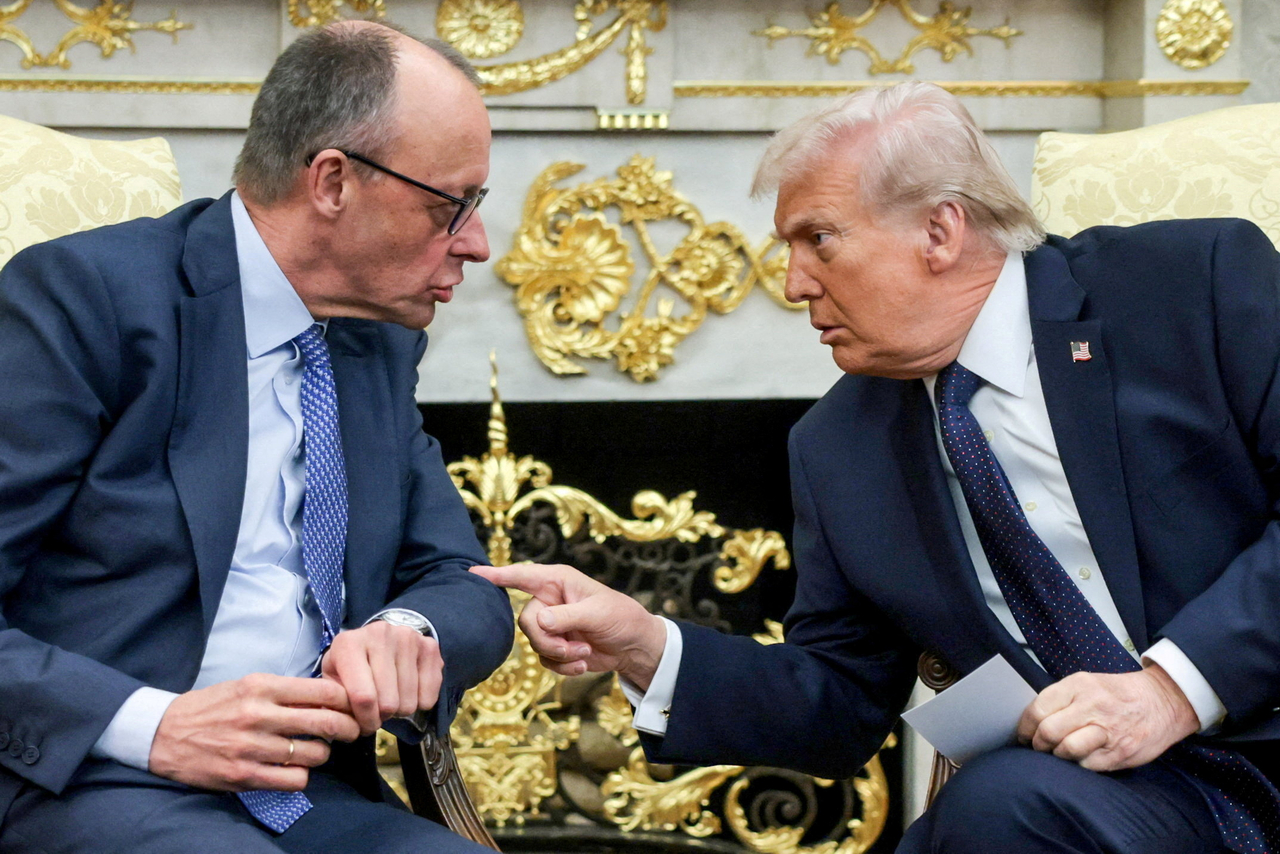 [Herald Economy=Reporter Eun-ji Choi] A personal feud between U.S. President Donald Trump and German Chancellor Friedrich Merz is seriously undermining the European Union’s trade negotiations with the United States.
On the 9th (local time), Bloomberg and other outlets reported that President Trump recently postponed raising tariffs on EU-made passenger cars and trucks but has continued to apply intense pressure. Analysts say the move reflects Trump’s anger after Merz publicly criticized the U.S. approach to conducting military action against Iran.
On the 1st, Trump warned he would raise auto tariffs from 15% to 25%, citing the EU’s failure to uphold the trade agreement.
On the 7th, he said on social media that he had spoken with European Commission President Ursula von der Leyen and issued a final deadline: if the agreement is not implemented by U.S. Independence Day on July 4, tariffs will be raised immediately.
The German government is working to defuse the situation. German Foreign Minister Johan Badepul said Germany supports the U.S. goal of preventing Iran from acquiring nuclear weapons, but Trump has not withdrawn his threat to pull 5,000 U.S. troops out of Germany.
Experts say Trump often lets personal feelings shape policy decisions, and that tendency is harming the entire EU negotiating process. They warn his animus toward Merz has become an invisible barrier to implementing the trade deal.
Discord within the EU is also a problem. In July last year, Trump and von der Leyen agreed that the EU would purchase $750 billion in U.S. energy and military equipment and invest an additional $600 billion, in return for the U.S. cutting tariffs across the board to 15%. However, the European Parliament gave conditional approval to the plan in March, and some member states are still delaying final sign-off.
The European Parliament is pushing to add a clause that would suspend the agreement if the U.S. fails to meet its commitments, a move that has drawn U.S. pushback. Jameson Greer, an official at the U.S. Trade Representative’s office, warned that “if the original text is changed, U.S. exports to Europe could be restricted.”
EU negotiators will meet again on the 19th to try to resolve outstanding issues. If they reach an agreement there, they plan to complete ratification in June, but it remains uncertain whether all steps can be finished before Trump’s July 4 deadline.















Most Commented