
Gwangju’s Political Scandal: Should A Candidate with Sexual Harassment Claims Retain Their Nomination?
Daniel Kim Views
Translation result.

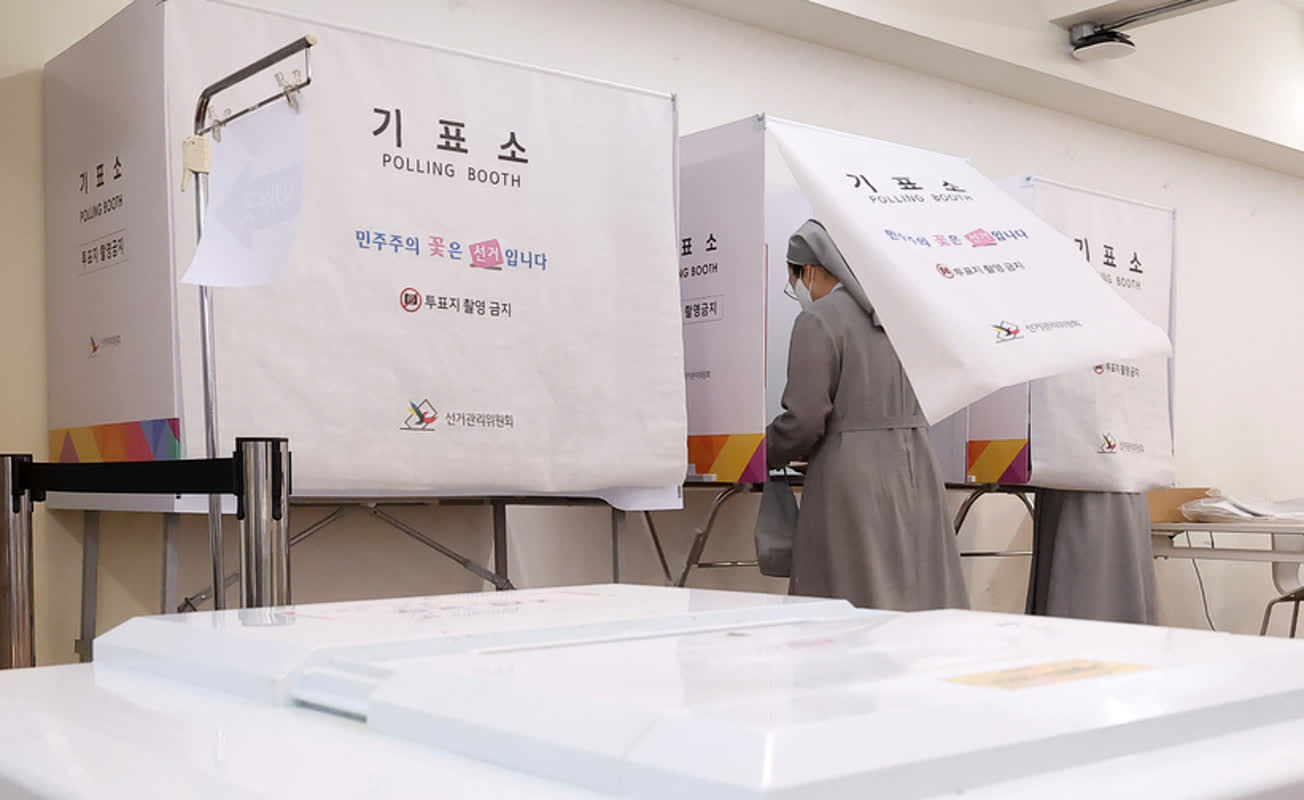
▲The Democratic Party of Korea confirmed allegations that preliminary candidate A for the Jeonnam–Gwangju Integrated Special City council seat in Gwangju’s Buk-gu District 1 made sexually harassing remarks, yet kept his nomination, and the fallout is spreading. Photo courtesy of the Democratic Party of Korea, Gwangju Metropolitan Party.
Gwangju—Energy Economic News reporter Moon Seung-yong: The Democratic Party confirmed that preliminary candidate A for the Jeonnam–Gwangju Integrated Special City council seat in Gwangju’s Buk-gu District 1 made sexually harassing remarks, but the party retained his nomination, and the dispute is growing.
Candidate A served on the Buk-gu Council during its 8th and 9th terms and represented the Na electoral district (Munheung 1·2-dong, Ochi 1·2-dong, Usan-dong). He recently secured the party nomination to run for the higher-profile Buk-gu District 1 city council seat in this year’s local elections.
Recordings obtained by Energy Economic News on May 5 indicate that A repeatedly used explicit sexual language toward the victim, B, and pressed her for a relationship while implying physical contact. The conversations reportedly included sexually objectifying comments about a specific woman. Even after B challenged rumors about his relationships with women, A denied them and continued making similar remarks.
After learning of the allegations, the Democratic Party referred the case to its central Gender Violence Center for review. The Nomination Management Committee said it based its final decision on the center’s input.
A Gwangju party official said, “The majority concluded it was difficult to classify the conduct as sexual harassment,” adding that “of the 13 nomination committee members, 11 voted to keep the nomination.”
The party pointed to the victim’s statement that she did not want criminal charges pursued and to a withdrawal statement she submitted as key reasons for maintaining the nomination. Party officials said the withdrawal arrived before the committee’s decision and was taken into account. They also acknowledged internal confusion during the case as the parties’ positions shifted.
But the victim, B, filed a separate statement with both the central party and the local committee and strongly objected to the nomination decision, saying, “Sexist remarks can never be justified for any reason.”
B said, “I forgave him personally, but that does not absolve him of public responsibility. The behavior itself does not disappear. The party must independently assess a candidate’s qualifications,” she said.
The Buk-gu Gap regional committee also acknowledged problems interpreting the agreement. A committee official said, “The agreement appeared to reflect personal forgiveness, not consent to a nomination. The victim agreed to the settlement expecting the candidate would not be nominated; after the decision to retain the nomination, she submitted additional reports.”
He added, “Although the nomination process is not under the regional committee’s authority, we need to review whether the victim’s intent was adequately confirmed. Because the nomination committee has already voted, it is difficult for the provincial party to reverse the decision; a central party ruling is required.”
Critics inside and outside the party sharply condemned the decision to maintain the nomination on the basis of a private “agreement.”
Park Jun-young, secretary-general of the Democratic Reform Council, said, “It is hard to accept that the nomination stood even though the remarks were confirmed,” and added, “A private settlement cannot absolve a candidate of public accountability.” He continued, “The party must clarify the standards it uses to judge a candidate’s morality and fitness for office.”
Observers say the controversy highlights how political parties set standards for allegations of sexual misconduct and how those standards operate in the nomination process. The central question is how to interpret the gap between personal forgiveness and public responsibility.













Most Commented