
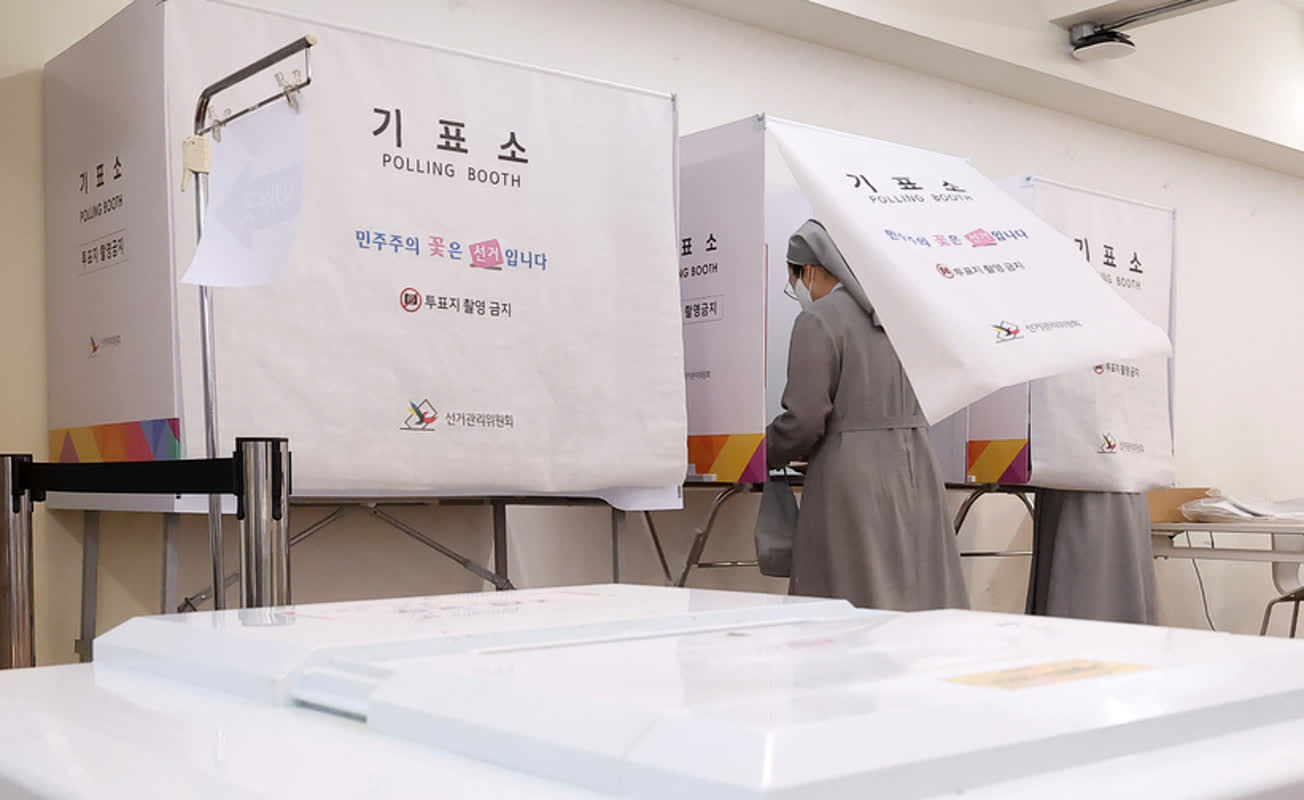
With roughly 40 days remaining before the June 3 local elections, the Democratic Party has concluded its primaries for provincial and municipal executives in North Jeolla Province. With the gubernatorial and mayoral contests settled, attention should now shift to races for local assembly seats. In North Jeolla, winning the party’s nomination typically translates into victory in the general election, so most primary winners go on to win. The Democratic Party completed the first round of local assembly primaries and will begin the second round on the 22nd. Because these contests are decided mainly by registered party members, Democratic members across the province should take the primaries seriously.
The total number of seats in North Jeolla’s local assemblies has increased by six. The National Assembly’s Special Committee on Electoral Reform approved a redistricting plan that takes effect with this election. The North Jeolla Provincial Council expanded from 40 to 44 members — 38 constituency seats and 6 proportional seats. Municipal council seats rose from 198 to 200. Because the districting process was delayed, the Democratic Party pushed back its primary schedule. Accordingly, the first round of provincial assembly primaries for the Jinan–Imsil–Sunchang–Gochang 2nd district took place on the 16th–17th, and the first-round municipal council primaries in Wanju, Jinan, Muju, Imsil, Sunchang and Gochang ran on the 18th–19th. The second round for provincial seats — covering Jeonju’s 4th and 5th districts, Jeongeup 1st and 2nd, Namwon 1st and 2nd, and Jangsu — will be held on the 22nd–23rd, while municipal second-round primaries are scheduled in Jeongeup, Namwon, Jangsu and Buan for the 24th–25th.
In practice, most residents pay little attention to local assembly elections. Typically, only candidates and a small circle of interested parties follow them; many voters don’t even know who is running. The large field of candidates and low name recognition help explain that. Yet local councils hold significant powers: they oversee local government, draft ordinances, review budgets and conduct administrative audits. Their decisions directly affect daily life — from curbside trash collection and water and sewer services to road construction, apartment height limits and hospital approvals. Local councils also often lack transparency and require stronger oversight. Local assembly members frequently face scandals involving corruption and patronage requests, as well as incidents of abusive speech and even violence.
Despite this, uncontested races remain common in North Jeolla’s local councils. Four years ago, 26 of 40 seats on the North Jeolla Provincial Council — 22 constituency seats and 4 proportional seats, or 65% — were decided without a vote after candidates received party nominations. Registered party members, who make up only about 10–20% of eligible voters, effectively chose local assembly members regardless of the broader public’s preferences. Voters should pay greater attention to local councils, which are the foundation of everyday politics.









Most Commented