
How Ulsan’s Future Leaders Plan to Transform Local Economy and Tourism: Key Proposals Revealed
Daniel Kim Views
Translation result
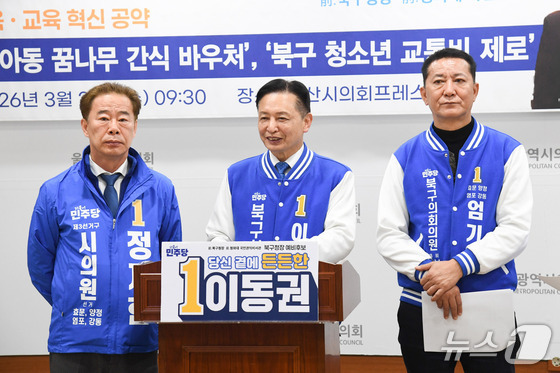
Candidates running for Ulsan’s municipal offices in the June 3 local elections have unveiled competing pledges on childcare, economic development, tourism and other issues.
On the morning of the 25th, Lee Dong-kwon, the Democratic Party of Korea’s candidate for Buk-gu mayor, held a press conference at the city council press center and pledged to provide every elementary school student in Buk-gu with a monthly snack voucher.
Lee said the vouchers would be restricted to neighborhood businesses—fruit stands, bakeries and small snack shops—and would not be valid at large supermarkets or corporate franchise chains.
He also pledged that Buk-gu would cover students’ commuting costs, linking the program to Ulsan’s transit card system so funds would be automatically loaded onto cards after a separate application.
On the same day, Im Hyun-chul, the People Power Party’s candidate for Nam-gu mayor, unveiled a blueprint built around three pillars: leisure tourism, advanced industry and urban regeneration.
Im said he would fast-track construction of a premium park-golf course at the Samsan–Yeocheon landfill site and connect it to a dog-friendly park. He also proposed installing a sky suspension bridge near Seonam Lake Park and Sinseon Mountain, and introducing ziplines and rail bikes on the stretch from Namsan to the Taehwa River National Garden.
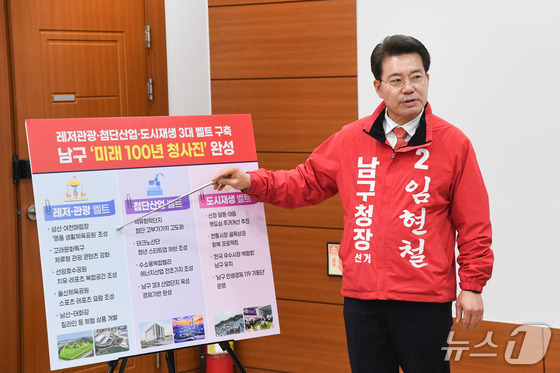
He added that, working with Ulsan city, he would launch a global investment-attraction team to secure new petrochemical projects and to concentrate eco-friendly and youth-focused startups in the Techno general industrial park. Im said he would operate a district-office rapid-response “People’s Livelihood Economy 119” team and foster a local-brand corridor linking Sinjeong Market and Dal-dong.
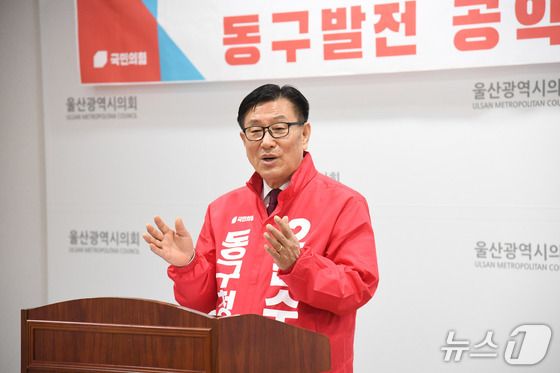
Also on the 25th, People Power Party candidate Kim Su-jong, running for Dong-gu mayor, pledged to aggressively pursue construction of a national shipbuilding museum in Dong-gu with an estimated total budget of about 30 billion KRW (approximately 22.5 million USD).
Kim said the museum would trace shipbuilding history from the long legacy of Bangojin Port through Hyundai Heavy Industries’ founding stories. He promised to partner with HD Hyundai Heavy Industries to open parts of the shipyard normally closed to the public.
He added that a “future smart shipbuilding” gallery would present visions for AI and autonomous navigation, and include a VR zone where visitors can experience autonomous vessels. Kim also proposed introducing a “digital twin shipyard” system using HD Hyundai Heavy Industries’ advanced smart-factory data.










Most Commented