
Unlocking Seongnam’s Skies: Key Changes to Flight Safety Height Restrictions Explained
Daniel Kim Views
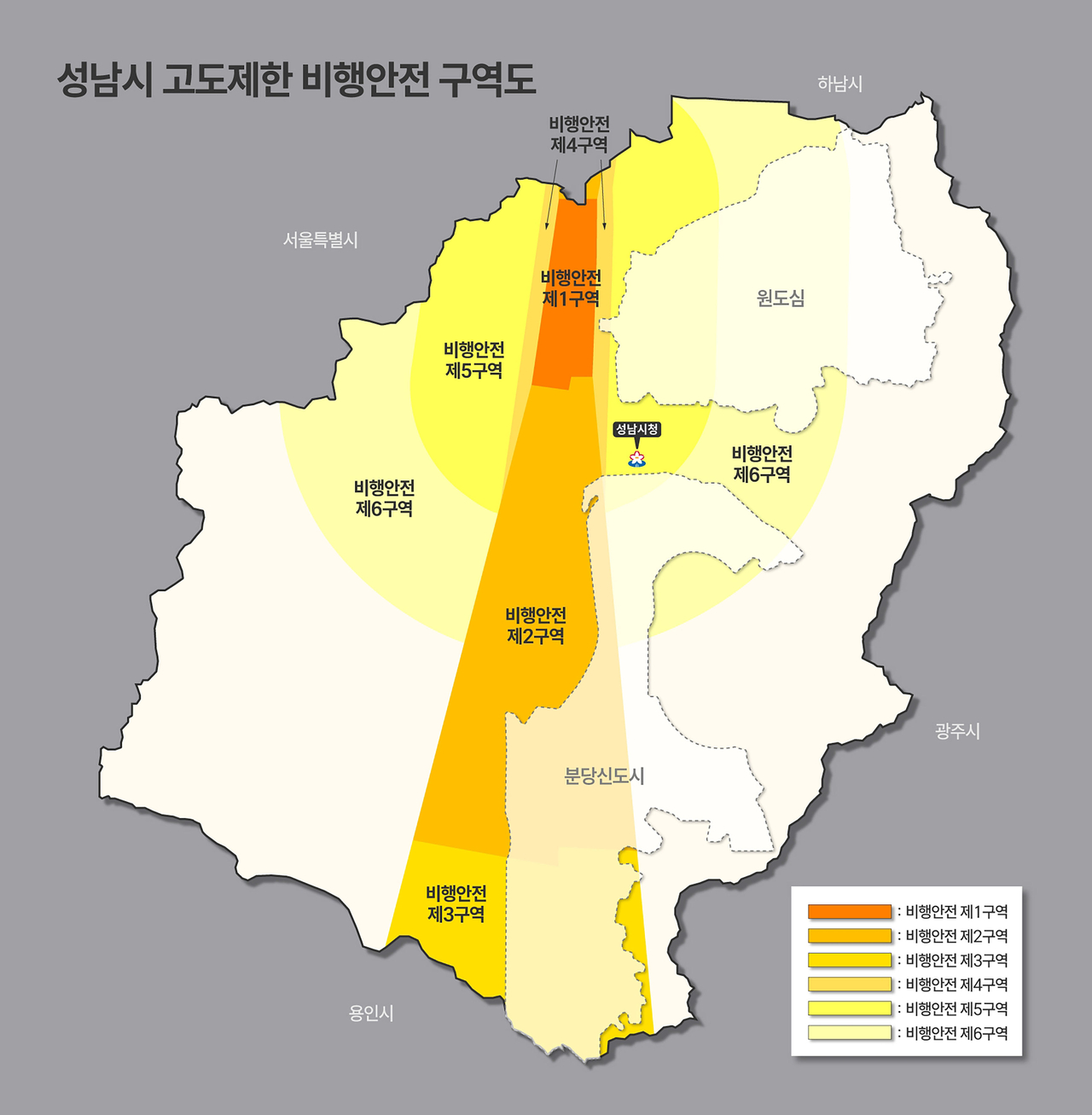
[Herald Economy (Seongnam) = Park Jeong-kyu] Seongnam City Mayor Shin Sang-jin announced on the 10th that the city has resubmitted a revised plan to the Ministry of National Defense. This plan enhances the previously rejected proposals to relax altitude restrictions in flight safety zones 5 and 6.
The revised plan includes three proposals to ease altitude restrictions over approximately 45 square kilometers (17.37 square miles) in flight safety zones 5 and 6. This area covers 24 neighborhoods, including Taepyeong, Sinheung, Sujin, Seongnam, Yatap, and Imae. Of Seongnam City’s total area of 141.8 square kilometers (54.76 square miles), about 80 square kilometers (30.88 square miles) are designated as altitude restriction zones. These zones are divided into six areas based on Seoul Airport’s runway.
To tackle the altitude restriction issue, Seongnam City initiated a research project in September 2023. After gathering public input, they developed five measures to relax altitude restrictions. These proposals were officially submitted to the Ministry of National Defense in June 2025.
The ministry accepted two of the proposals: amending the ground surface criteria under the Military Base Act enforcement decree (August 26, 2025) and announcing changes to Seongnam City’s flight safety areas (September 27, 2025). However, they rejected three key proposals: altering the aircraft turning approach path at Seoul Airport from east to west (towards Cheonggye Mountain), establishing special turning approach procedures, and relaxing altitude restrictions based on the buffer zone of the minimum safe altitude.
Seongnam City viewed these rejected proposals as crucial for meaningful altitude regulation relaxation. They reassessed the ministry’s reasons for rejection from an aeronautical standpoint, incorporated public feedback, and prepared a revised plan for resubmission.
The revised plan focuses on three main areas: easing altitude restrictions in the turning approach area, adjusting altitude limits due to the non-operation of the turning approach procedure, and implementing special turning approach procedures for altitude relief. If accepted, these changes could allow for altitude relaxation ranging from 15.96 meters (52.4 feet) to 135.75 meters (445.4 feet), depending on local characteristics and the ministry’s approval.
Additionally, Seongnam City requested a revision to the Military Base and Military Facility Protection Area Management Regulations. They proposed including tree heights when calculating the shielding area, which is currently excluded from consideration.
The city also highlighted past exceptions where military facilities at Seoul Airport were allowed to exceed altitude restrictions after passing flight safety impact assessments. They argued for similar flexibility for private buildings outside the shielding area, provided they don’t compromise aviation safety.
Mayor Shin Sang-jin emphasized, “Resolving the altitude restriction issue is a critical task that requires persistent effort and multiple revisions. We are committed to ongoing negotiations with the Ministry of National Defense to strike a balance between protecting our citizens’ property rights and ensuring aviation safety.”













Most Commented