
Understanding the Daegu-Gyeongbuk Administrative Integration: Key Insights and Legislative Roadmap
Daniel Kim Views
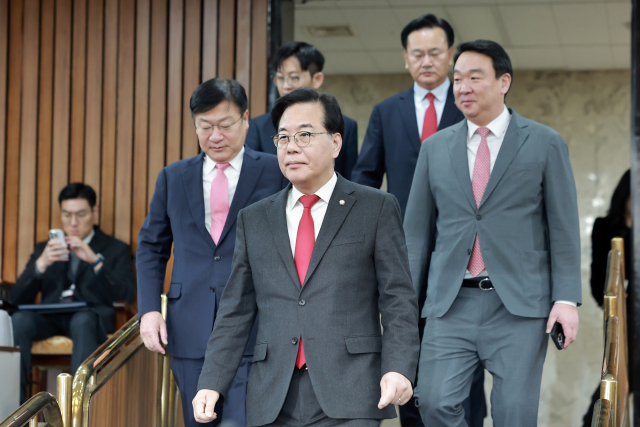
The administrative integration of Daegu and North Gyeongsang Province has hit two major snags: opposition within the opposition party to the government’s fast-tracking, and disagreements with the government over special provisions. As the government and ruling party push for the passage of integration-related legislation, there’s a growing chorus calling for Song Eon-seok, the floor leader of the People Power Party, to take the helm and become the problem-solver for the region’s long-term future.
The special law for the administrative integration of Daegu and North Gyeongsang Province began its review in the National Assembly’s Administrative Safety Committee’s subcommittee on the morning of the 10th.
While the legislative process has officially kicked off, the current mood is far from optimistic. There’s a significant gap between local governments’ demands for special provisions and the central government’s position. Additionally, other local governments not involved in the integration discussions are voicing their concerns.
Within the opposition party, dissenting voices and calls for a more measured approach are gaining momentum. On the afternoon of the 10th, Busan and South Gyeongsang Province announced they had presented three core demands for administrative integration, including the establishment of a Basic Law for Administrative Integration, to the presidential office.
The two regions requested the creation of a Basic Law for Administrative Integration to provide clear, nationwide standards and a roadmap, preventing confusion arising from varying special law contents for each local government. Similar to Busan and South Gyeongsang, negative reactions to the rushed administrative integration process are emerging from Daejeon and South Chungcheong Province, where current leaders are members of the People Power Party.
The worry is that this situation could hinder the party’s strongest support base in Daegu and North Gyeongsang. With the government offering substantial incentives, including 5 trillion KRW (3.75 billion USD) annually and 20 trillion KRW (15 billion USD) over four years in financial support, local public opinion in Daegu and North Gyeongsang leans towards “jumping on the bandwagon.” This sentiment is bolstered by the belief that if Daegu and North Gyeongsang present a unified front, passing the special law alongside Gwangju and South Jeolla Province is entirely feasible.
A source in the local political scene emphasized, “This issue is more closely tied to regional interests than any other bill. TK (Daegu and North Gyeongsang) figures within the leadership must take responsibility and proactively resolve the issue.”
North Gyeongsang Governor Lee Cheol-woo stated, “Administrative integration is an opportunity for Daegu and North Gyeongsang to combine our strengths, dramatically develop our region, and extend our reach globally. We must pursue this from the perspective of local interests without hesitation and boldly push forward to create new opportunities and hope for future generations in Daegu and North Gyeongsang.”










Most Commented