
Supreme Court vs. Political Arena: The Controversy Over the Introduction of Constitutional Complaints in 2023
Daniel Kim Views
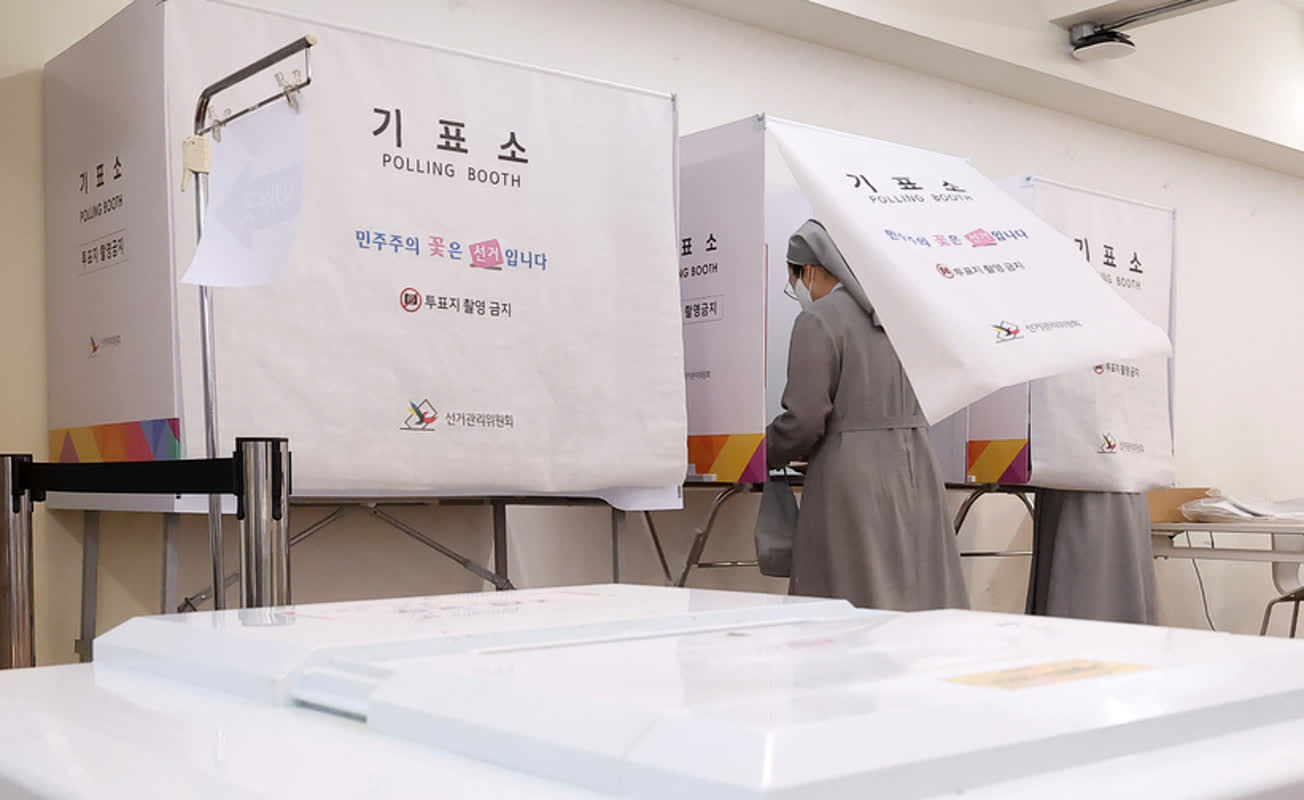
![[Photo: Yonhap News]](https://contents-cdn.viewus.co.kr/image/2026/02/CP-2023-0070/image-75d8cce5-58bb-4b15-bd85-cf864d0500aa.jpeg)
The Supreme Court and political circles are at loggerheads over the proposed introduction of a constitutional complaint system against court rulings. As the Democratic Party of Korea announces plans to process related bills this month, the Supreme Court has officially opposed the move, stating to Congress that “it cannot be implemented through legislation alone without constitutional amendments.”
According to political sources on the 10th, the Supreme Court’s Administrative Office submitted a 36-page opinion to Congress regarding the proposed partial amendment to the Constitutional Court Act, spearheaded by Democratic Representative Kim Ki-pyo. The National Assembly’s Judiciary Committee is reportedly considering tabling and processing the bill, which centers on introducing the constitutional complaint system, on the 11th.
The Supreme Court based its argument on Article 101 of the Constitution, which stipulates that “judicial power belongs to courts composed of judges” and that “the courts consist of the Supreme Court, as the highest court, and lower courts.” The Supreme Court contends that “the Constitution sets limits for appeals to conclude at the Supreme Court,” arguing that “creating an appeal process beyond the Supreme Court through legislation alone contradicts the constitutional framework.” They maintain that, regardless of policy merits, the current constitutional structure does not permit such a system.
From a policy standpoint, the Supreme Court also expressed reservations. They argue that introducing constitutional complaints would effectively create a “four-tier judicial system,” leading to repeated trials and prolonged litigation, potentially weakening national competitiveness. The Supreme Court assessed that “the likelihood of the Constitutional Court overturning a Supreme Court decision is realistically very low,” describing the proposed system as “a high-cost, low-efficiency measure that merely delays the final resolution of cases.” They added that many cases would likely be dismissed at the preliminary review stage, ultimately limiting the impact to a few politically or socially significant cases.
The Supreme Court also highlighted concerns about the power dynamics between itself and the Constitutional Court. They emphasized that the Constitution defines ‘Chapter 5: Courts’ and ‘Chapter 6: Constitutional Court’ in parallel, distributing authority horizontally between the two institutions. This differs from structures like Germany’s, where the Constitutional Court holds supreme judicial authority. They also cited previous Constitutional Court decisions that upheld the constitutionality of current regulations excluding court rulings from constitutional complaints.
A provision in the bill allowing for the suspension of final judgments has also become contentious. The Supreme Court warned that this could undermine legal stability. For instance, questions arise about whether a constitutional complaint could be filed alongside a request to suspend a final judgment in cases of election-related crimes, or whether a convicted criminal should be released based on a suspension decision.
The Supreme Court also cautioned that constitutional complaints could be misused as a tactic to delay litigation. They expressed concerns that if losing parties repeatedly file complaints and suspension requests, it could throw the entire judicial system into disarray.
The debate over introducing constitutional complaints against court rulings has evolved beyond a simple question of establishing a new system. It now encompasses constitutional issues regarding the balance of power between the Supreme Court and Constitutional Court, the structure of final appeals, and the stability of final judgments. With political circles pushing for swift legislation and the judiciary publicly intervening, intense debates are expected as the bill moves forward.














Most Commented