
Political Landscape Shift: Why ‘Political Realignment’ is No Longer Relevant in Korea
Daniel Kim Views
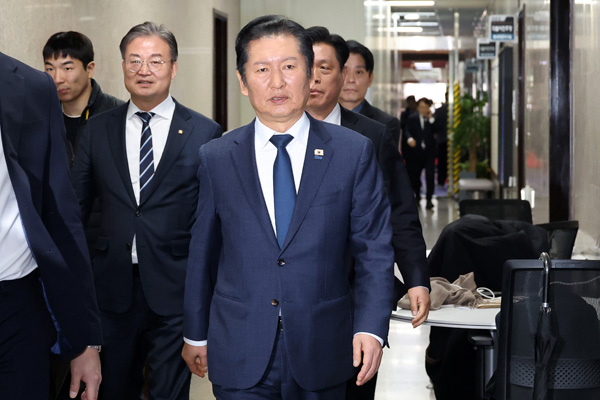
The phrase ‘political realignment’ has become a rarity in today’s media landscape, though it was once ubiquitous. In essence, it often describes political factions reshuffling based on their interests. Historically, the media packaged this process as a crucial and inevitable political phenomenon.
Recently, the Democratic Party has been embroiled in heated debates over a potential merger. While the specifics should be worked out by the Democratic Party, the Cho Kuk Innovation Party, and their respective supporters, this situation has reignited discussions about ‘political realignment.’ It’s concerning that even those within the progressive camp seem to misunderstand that this concept is no longer relevant in today’s political climate.
The framework of ‘political realignment,’ including mergers, primarily involves established politicians or parties – the professional political class, if you will. Naturally, their goal is to secure votes through elections and gain power. This objective is neither inherently wrong nor unethical; it’s simply the nature of politics.
The issue lies in the outdated perception that this was the entirety of politics or at least its most critical aspect. This mindset allowed the media to frequently employ the term ‘political realignment.’
Within this framework, citizens were relegated to the role of spectators rather than active participants in the political process. As a result, their involvement was limited to supporting their preferred factions, making donations, or voting during elections.
It’s no coincidence that the current administration’s slogan is “People’s Sovereignty Government.” Regardless of one’s support for the administration, this slogan reflects the public’s growing desire to move beyond the role of passive observers in politics. It aligns with the zeitgeist and contemporary trends in civic engagement.
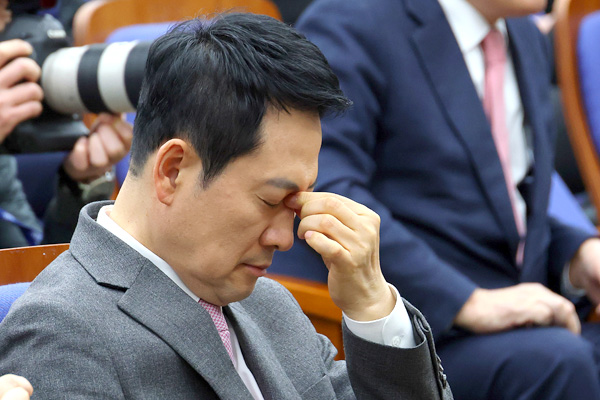
The People Power Party is not immune to this shift. When the Chosun Ilbo criticized the party’s current leadership, a conservative YouTube personality directly challenged the critique, garnering support from many People Power Party supporters. This scenario, unthinkable in the past, is now commonplace across the political spectrum.
Given this new reality, even among the post-traditional media landscape of YouTube, we’re seeing a distinction between more authoritative content creators and those with a different approach. While “authoritative” may not be the perfect descriptor, there’s a clear differentiation between YouTubers who closely align with public sentiment and those who position themselves as thought leaders, slightly ahead of the curve.
Consequently, the ‘political realignment’ framework is now obsolete. Instead, themes of political reform and civic efficacy dominate South Korea’s political discourse in 2026. Citizens are fundamentally disinterested in the merging or splitting of political factions. They’re focused on reforming outdated political practices and finding ways to ensure their voices are heard and acted upon in the political process.
It’s perplexing that the political establishment struggles to grasp this evident reality. This disconnect suggests that entrenched interests often become trapped in their own echo chambers, regardless of political affiliation. I strongly urge the political sphere to proactively pursue urgent reforms that resonate with the spirit of our times and enhance civic engagement and political efficacy.










Most Commented