
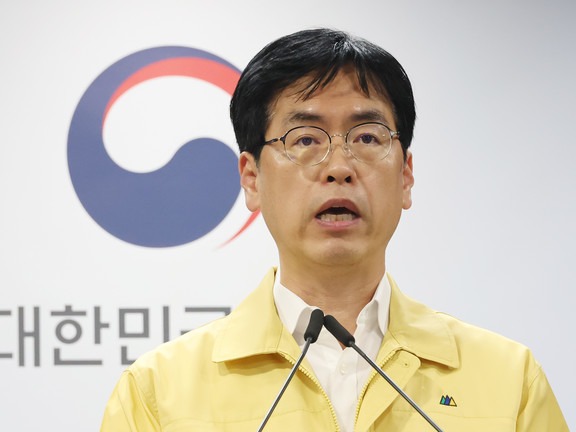
Today Korea=Reporter Kim Si-on | Deputy Minister Kim Min-jae of the Interior and Safety Ministry suggested that the scale of financial incentives for integrated local governments, formed through administrative consolidation among metropolitan areas, could decrease if the integration is delayed.
Kim made this statement on February 9 during a legislative hearing on the ‘Bill for Administrative District Integration’ at the National Assembly’s Administrative Safety Committee. He was responding to questions from Representative Lee Seong-gwon of the People Power Party about the progress of Busan and South Gyeongsang Province integration efforts.
Addressing Rep. Lee’s concern about potential disadvantages for regions if integration is delayed, Kim stated, “If administrative integration occurs three years from now, we may not be able to provide all four years of incentives. It’s possible that only one year of support would be available.”
This implies that if the administrative integration process extends into the next year, the government might not fully deliver on its promised financial incentives of up to 20 trillion KRW (15 billion USD) over four years.
Rep. Lee strongly criticized the government, saying, “It doesn’t seem like the government is leading the administrative integration at the institutional and systemic level.” He added, “This sounds like pressure, suggesting there might be no ‘leftovers’ if decisions aren’t made before the local elections.”
While Kim firmly denied such intentions, Rep. Lee persisted, pointing out, “There’s no clear plan for securing resources after the four-year support ends.”
Kim explained, “The financial incentives are meant to catalyze integration,” and disagreed with the notion that they hadn’t considered the period beyond the initial support.
Previously, the government announced plans to provide up to 20 trillion KRW (15 billion USD) in financial incentives over four years, at 5 trillion KRW (3.75 billion USD) annually, for special cities formed through metropolitan administrative consolidation.
With local elections approaching in June, Kim also expressed that a ‘pre-integration, post-refinement’ approach is a realistic alternative to expedite administrative integration discussions.
He stated, “While perfect preparation before integration is ideal, considering the local election timeline, I believe it’s most appropriate to decide on integration first and address any shortcomings later.”
Regarding individual bills being introduced for each region pursuing integration, Kim noted, “Common special cases agreed upon with the government can be processed quickly.” He added that regional special cases could also be accommodated, with adjustments possible even after the integrated government launches on July 1.
Meanwhile, administrative integration discussions are gaining momentum beyond Busan and South Gyeongsang, with Gwangju Metropolitan City and South Jeolla Province pushing for the establishment of the ‘South Jeolla-Gwangju Integrated Special City.’
Both regions are continuing discussions in the National Assembly to enact special laws for integration. A recent point of contention is the concern over key special provisions being reduced or rejected during the central government review process.
The local governments of South Jeolla and Gwangju are making every effort to ensure that the integrated special law incorporates substantial authority transfers and financial-administrative special provisions during the National Assembly review process.











Most Commented