
Lee Gae-ho Unveils Ambitious Plans for Jeonnam-Gwangju: 3 Key Strategies for Economic Transformation
Daniel Kim Views
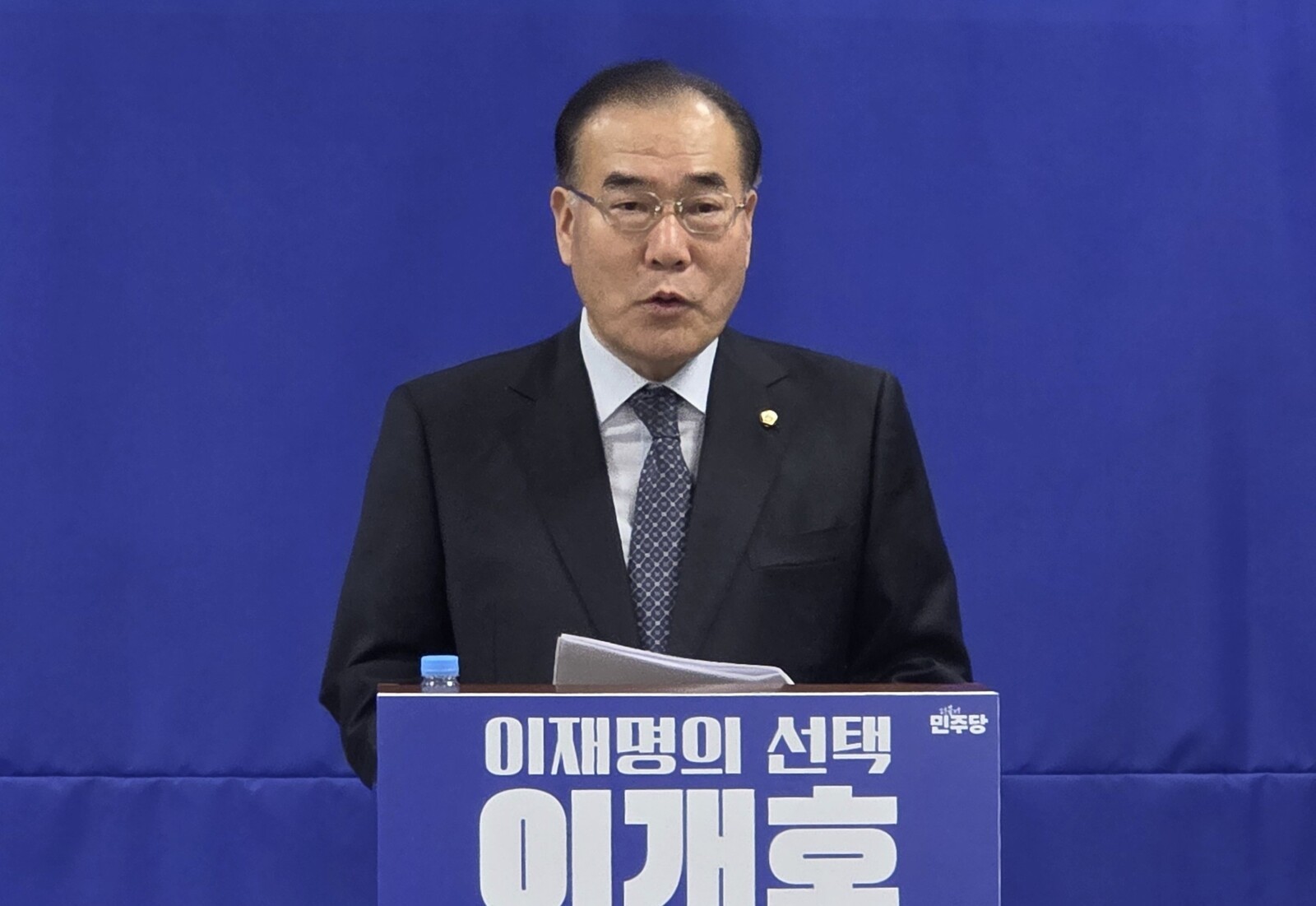
Lee highlighted his 45 years of administrative and political experience, including 31 years in public service, four terms as a congressman, and his tenure as Minister of Agriculture, Food and Rural Affairs, as his primary strengths.
He particularly emphasized his role in designing key policies of the current administration, such as including nursing care costs in health insurance and the “Create 10 Seoul National Universities” initiative, during his time as chair of the Democratic Party’s policy committee. Lee also pointed to his experience as the first special envoy to India for President Lee Jae-myung, asserting that this background makes him uniquely qualified to secure support from the federal government.
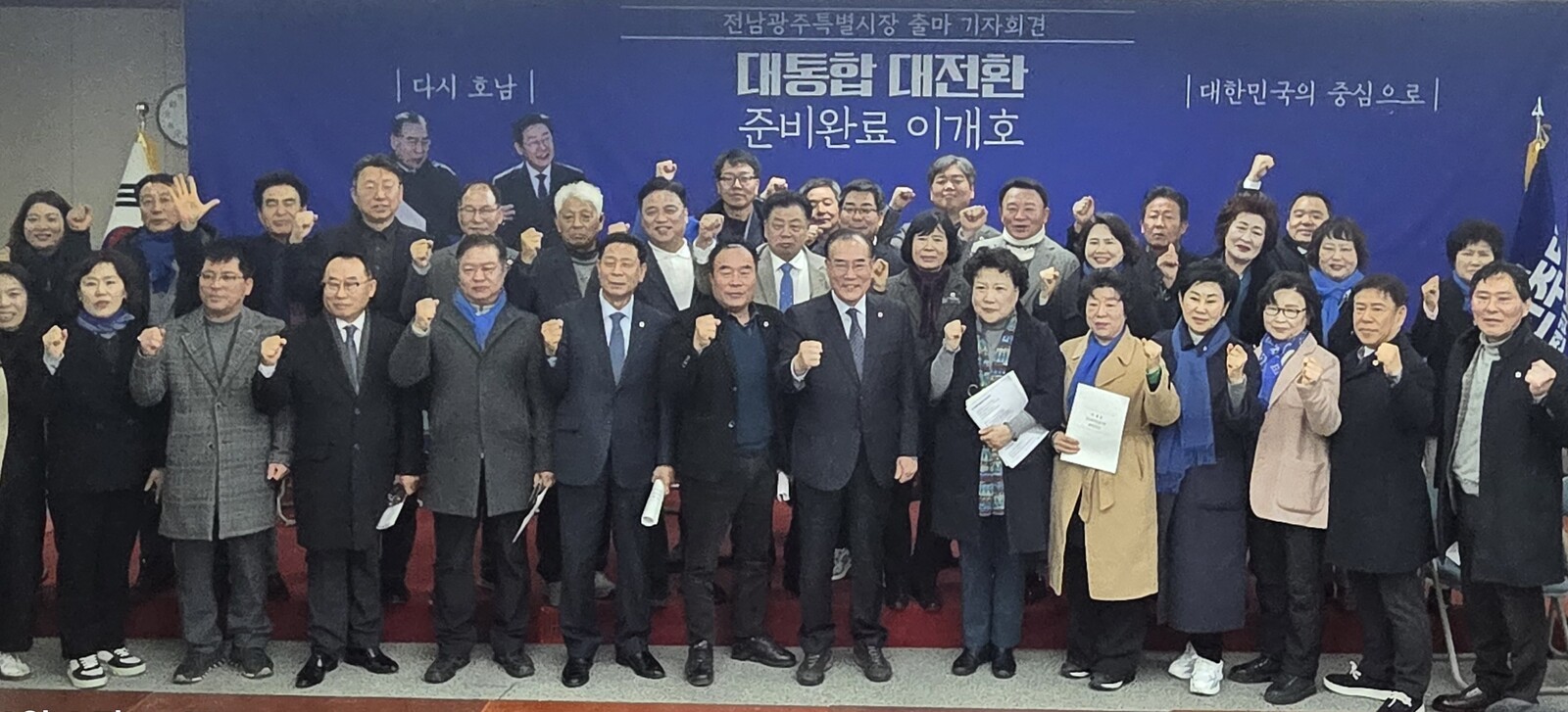
Following the press conferences at the Jeonnam Provincial Council and Gwangju City Council, Lee Gae-ho posed for a commemorative photo with his supporters.
Lee presented three major priorities and four regional development strategies as his key platform for achieving comprehensive unification and transformation in Jeonnam and Gwangju.
The three major priorities include: ▲ declaring energy sovereignty and establishing local production for local consumption, ▲ implementing a tiered electricity pricing system, and ▲ securing 20% of the 150 trillion KRW (about 112.5 billion USD) National Growth Fund and fostering the offshore wind industry. These initiatives aim to attract power-intensive high-tech companies, thereby revitalizing the local economy.
The four regional strategies involve: ▲ developing Gwangju into a “hub of cutting-edge technology” centered on a second AI cluster, a national AI research institute, and a collaborative semiconductor post-processing foundry; ▲ transforming Yeosu, Suncheon, and Gwangyang in eastern Jeonnam into the “world’s premier materials production base” by providing 50% support for carbon-neutral transition costs and establishing a steel research center; ▲ positioning southwestern Jeonnam as a nexus for renewable energy and marine logistics by creating a global RE100 industrial complex and enhancing Mokpo New Port’s capabilities; and ▲ introducing comprehensive farmer basic income and solar and wind pensions to create a sustainable foundation for integrated urban-rural development.
Lee expressed unwavering commitment to the integration process, stating, “Unification is both a mandate from our citizens and a historical imperative.” He pledged to abstain from all future elections should the integration fail, demonstrating his dedication to the cause.
Addressing the contentious issue of the integrated government office location, Lee proposed, “Gwangju should focus on urban management, culture, and construction, while Jeonnam should oversee industry, economy, agriculture, and environmental affairs.” He suggested rotating the main administrative office, which handles critical functions like personnel and budgeting, between Gwangju and Jeonnam every four years to ensure equitable representation.
Lee Gae-ho concluded by saying, “Politics should be about compassionate service, not cold power. I am committed to steadfastly pursuing the path of integration, starting from the grassroots level, to establish the southern capital of South Korea.”









Most Commented