
How Jeonnam-Gwangju’s Administrative Integration Could Transform South Korea: Key Insights from Lawmaker Min Hyung-bae
Daniel Kim Views
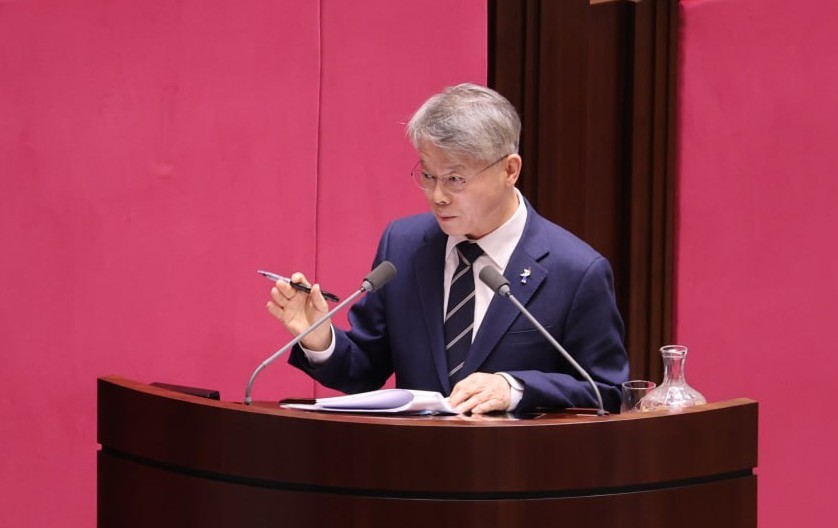
During the National Assembly’s political question-and-answer session on March 9th, Rep. Min emphasized to Prime Minister Kim Min-seok that the integration of Gwangju and South Jeolla represents more than a simple administrative merger. It signifies a major shift in national governance, challenging the Seoul-centric system.
Min highlighted that the Honam region is the only area in the country experiencing negative growth and severe youth exodus. He pressed the Prime Minister on the reasons behind this trend. In response, PM Kim officially acknowledged that this situation stems from the region’s marginalization during industrialization, admitting it as a state failure.
Rep. Min argued, “If the state is responsible for the cause, it must also be responsible for the solution.” He urged the government to apply President Lee Jae-myung’s governance philosophy of “special compensation for special sacrifices” and “greater support for areas farther from the capital” to integration policies.
Min focused intensely on financial support measures crucial for driving the Gwangju-South Jeolla integration. PM Kim responded, “The Ministry of Finance and other financial authorities are running various simulations. We will definitely arrange separate financial support. The President is strongly committed to this, so there’s no need for concern.”
This statement is viewed as an official confirmation of government financial incentives, regardless of the bill’s passage.
Min scrutinized 119 key special provisions, including energy, offshore wind power, and green belt release, which government departments had deemed unacceptable. He stressed the need for region-specific strategies rather than uniform equality, eliciting a promise from PM Kim to “work together on these issues.”
Additionally, Min proposed the concept of a “Southern New Industry Capital” and suggested establishing a dedicated control tower, similar to the Saemangeum Development Agency, called the “Southern New Industry Capital Development Agency.” He argued that the 300 trillion KRW (225 billion USD) investment promised by the business community should naturally flow to Gwangju-South Jeolla, given its renewable energy and AI infrastructure, urging the government to create a strategic environment.
Min also emphasized the need to relocate public institutions. He pointed out that just as Busan developed a new industrial ecosystem after the relocation of the Ministry of Oceans and Fisheries, Gwangju-South Jeolla should strengthen its industrial base by relocating institutions like the National Agricultural Cooperative Federation, the Ministry of Agriculture, Food and Rural Affairs, and the Ministry of Culture, Sports and Tourism.
Rep. Min Hyung-bae stated, “This integration is a process of restoring undermined constitutional values and reclaiming citizens’ power.” He asserted that the state has a constitutional obligation to ensure balanced regional development and protect the livelihoods of people in the Honam region.
Min was the first among candidates for the Gwangju-South Jeolla Integration Special Mayor to declare his candidacy last February. This government questioning session is expected to further solidify his leadership on integration-related policies.










Most Commented