
Will Japan’s Rightward Shift Strengthen Ties with South Korea? Insights from Experts
Daniel Kim Views
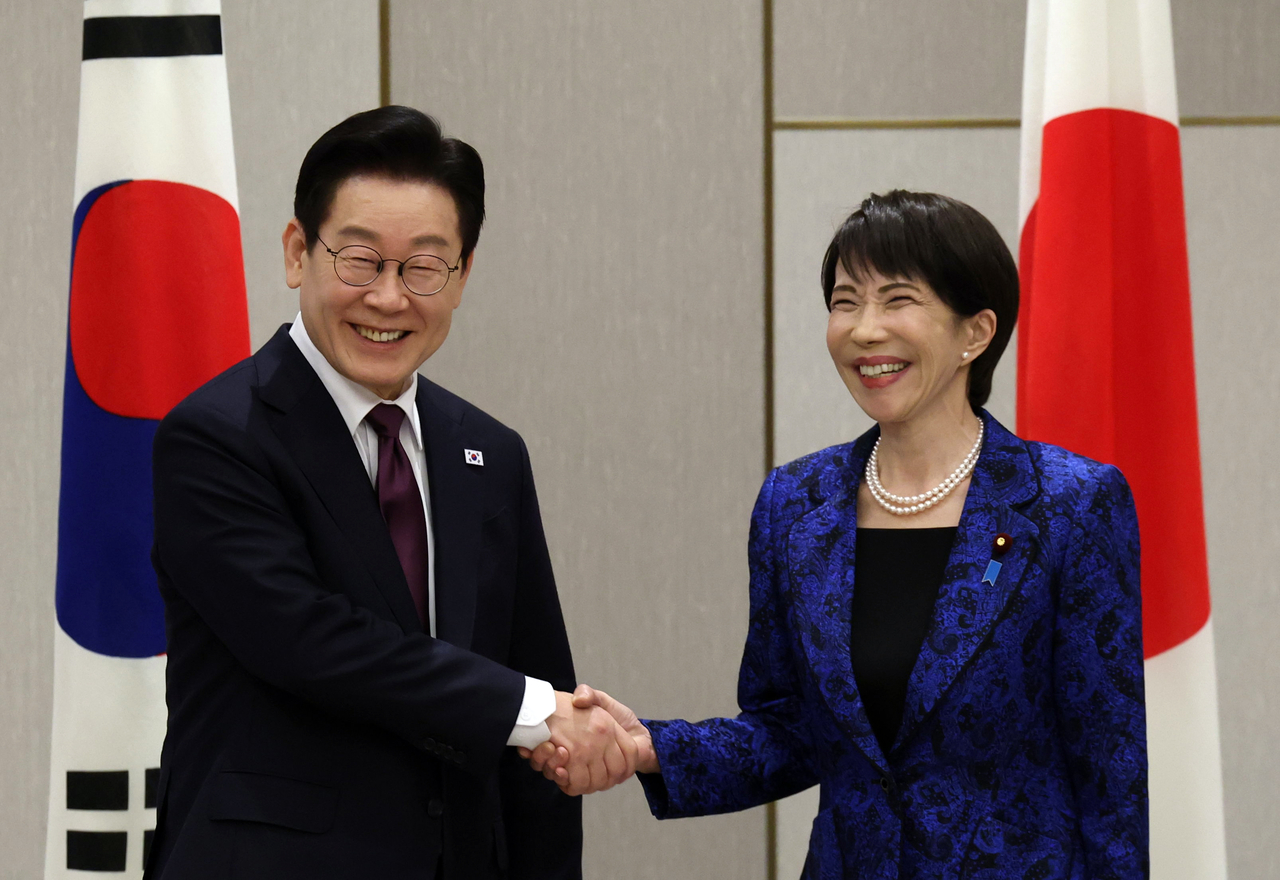
Concerns are mounting that Japan’s rightward shift may accelerate following the Liberal Democratic Party’s (LDP) landslide victory in the House of Representatives election on February 8. However, a U.S. expert on Japan suggests this outcome could actually have a positive impact on Japan-South Korea relations.
Andrew Oros, director of the Japan Program at the Stimson Center, offered his assessment of the LDP’s victory during a “Korean Media Day” event held at the center’s office in Washington, D.C. on February 9.
Oros noted that one factor contributing to the LDP’s success was its ability to attract some supporters from the far-right Japan Restoration Party. He stated, “This could be a positive development for Japan-South Korea relations.” Oros explained that former Prime Minister Shinzo Abe, who mentored current Prime Minister Sanae Takaichi, had some control over Japan’s nationalist right. While this occasionally led to diplomatic tensions, it also provided more predictability in terms of cooperation.
The election results, which gave the LDP a commanding majority of seats, suggest that it won’t be influenced by far-right elements. This could potentially enhance political and diplomatic stability, aiding in the improvement of Japan-South Korea relations. Oros commented, “This will pave the way for deeper cooperation between Japan and South Korea,” adding that it also opens up possibilities for trilateral cooperation among the U.S., Japan, and South Korea.
Regarding concerns that Prime Minister Takaichi might attempt to transform Japan into a nation capable of waging war through constitutional amendments, Oros offered a measured assessment. While acknowledging the possibility of constitutional reform efforts, he noted, “There are diverse opinions within Japanese society on what should be amended and how.”
He added, “If the amendment goes to a national referendum, other issues such as information disclosure and environmental concerns could also come to the forefront.”
Oros concluded, “While this issue generates interest, I don’t view it as a deeply significant matter at this time.”
At the same event, Kelly Grieco, a senior researcher at the Stimson Center, predicted that attempts to reduce troop levels or scale back the U.S. military presence in South Korea are likely following the potential start of a second Trump administration. She specifically noted, “Heavily armed ground forces are likely to be the primary target,” adding that such indications have been observed multiple times.
Grieco mentioned that instead of reducing U.S. Army personnel, there’s a possibility of bolstering Air Force or Navy capabilities. However, she indicated that “there’s disagreement within the Department of Defense regarding the enhancement of Air Force capabilities.”
Some believe additional Air Force bases could provide practical value for dispersed operations, while others are skeptical, arguing that South Korea wouldn’t allow their use in wartime scenarios.
Min-young Lee, a senior researcher at 38 North, projected that the likelihood of President Donald Trump meeting with North Korean leader Kim Jong Un during his scheduled April visit to China is “very slim unless the U.S. withdraws its demand for denuclearization.”











Most Commented