
Why the Labèque Duo’s Upcoming Concert in Korea is a Must-See for Classical Music Lovers
Daniel Kim Views
Translation result. 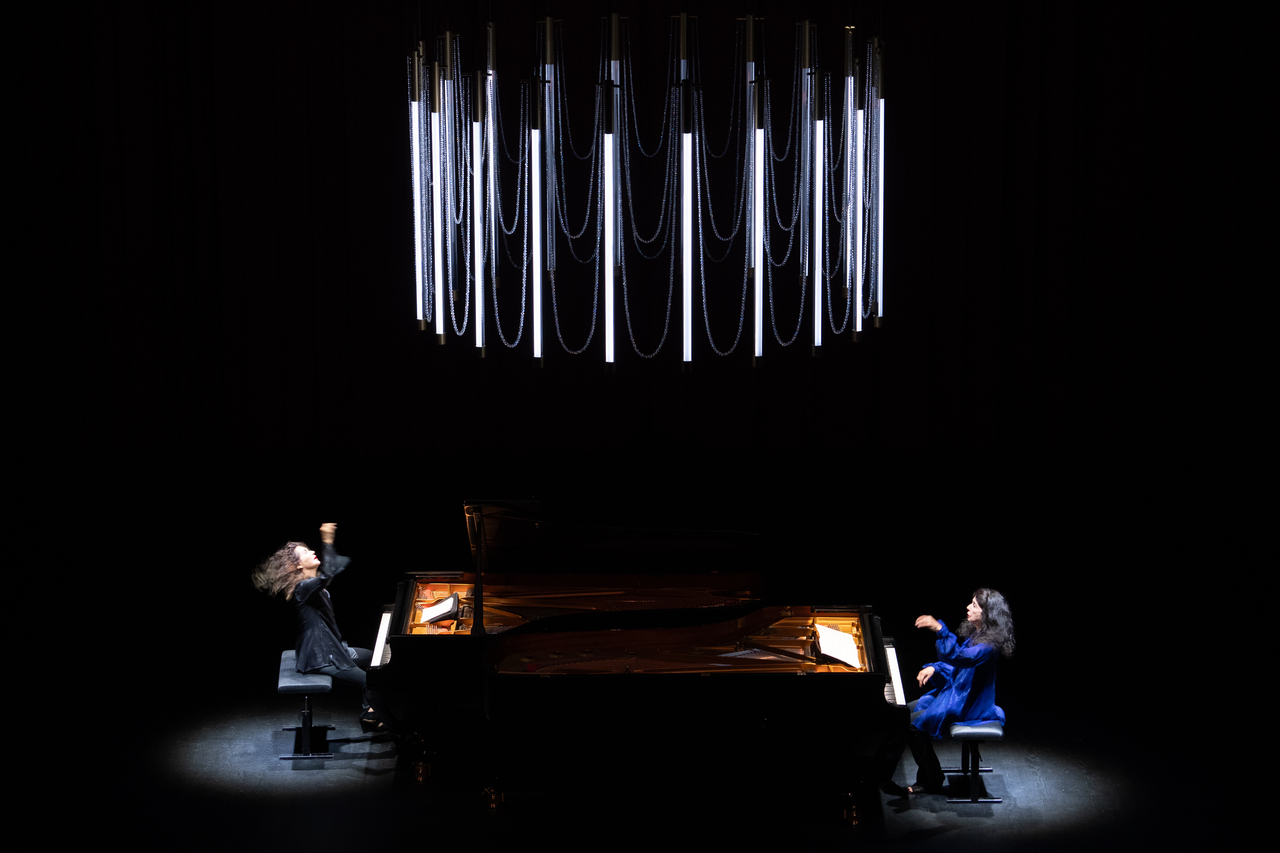 [Herald Economy = Reporter Go Seung-hee] The word telepathy seems made for them. Two bodies move as one; four hands overlap as if they were two. When 88 keys become 176, the music opens into a seemingly boundless universe. They connect without words or even a glance.
“A piano duo is about sharing the stage with someone you love and respect. I’ve never had the urge to pursue a solo career,” the Labèque sisters said.
The Labèque Duo, who have shared a keyboard for more than half a century, return to Korea. Sisters Katia Labèque and Marielle Labèque have existed as a single organism since they recorded their first album under conductor Olivier Messiaen in 1970.
Their musical daring never stopped. Time and again they have chipped away at the rigid walls of classical music to claim new ground. Since that Messiaen recording more than five decades ago, their range has spanned Gershwin ragtime to Philip Glass minimalism and even collaborations with artists such as Thom Yorke and Madonna. On this visit they will perform works from Philip Glass’s Jean Cocteau trilogy—Orphée, Beauty and the Beast, and Les Enfants Terribles.
In a written interview ahead of the Korea concerts, the sisters called Philip Glass “the greatest living composer today and the last romantic composer of our time.”
“People often label his music repetitive, but it’s actually finely wrought, deeply expressive and romantic,” Marielle said. “Repetition doesn’t mean playing the same phrase in exactly the same way each time. If you do that, the music won’t live.”
The sisters first encountered Glass’s music in 2008, when they were invited to a minimalism festival at King’s Place in London. Katia recalled the shock of seeing the score: layered rhythms and frequent shifts made the pieces technically demanding. Five years later they recorded Glass’s Four Movements for Two Pianos—what Katia describes as their first real step into his world.
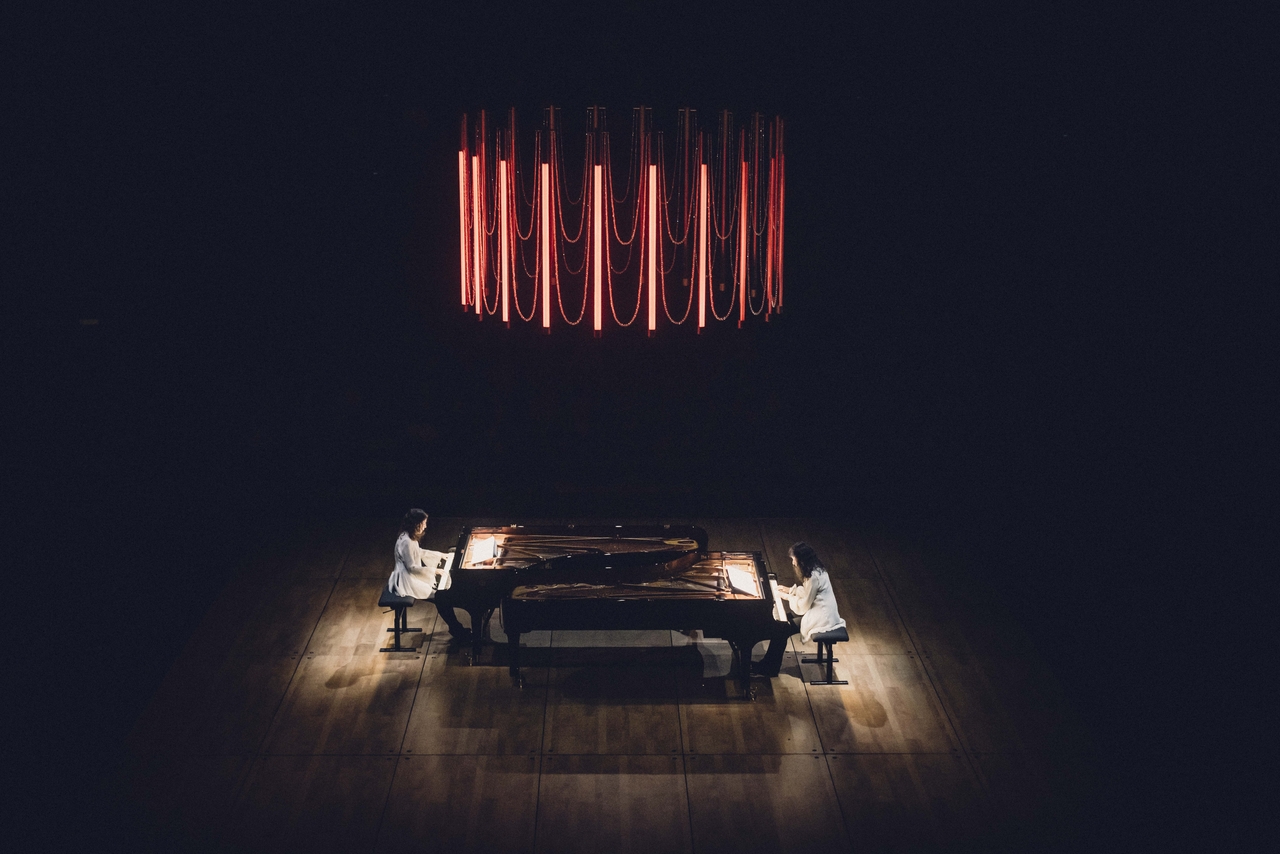 This production also features distinctive staging: two large pianos and a chandelier create an intimate, theatrical atmosphere. “They recreate the private worlds of the characters—the bedroom in Les Enfants Terribles, the castle in Beauty and the Beast,” Katia explained.
Although the program is the same one that premiered in Paris this March, each performance is its own thing. “Every concert is a new adventure—acoustics, audience response and the piano’s voice change from hall to hall,” Marielle said. “Music doesn’t come together like instant coffee; it needs time to ripen.”
Their career reads like a remarkable saga. In the late 1960s, when Katia was 18 and Marielle 16, Katia pushed against the conservative culture at the Paris Conservatory to win permission to perform as a duo. The school, focused on training soloists, initially refused to recognize their work as chamber music. After persistent appeals, the sisters became the first in the conservatory’s history to receive a degree in the piano-duo category. Recording with Messiaen marked a crucial early milestone. Finding someone who truly understood their music and wanting to stay together turned them into a shared destiny.
Their seemingly perfect synchronicity, paradoxically, comes from difference. Marielle provides a solid, forceful bass; Katia favors dazzling flourishes in the upper register. They maintain independent artistic identities while forming a close partnership. “We sometimes have intense arguments, but that tension is the only way to create meaningful art,” Katia said. “Contrast is necessary.” Marielle added, “Our differences are what have sustained the duo for so long.”
“I’ve never tried to play like Katia, and she’s never tried to play like me. We’re very different onstage and off. I think piano-duo music becomes more compelling when two distinct personalities come through together,” Marielle said.
They haven’t performed in Korea for 18 years. For Marielle, Korea is a place of musical exchange. She said her husband, conductor Semyon Bychkov, told her that during a Czech Philharmonic tour last year he was deeply moved and inspired by Koreans’ warm welcome—the audience’s youth and sophistication left a strong impression. She said she looks forward to meeting Korean audiences who bring deep understanding and affection for music.












Most Commented