
How ‘The Contact’ Revolutionized Korean Cinema with Iconic Soundtracks: A Deep Dive into Its Musical Legacy
Daniel Kim Views
Translation result.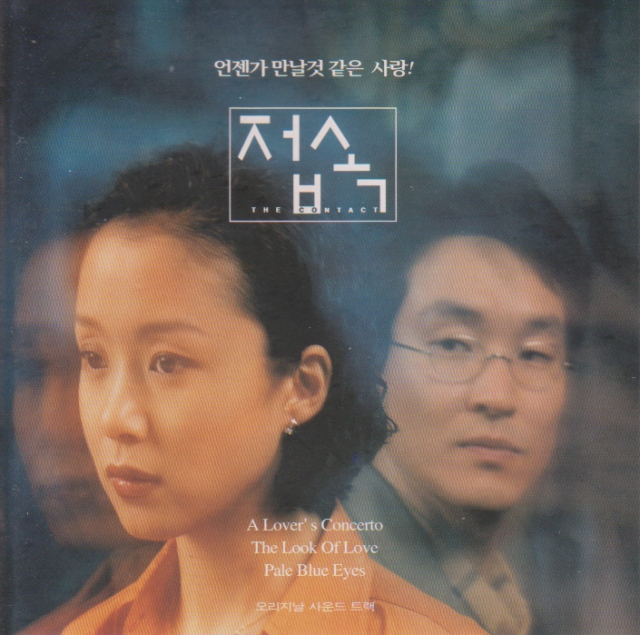
The 1997 film The Contact is a quintessential example of 1990s Korean cinema that simply wouldn’t be whole without its music. Another notable case is Seopyeonje (1993), which sparked a renewed interest in pansori. Though Seopyeonje began with rock influences, it ultimately presented Kim Soo-chul’s turn toward traditional Korean music as film music. Around the same era, Shiri (1999), which carried what was then a blockbuster-sized budget of 3 billion KRW (about 2.25 million USD), saw music director Lee Dong-jun employ a 70-piece orchestra to create a Hollywood-caliber sense of rhythm and space for a spy thriller.
The Contact, however, operates on a different wavelength. Its decisive achievement lies in a set of song choices so perfect they dominate the film’s other elements. Crafting original music has clear merits, but selecting powerful existing songs to amplify a film’s emotional core can be just as, if not more, effective.
◆ From PC networks to records as the link
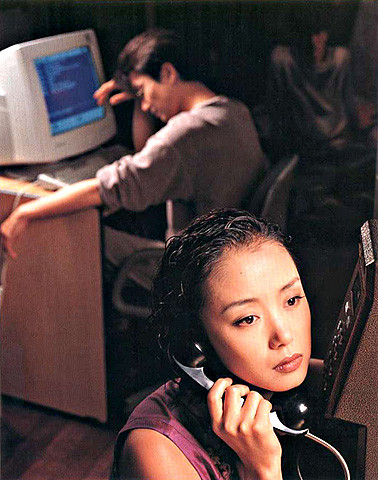
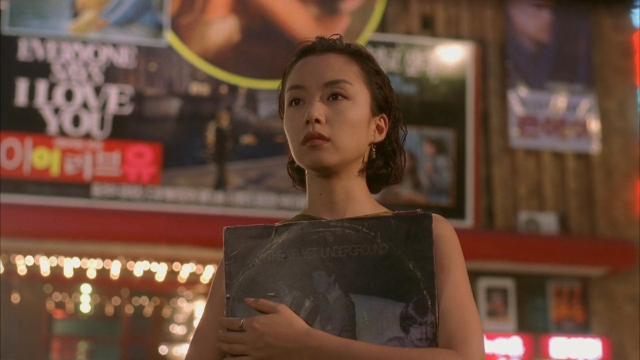
The Contact is often described as a romance born on a PC network, but a vinyl record plays an even more crucial role. Dong-hyun (Han Suk-kyu), a radio music-program producer, is unsettled when an ex sends him a record by mail. When he plays a track from that album on the air, Su-hyun (Jeon Do-yeon) hears it and becomes obsessed. She searches record stores for the album and comes up empty.
She posts on the PC network asking the radio show to play the song again. Dong-hyun, suspecting the requester might be his former lover, logs on and exchanges messages with Su-hyun. He soon realizes she’s not his ex, but they keep communicating online, drawn together by parallel wounds of lost and unrequited love.
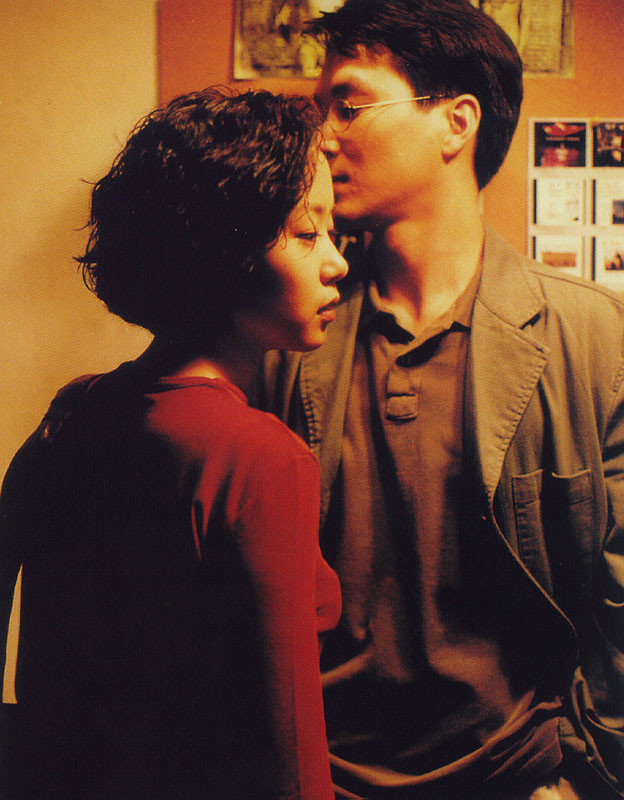
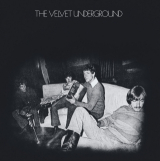
The track that links them on the PC network is “Pale Blue Eyes,” from The Velvet Underground’s 1969 third album. The record appears early in the film when it’s handed to Dong-hyun and returns at the end in Su-hyun’s hands as she waits—creating a circular, bookended structure. While the title The Contact might suggest the PC network as the obvious connector, the record that channels their feelings is the film’s true emotional bridge.
Just before the film’s end, the musical baton shifts in a striking, almost ceremonial way. Sarah Vaughan’s “A Lover’s Concerto” arrives like spring rain, opening with the lines, “How gentle is the rain that falls softly on the meadow.” After the melancholy tone of “Pale Blue Eyes,” this tender, blessing-like song closes the film.

◆ Breakout roles for Jeon Do-yeon and Jo Young-wook
The soundtrack, which also features Dusty Springfield’s “The Look of Love” among its highlights, is a standout achievement. Music director Jo Young-wook—who came not from a composer’s background but as a producer leading a composing team—built the film’s sound largely through meticulous song selection, an uncommon but effective strategy. Jo would later work frequently with director Park Chan-wook.
Beginning with JSA (2000), which incorporated Kim Kwang-seok’s “Letter from a Private,” Jo translated Park’s distinctive visual mise-en-scène into sound on films such as Oldboy (2003), Sympathy for Lady Vengeance (2005), and Decision to Leave (2022). He produced the opening guitar passage of “Neoege Nan Naege Neon” by Bicycle (the band) for the film Classic (2003) and helped shape the score for New World (2013), a landmark of Korean noir.

Jo Young-wook’s career in Korean film music effectively began with The Contact—it was his debut as a film music director. The film was also director Jang Yoon-hyun’s debut and marked Jeon Do-yeon’s transition from television to film. The Contact earned Jo the Korean Film Critics Association Award, won Jang the Best New Director prize at the Grand Bell Awards, and brought Jeon Best New Actress honors at both the Blue Dragon Film Awards and the Grand Bell Awards. In total, the film took home seven Grand Bell Awards, including Best Film, and two Blue Dragon Awards, including the top-grossing Korean film award.
The Contact’s OST officially sold more than 800,000 copies and, by some unofficial tallies, surpassed 1 million—still the best-selling Korean film soundtrack to date. The film itself drew roughly 1.5 million viewers nationwide from Chuseok through the end of 1997, making it a commercial success. For any Korean film aiming to win through music, The Contact remains a model worth emulating.











Most Commented