
Golden Holiday Traffic Surge: 5 Essential Tips for Safe Long-Distance Driving on South Korea’s Highways
Daniel Kim Views
Translation result.
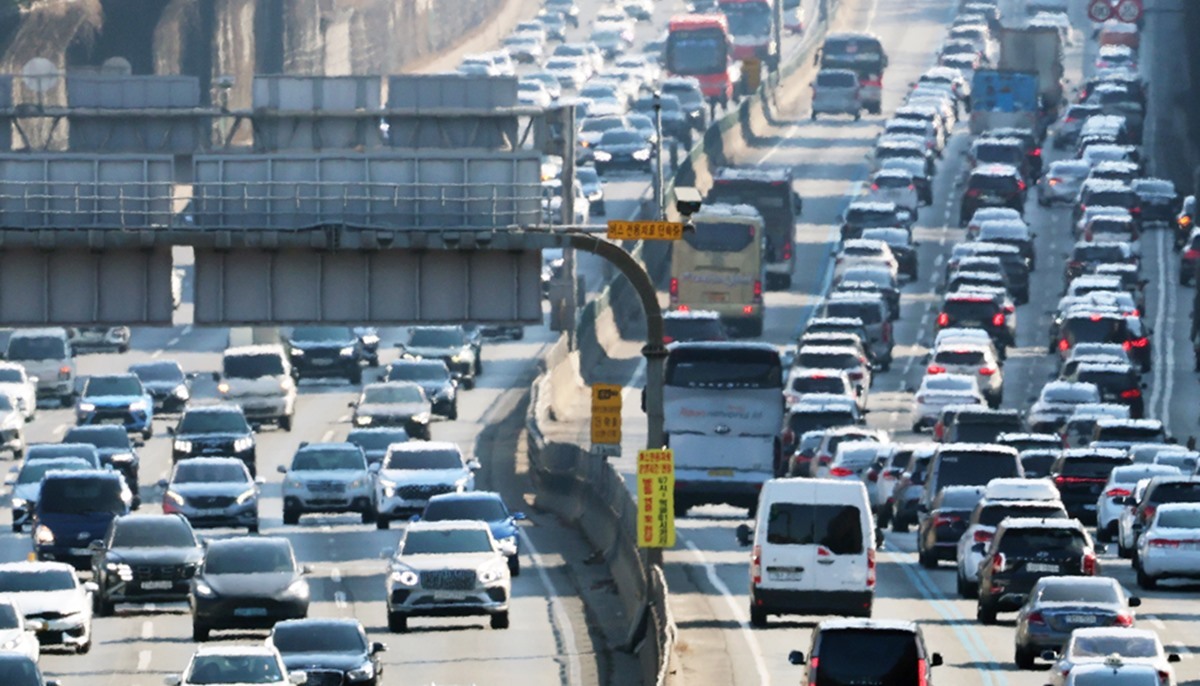
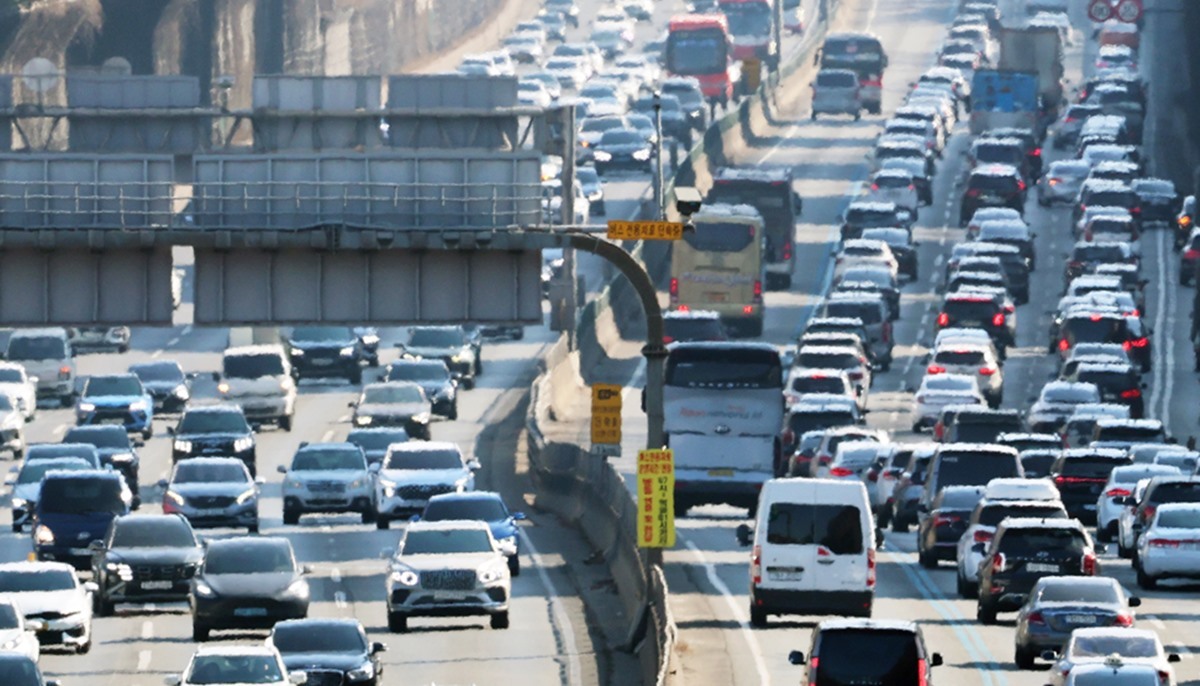
Traffic on Saturday, May 2 — the Golden Holiday’s second day — is expected to be heavier than on a normal Saturday. Springtime outings connected to the holiday are driving the increase in vehicles.
The Korea Expressway Corporation estimates some 5.81 million trips on national highways that day. It forecasts roughly 440,000 vehicles will depart the Seoul metro area for other regions, while about 460,000 will travel from those regions back to Seoul.
Traffic rises on the second day of the Golden Holiday — Seoul → Busan may take about 7 hours, 20 minutes
The corporation expects the Yeongdong and West Coast expressways to be the most congested in both directions. It says southbound congestion is likely to begin around 7–8 a.m., peak between 11 a.m. and noon, and ease around 10–11 p.m.
Northbound congestion toward Seoul is expected to start around 9–10 a.m., peak between 5 and 6 p.m., and clear by about 11 p.m.–midnight, the corporation added.
As of 10 a.m., estimated travel times from Seoul to major regional cities are: Busan, 7 hours 20 minutes; Ulsan, 7 hours; Gangneung, 5 hours; Yangyang, 3 hours 50 minutes (from Namyangju); Daejeon, 3 hours; Gwangju, 4 hours 40 minutes; Mokpo, 5 hours 50 minutes (from West Seoul); and Daegu, 6 hours 20 minutes.
Under the same conditions, estimated driving times by passenger car from regional cities to Seoul are: Busan, 5 hours 40 minutes; Ulsan, 5 hours 20 minutes; Gangneung, 2 hours 40 minutes; Yangyang, 1 hour 50 minutes (to Namyangju); Daejeon, 1 hour 50 minutes; Gwangju, 3 hours 20 minutes; Mokpo, 3 hours 50 minutes (to West Seoul); and Daegu, 4 hours 40 minutes.
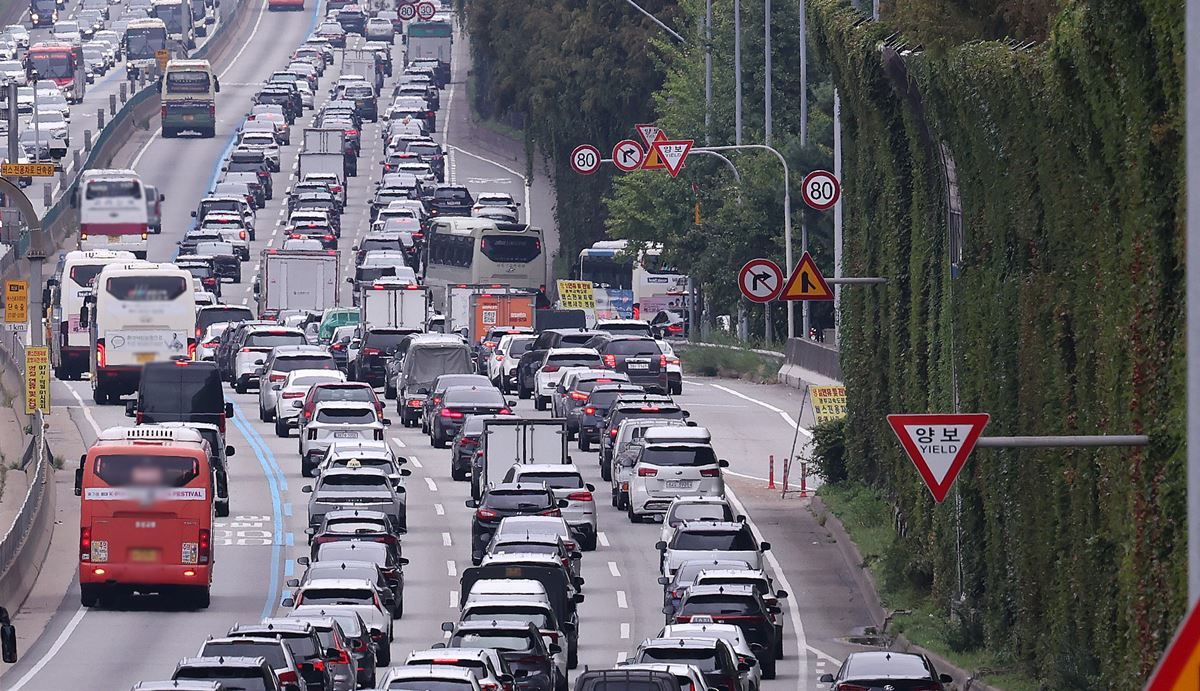
What to watch for on long highway drives?
When congestion forces you to spend long hours behind the wheel, maintaining focus is essential. Even in crawl traffic, keep your eyes on the road ahead and maintain a safe following distance to guard against sudden stops or vehicles cutting in.
In stop-and-go conditions, avoid hard acceleration and sudden braking. Smooth inputs on the gas and brake reduce the risk of collisions. Because slow, repetitive driving can lead to drowsiness, crack a window for fresh air or do light stretches to stay alert.
Managing physical fatigue is also vital. Stop regularly at rest areas or drowsiness-relief shelters to rest and stretch, which helps circulation. Stay hydrated, but avoid excessive caffeine — it can make fatigue worse once it wears off.
Finally, steer clear of smartphone use and other distractions; they can quickly lead to crashes. Following these basic safety measures will help you drive more safely and efficiently even in heavy traffic.









Most Commented