
On the 1st — Labor Day and the start of the May family holiday bridge weekend — highways across the country snarled as day-trippers flooded the roads.
The Korea Expressway Corporation estimated that roughly 6.05 million vehicles would travel the nation’s highways that day.
Roughly 460,000 vehicles were projected to leave the Seoul metropolitan area for the provinces, and about 480,000 were expected to head toward Seoul. The Gyeongbu and Yeongdong corridors, heading away from the capital, were forecast to be the most congested.
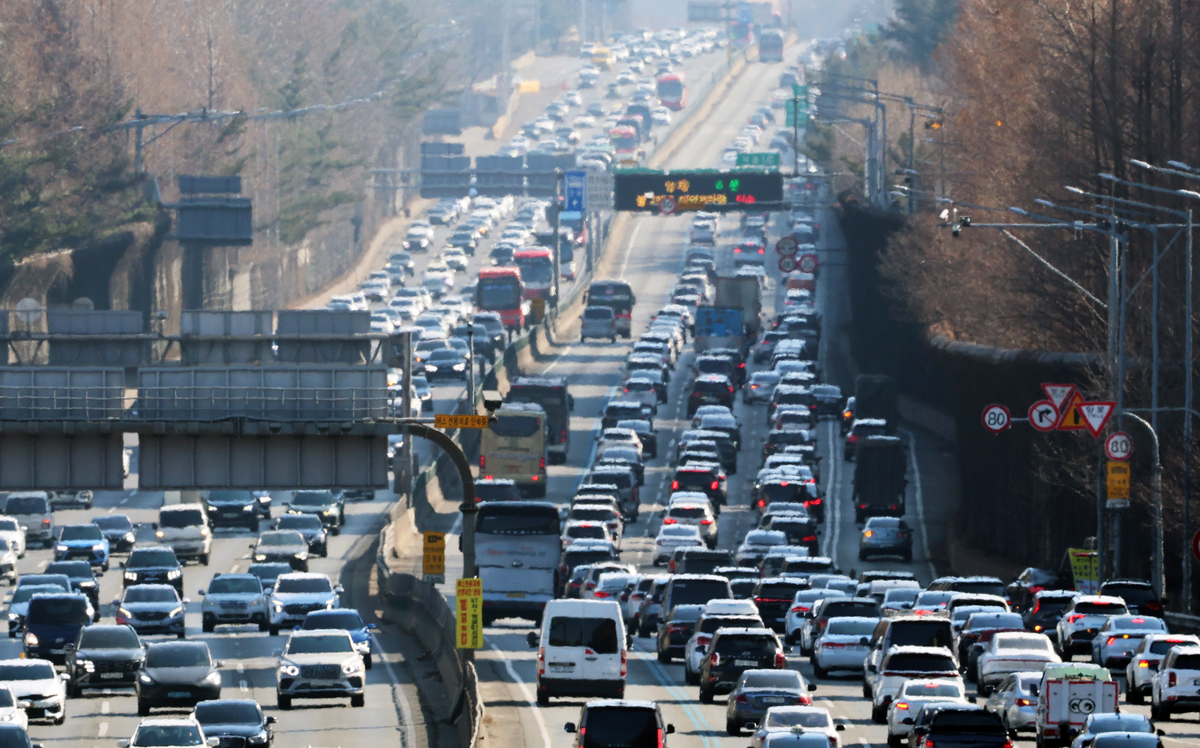
Outbound congestion was expected to begin around 6–7 a.m., peak between 11 a.m. and noon, and not ease until roughly 9–10 p.m.
Traffic heading into Seoul was forecast to start building around 9–10 a.m., peak between noon and 1 p.m., and should begin to ease around 10–11 p.m.
As of 10 a.m., estimated driving times from Seoul to major regional cities were: Busan, 8 hours 40 minutes; Ulsan, 8 hours 20 minutes; Gangneung, 6 hours 20 minutes; Yangyang, 4 hours 30 minutes (departing from Namyangju); Daejeon, 4 hours 20 minutes; Gwangju, 7 hours 20 minutes; Mokpo, 7 hours 40 minutes (departing from West Seoul); and Daegu, 7 hours 40 minutes.
In the opposite direction, estimated driving times from the provinces to Seoul were: Busan, 6 hours 50 minutes; Ulsan, 6 hours 30 minutes; Gangneung, 2 hours 40 minutes; Yangyang, 2 hours (arrival at Namyangju); Daejeon, 2 hours 20 minutes; Gwangju, 4 hours; Mokpo, 4 hours (arrival at West Seoul); and Daegu, 5 hours 50 minutes.









Most Commented