
Hyundai’s Genesis Unveils 6 New Models: What to Expect from the 2026 GV90 Electric SUV?
Daniel Kim Views
Streamlines structure to speed decisions and execution
Moves Genesis MEA and APAC responsibilities to regional HQs
Strengthens push into emerging markets including Europe and India
Plans six new models through the first half of next year
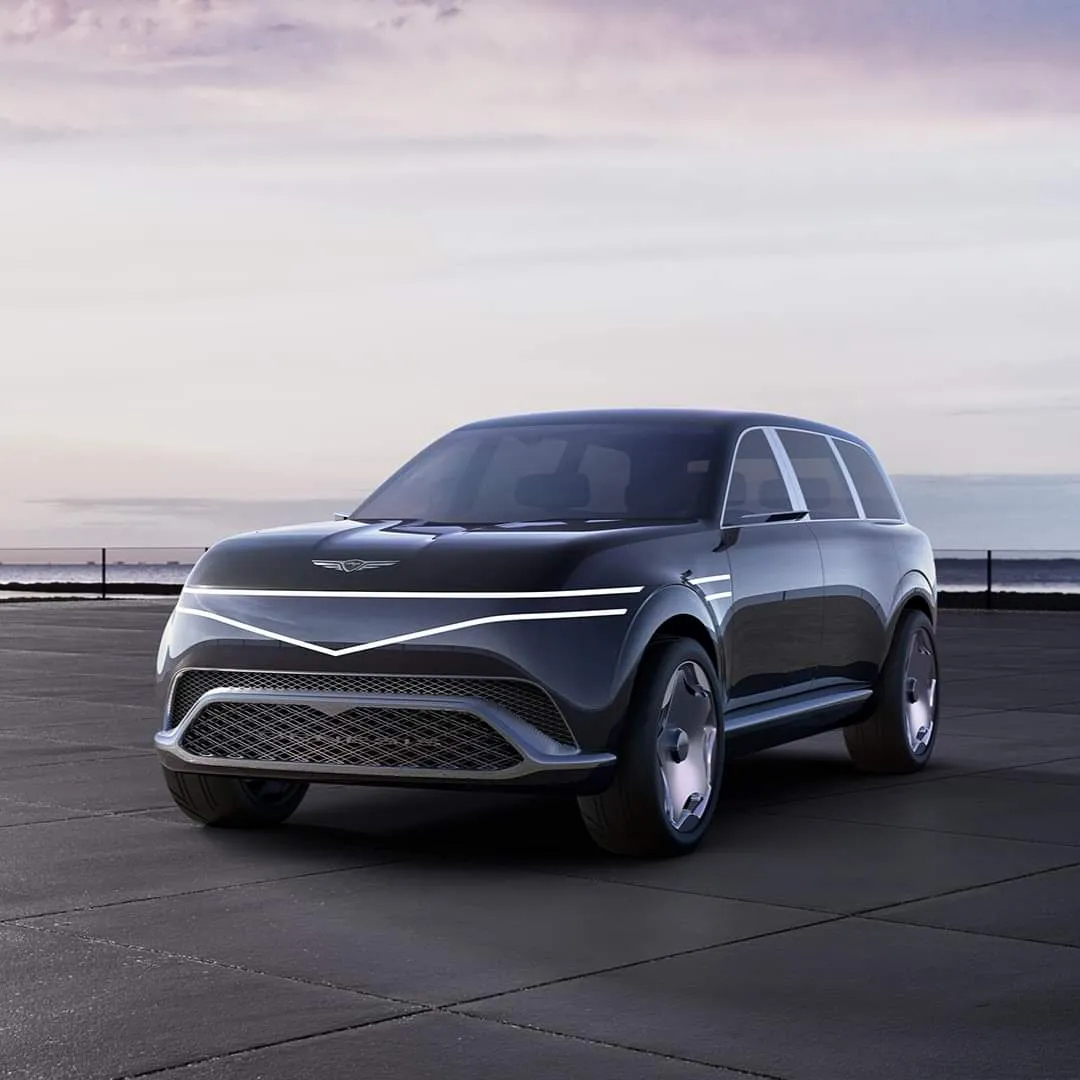
Hyundai Motor has substantially reorganized the Genesis business unit as it moves to accelerate the brand’s global expansion this year. The company eliminated two division-level organizations to slim the structure and increase the speed of decision-making and execution. Genesis plans to launch six new models at home and abroad through the first half of next year, led by the flagship SUV GV90.
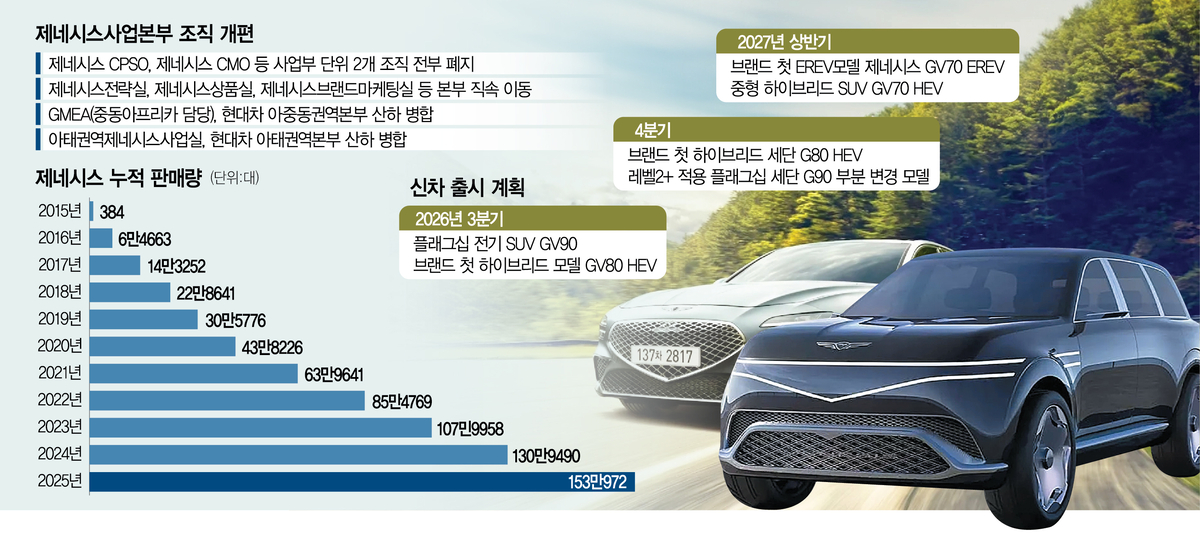
Industry sources said on the 12th that Hyundai disbanded two division-level teams within the Genesis business: Genesis CPSO, which handled brand and product strategy, and Genesis CMO, which was responsible for marketing. The unit-level offices that once reported to those divisions — Genesis Strategy Office, Genesis Product Office, Genesis Exclusive Customer Office, Genesis Brand Marketing Office and Genesis Spatial Experience Office — now report directly to the business headquarters, simplifying reporting lines.
Hyundai also pared back its global organization. The company judged that local subsidiaries are often better positioned than the head office to execute region-specific strategies in emerging markets, so it transferred the Genesis Middle East & Africa (MEA) unit under the Asia–Middle East regional headquarters. Hyundai also dissolved the standalone Asia-Pacific team and placed APAC oversight directly under the APAC regional headquarters, reflecting relatively limited sales in that region.
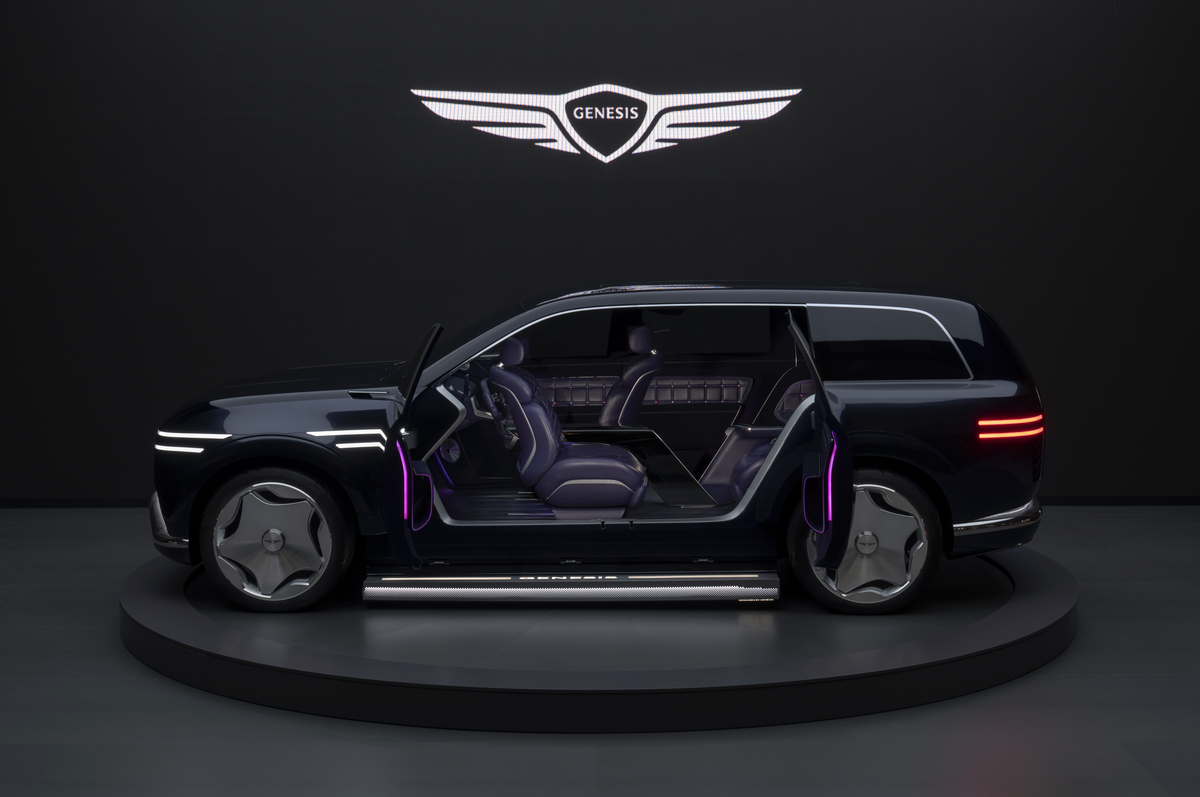
The reorganization was led by Lee Si-hyuk, who was promoted to head of the Genesis business unit late last year. A product specialist, Lee previously served as Genesis product chief, global product electrification chief and head of product for North America. He played a central role in building Genesis’s global product lineup when the brand launched in 2017.
Observers expect Lee to take a hands-on role in defining product concepts and go-to-market strategies within the leaner organization, drawing on his deep brand knowledge. With market conditions shifting rapidly — including a temporary EV demand slowdown — analysts say luxury marques must compete on performance and perceived value rather than price, so Hyundai emphasized faster responses to customer needs and stronger leadership.
Hyundai’s reorganization reflects its view that this year is a pivotal moment for Genesis’s global ambitions. Since the brand’s debut, Genesis has sold 1.5 million vehicles worldwide in 10 years. While the brand is well established in Korea and the U.S., awareness remains limited in Europe, China and India. Earlier this year Hyundai expanded Genesis’s European footprint beyond Germany, the U.K. and Switzerland by adding Italy and France and then Spain and the Netherlands, growing its presence from three to seven countries. The company is also considering entry into India and plans to focus on electrified models in China.
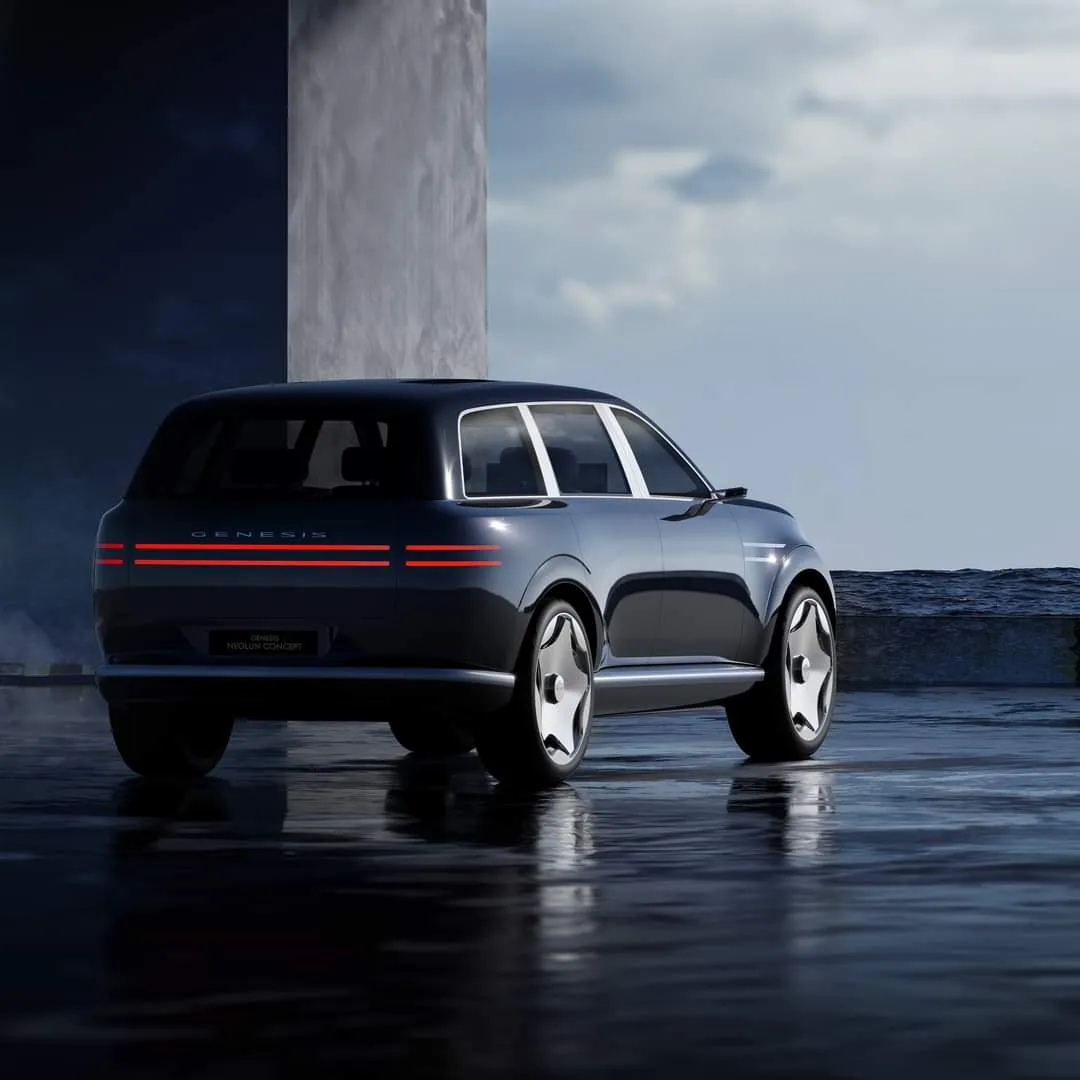
Hyundai plans an aggressive product push, rolling out six Genesis models domestically and internationally through the first half of next year. The first salvo is likely to be the large electric SUV GV90, expected as early as the third quarter. The GV90 is positioned as a showcase for Hyundai Motor Group’s electrification capabilities and will be the first vehicle to use the next-generation EV platform “e-M.” With a high-capacity battery pack, Hyundai estimates the GV90’s single-charge range could reach 800 km (about 497 miles).
In the second half of this year and into early next year, Genesis will introduce three of its first HYBE hybrid electric vehicle (HEV) models — the GV80, G80 and GV70 — and will debut the brand’s first range-extended electric vehicle (EREV) based on the GV70. Unlike a HYBE hybrid, where an electric motor assists an internal-combustion engine, an EREV uses an internal-combustion engine to generate electricity and recharge the battery. Hyundai says the EREV could achieve more than 1,000 km (about 621 miles) on a single charge.
Genesis is also positioned to lead Hyundai’s shift to software-defined vehicles (SDVs). Hyundai will apply the group’s first Level 2+ autonomous driving system to a facelifted G90 flagship sedan due in the second half of the year. Level 2+ still requires the driver to monitor the road but allows hands-off driving under specific conditions, such as on highways. Hyundai plans to introduce “Level 2++” technology — which the company says will be suitable for urban driving — beginning with the GV90 in 2028.










Most Commented