
Translation result.
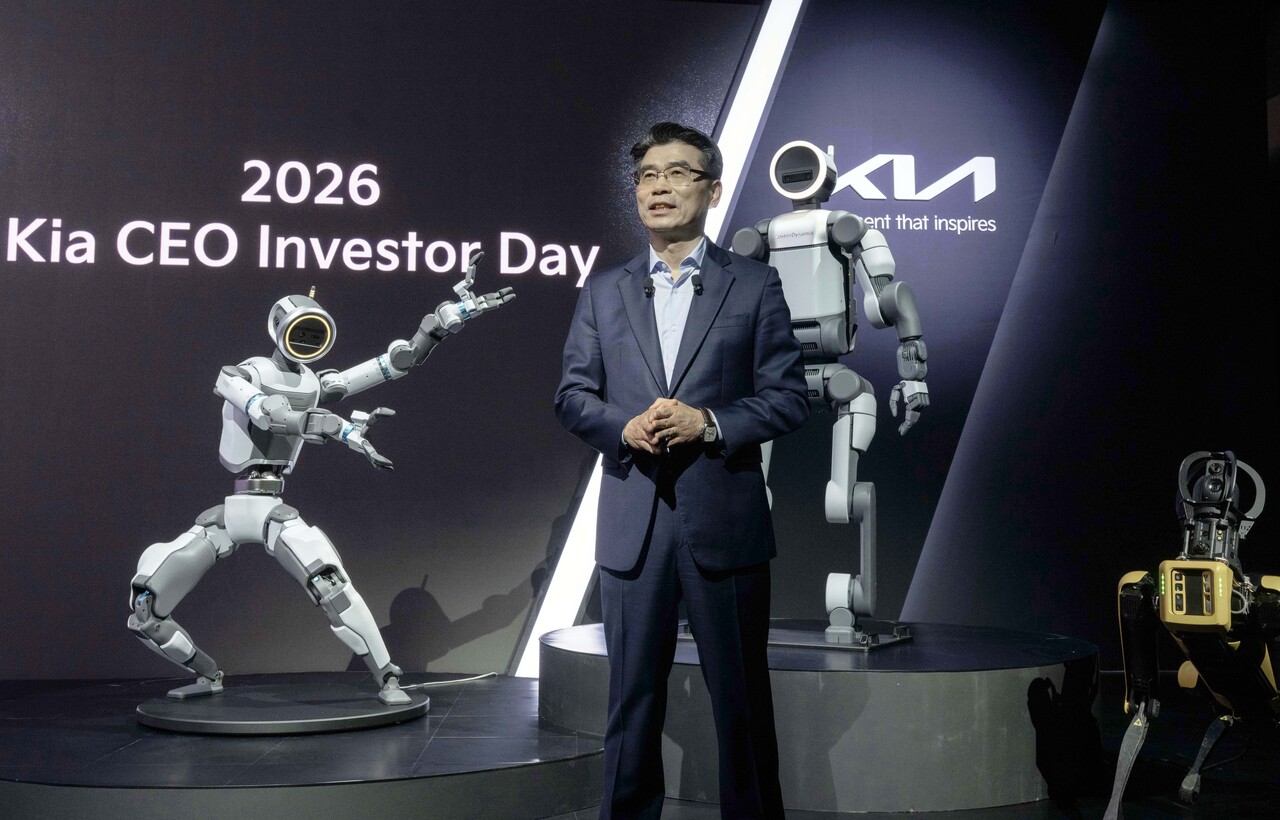
[The Public — Reporter Youngil Kim] On April 9, Kia presented the results of its shift toward a “sustainable mobility solutions” company and rolled out an upgraded mid- to long-term business plan.
Kia held its 2026 CEO Investor Day at the Shilla Hotel in Jung-gu, Seoul. The annual briefing gives investors, analysts and other market stakeholders a detailed look at Kia’s recent performance and strategic direction.
At the event, Kia sharpened its 2030 plan with concrete, model- and region-level strategies aimed at delivering above-market growth.
Hyundai Motor Group also used the forum to outline its autonomous-driving and robotics road maps.
Kia President Song Hosung said, “Building on five years of innovation across brand, electric vehicles (EVs), purpose-built vehicles (PBVs) and ESG, we expect our fastest growth in EVs, HYBE hybrids (HEVs), autonomous driving and robotics. Even as external uncertainties increase, we will proactively respond to market shifts with differentiated strategies.”
Kia’s 2030 mid- to long-term target: 4.13 million units (4.5% market share)… Continued expansion of ICE and HYBE hybrid lineups
Kia set a stepped sales target of 3.35 million units (3.8% market share) for 2026 and 4.13 million units (4.5% market share) for 2030.
To hit those goals, Kia plans to keep expanding both internal combustion engine (ICE) and HYBE hybrid lineups.
The company will introduce nine new ICE models by 2030 and operate 13 HYBE hybrid models by 2030, building a diversified powertrain mix. The sales allocation target is 1.98 million ICE units and 1.15 million HYBE hybrid units.
For ICE, Kia will continue rolling out core nameplates including this year’s Telluride and Seltos. For HYBE hybrids, it will sequentially launch models starting with Telluride HEV and Seltos HEV this year, followed by the K4 HEV and others to meet demand.
Kia expects HEV sales to rise from 690,000 units in 2026 to 1.1 million units in 2030, and plans to add around 400,000 units of production capacity over the medium term. It will also position plants in Korea, China, India and Mexico as key supply hubs for ICE and HYBE hybrid demand in emerging markets, enhancing a flexible global manufacturing footprint.
EVs: Targeting 1 million units (3.8% market share) — boost competitiveness, supply and accessibility
Kia aims to sell 1 million EVs in 2030, achieving a 3.8% market share and accelerating EV mainstream adoption.
Execution will focus on three priorities: strengthen EV product competitiveness, improve EV accessibility, and reinforce the EV supply chain.
To sharpen product competitiveness, Kia will expand its EV range from 11 models in 2026 to 14 by 2030: two passenger cars, nine SUVs and three PBVs.
To improve accessibility, Kia will extend ultra-fast charging coverage through partnerships with major charging alliances (Electrify America, IONNA, IONITY, etc.) and expand Hyundai Motor Group’s domestic ultra-fast charging brand, E-pit.
To shore up supply, Kia will make Korea a global hub for EV development and production while pursuing local manufacturing aligned to regional demand and policy: EV2 and EV4 in Europe, EV6 and EV9 in the U.S., and market-targeted EVs for emerging markets (Sirocco EV, Carens EV) in India.
PBV strategy built around four pillars: product, manufacturing ecosystem, solutions and channels
Kia’s PBV go-to-market will rest on four pillars: product, manufacturing ecosystem, solutions and channels.
PV5, Kia’s first PBV launched last year, sold about 8,500 units through year-end. Kia plans a full global rollout this year with an annual sales target of 54,000 units.
The PV5 lineup covers three base variants—Passenger (5/6/7-seat, WAV), Cargo (standard/long/high-roof) and Chassis Cab—and seven conversion models, including Prime, Light Camper, Camper, Crew Van, Open Bed, Interior Box Truck and Refrigerated Truck, to serve diverse commercial needs.
On manufacturing, Kia will operate the Hwaseong EVO Plant as a PBV-dedicated factory and link nearby conversion centers and global conversion partners to handle flexible, small-batch production.
On solutions, Kia will offer B2B-focused services built on a 12.9-inch IVI (in-vehicle infotainment) screen: specialized B2B apps, a fleet management system (FMS) with real-time vehicle monitoring, and a One Billing platform that bundles financing, maintenance, insurance and charging into a single payment flow.
On channels, Kia will operate PBV-dedicated dealers, websites and specialists (PBV Expert, PBV Master), and provide 24/7 customer support and maintenance to strengthen service across purchase and operation.
Kia plans to expand the PBV line with PV7 in 2027 and PV9 in 2029, building a full family and offering more than 40 body types to deliver tailored mobility solutions.
To reach 4.13 million units in 2030, Kia will use differentiated strategies for the U.S., Europe and emerging markets
Kia has defined region-specific strategies to achieve its 2030 sales goal of 4.13 million units.
In the U.S., Kia targets 1.02 million units and a 6.2% market share in 2030 by expanding its HEV lineup (from four to eight models), leaning on a full SUV portfolio to develop volume sellers, and entering the pickup segment.
In Europe, Kia plans to grow sales to 746,000 units and secure a 4.8% market share in 2030 by leveraging a full EV lineup, expanding PBV operations and strengthening its HEV offering.
For emerging markets—India, Mexico, APAC, the Middle East and Latin America—Kia targets 1.48 million units and a 6.6% market share in 2030, roughly 500,000 units above the 2025 baseline of 1.0 million.
Hyundai Motor Group autonomous-driving strategy — ① partner globally ② secure in-house capability
At the event, Hyundai Motor Group also unveiled its autonomous-driving and robotics strategies.
Hyundai Motor Group said that as AI advances, the competitive paradigm in autonomous driving is shifting from the superiority of individual technologies to the scale of data and how it is used. To respond, the group will form a Data Union with NVIDIA and leverage millions of global vehicle sales each year to collect real-world driving data. That will establish a virtuous loop—data collection, training, performance improvement and product deployment—that accelerates development.
The group will pursue two parallel strategies to accelerate commercialization and secure long-term leadership.
First, it will work with proven global partners to standardize sensors and systems early and rapidly bring production vehicles to market, delivering immediate value to customers.
Second, it will use driving data from mass-produced vehicles to continuously refine its in-house end-to-end (E2E) autonomous model, ensuring high safety and reliability through proprietary technology.
Under this approach, Kia plans to complete development of its first software-defined vehicle (SDV) featuring Level 2+ highway capabilities by the end of 2027, and to deploy Level 2++ functionality—covering both highways and urban environments—by early 2029.
Kia’s first SDV will integrate Hyundai Motor Group’s SDV technologies, including the CODA (Computing & I/O Domain-based Architecture) SDV architecture, the next-generation infotainment platform Pleos Connect, and the vehicle agent AI, Gleo AI.
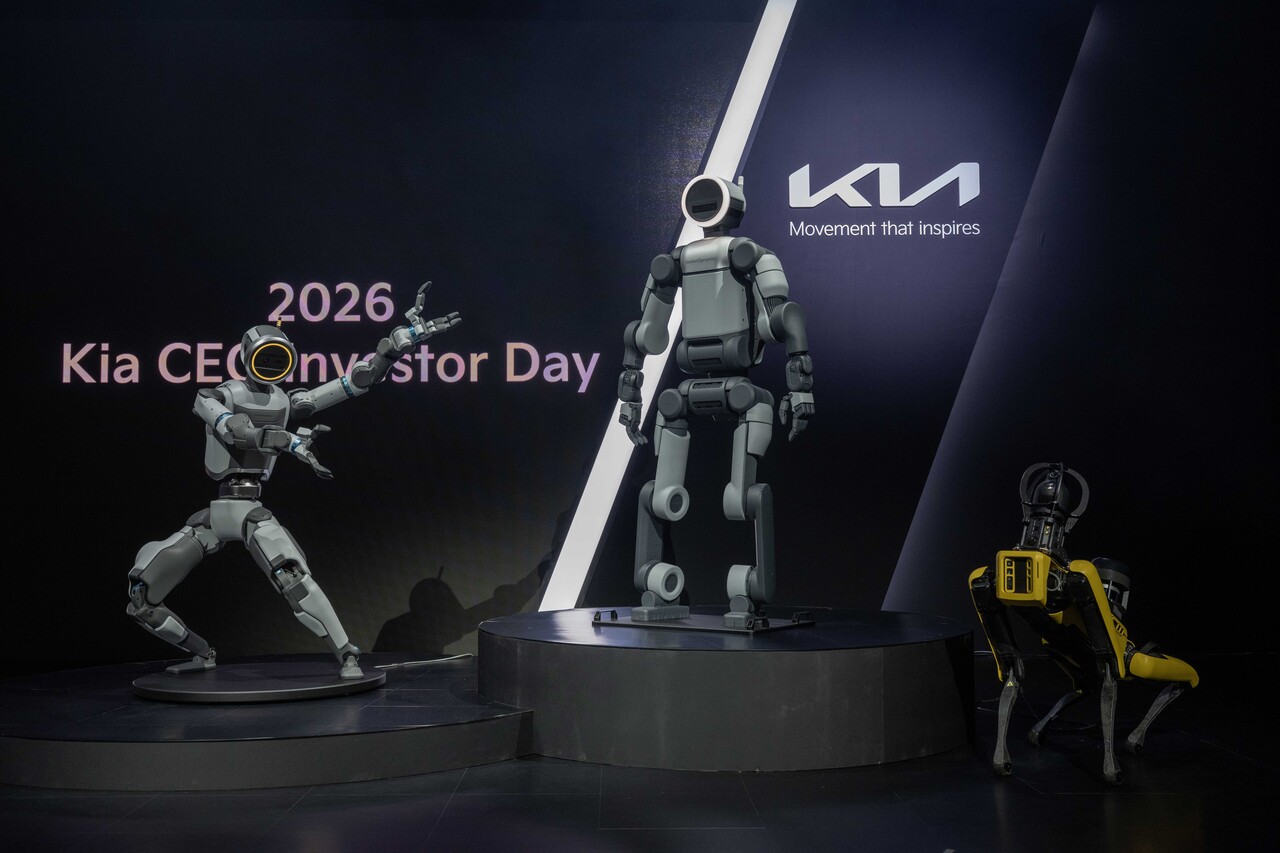
Hyundai Motor Group robotics strategy — Atlas to be deployed in U.S. plants in 2028–2029
Hyundai Motor Group is also moving to establish leadership in robotics.
Boston Dynamics, central to Hyundai Motor Group Robotics, aims over the next decade to make general-purpose robots mainstream, with a vision to create machines that can move anywhere, perceive their surroundings and manipulate objects.
To achieve that, the group will pursue three differentiated approaches: secure deployment demand and collect operational data by linking robots to Hyundai production sites; invest more than $500 million in AI infrastructure and talent and partner with organizations such as Google DeepMind and NVIDIA to build physical AI and VLA (Vision Language Action) capabilities; and realize economies of scale through the group supply chain, including collaboration with Hyundai Mobis on next-generation Atlas actuators.
Atlas deployment will begin with full-scale use at HM Plant America in 2028, followed by rollout to Kia’s Georgia plant (KaGA) in the second half of 2029, with phased expansion to other global factories. The group has identified 16 core manufacturing processes where robots can improve safety, productivity and quality.
Kia announces this year’s business plan and mid- to long-term financial targets… boosting shareholder returns
Separately, Kia set out detailed plans for the year and its medium- to long-term financial targets.
For 2026, Kia plans wholesale sales of 3.35 million units—about 7% growth year on year—and aims for a global market share of 3.8%, up 0.3 percentage points from last year.
This year’s financial targets are revenue of 122.3 trillion KRW (approximately 91.7 billion USD; up 7.2% year on year), operating profit of 10.2 trillion KRW (approximately 7.65 billion USD; up 12.4%), and an operating margin of 8.3% (an improvement of 0.3 percentage points).
For the medium term, Kia targets revenue of 150 trillion KRW (approximately 112.5 billion USD) with a 9% operating margin in 2028, and revenue of 170 trillion KRW (approximately 127.5 billion USD) with a 10% operating margin and 17 trillion KRW (approximately 12.75 billion USD) in operating profit by 2030.
Kia will continue to step up investments to secure future competitiveness. Capital expenditure for this year is planned at 10.1 trillion KRW (approximately 7.58 billion USD)—1.2 trillion KRW (approximately 900 million USD) more than last year. Compared with the previous five-year plan (2025–2029), the new 2026–2030 plan raises total investment by 7 trillion KRW (approximately 5.25 billion USD) to 49 trillion KRW (approximately 36.75 billion USD).
Investment in future-facing businesses—electrification, autonomous driving and robotics—will total 21 trillion KRW (approximately 15.75 billion USD), an 11% increase over the prior plan.
Kia also plans to strengthen shareholder returns. From 2026 through 2028, it has set a total shareholder return (TSR) target of at least 35% and will expand returns via dividends, share buybacks and cancellations.
A Kia spokesperson said, “Building on leadership in eco-friendly vehicles and HYBE hybrids, driving EV-led growth in advanced markets, improving emerging-market profitability through stronger products and continuous cost innovation, and advancing SDV and robotics-based manufacturing innovation, we will achieve our medium- to long-term objectives.”











Most Commented