
5 Key Reasons Why Zeekr 7X Could Be the Game-Changer for Premium Electric Cars in Korea
Daniel Kim Views
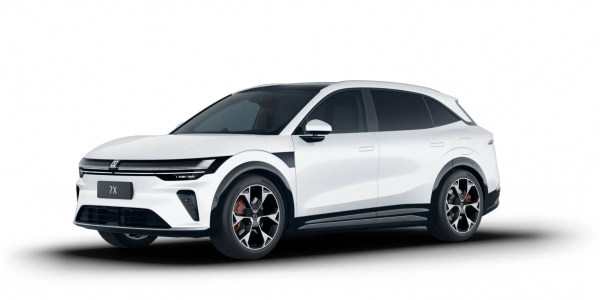
[Green Economy News = Jang Chang-hwan] Geely Automobile Group’s premium EV marque Zeekr is making a concerted push into South Korea with its mid-size 7X. The company is staking its entry on a “premium” positioning, and industry observers are watching to see whether it can meet the expectations of Korea’s discerning buyers.
Chinese cars have long carried a budget image in Korea. BYD’s arrival in January last year won consumers over by offering strong value, but the Zeekr 7X has attracted attention as a more fully realized premium offering even before its official launch. Its Nordic-inspired exterior, developed in line with design principles shared with Volvo and Polestar, has already drawn positive reactions from local EV enthusiasts.
A Zeekr Korea official told Green Economy News on the 8th that the company amplified emotional quality by combining Nordic minimalism with luxury materials, including premium leather seats. Since the Korean-market model is a facelift that reflects current trends, the company has high internal expectations for its design competitiveness.
Pricing will be the key variable for market success. Under Korea’s current EV subsidy rules, the subsidy is cut by 50% if a vehicle’s price exceeds 53 million KRW (about $39,750). Industry estimates place the 7X’s domestic launch price in the mid-50 million to low-60 million KRW range (approximately $41,250–$45,000).
Zeekr Korea said China retail pricing runs about 48 million KRW (about $36,000) for the entry model and about 60 million KRW (about $45,000) for a fully loaded version. The company is weighing price points that would secure full subsidy eligibility, but emphasized that finding the right balance between premium brand value and unit price is critical.
Tighter subsidy rules present another hurdle. Models using LFP (lithium iron phosphate) batteries are more price-competitive, but are likely to face reduced subsidies because of lower energy density and recycling value. To meet different customer needs, Zeekr plans to offer a higher trim equipped with a 100 kWh NCM (nickel–cobalt–manganese) battery.
Domestic expectations for driver-assist tech are also rising after exposure to systems such as Tesla’s FSD (Full Self-Driving). The 7X will ship with ADAS features but without LiDAR, so how reliably its urban driving assist and lane-keeping systems perform will be closely watched. Expanding service centers and after-sales infrastructure—also a factor in subsidy calculations—remains an urgent task.
Despite these challenges, Zeekr Korea expressed a bullish outlook. The company points to the way Chinese premium robot vacuums have come to dominate the home-appliance market here as evidence that Chinese brands can win consumers if they earn trust.
A Zeekr Korea representative said, “Chinese robot vacuums sell well here, which shows concerns about Chinese products have eased. We believe the 7X can help dissipate worries about Chinese cars. Rather than immediately chasing huge sales volumes, our priority is to raise brand awareness.”










Most Commented