
Hyundai’s Bold Shift: How New Mobility Services Will Transform the EV Market in 2026
Daniel Kim Views
Translation result.
|
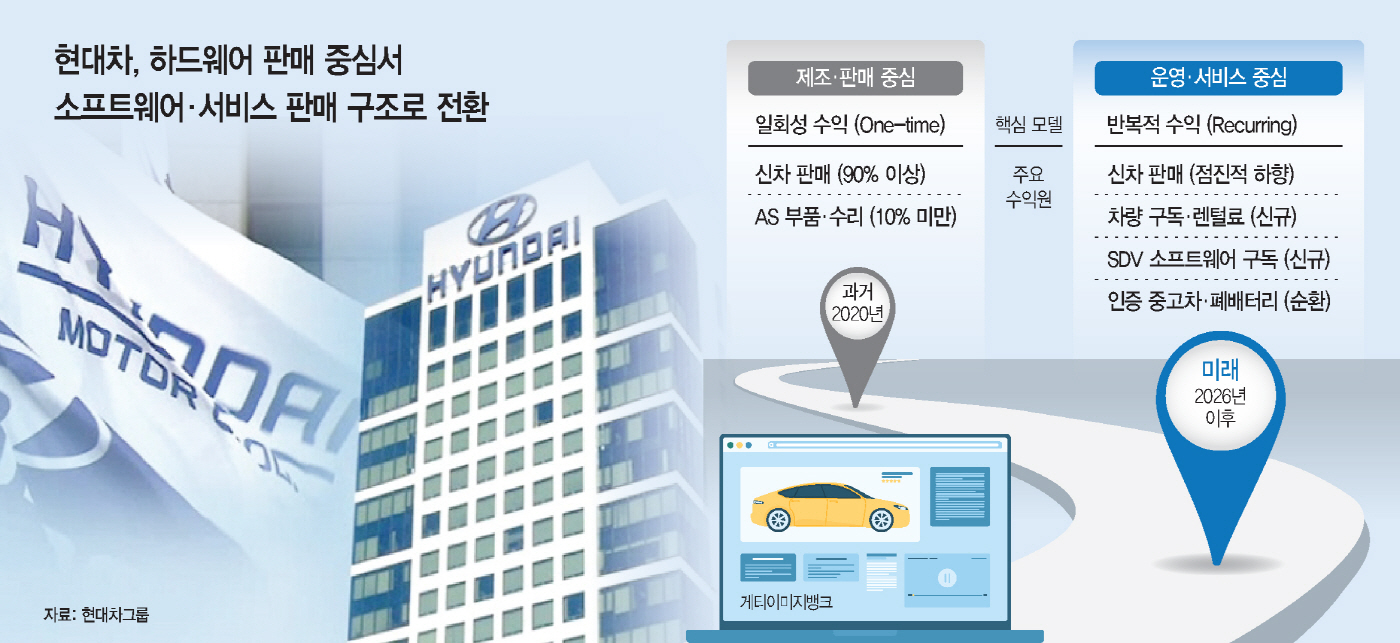
Hyundai Motor is shifting away from a vehicle-sales–centric business model and expanding into mobility operations such as subscriptions and rentals. The move is aimed at creating a steadier revenue base amid the uncertainty that has accompanied the industry’s shift from internal combustion to electrification.
According to industry sources on March 29, Hyundai added \”automobile rental business\” to its articles of incorporation at its 58th annual shareholders meeting on March 26. The amendment formally brings vehicle-operation services into the company’s official business scope, beyond its traditional focus on manufacturing and selling complete vehicles.
Industry observers say the charter change signals more than a simple entry into the rental-car market; it’s a strategic step to broaden mobility services built around vehicle operations. Hyundai intends to operate vehicles across subscription, rental and other service formats rather than only selling them, with the goal of opening new revenue streams.
In particular, Hyundai is pursuing a shift from a sales-driven revenue model to an operations-driven one. Historically, automakers recognized most revenue at the point of sale. If vehicle subscriptions and long-term rental services scale, manufacturers can operate fleets themselves and capture recurring service income.
Hyundai appears poised to strengthen post-sale revenue generation as it expands vehicle-operation businesses — a shift the industry describes as moving toward a recurring-revenue model.
This strategy aligns with Hyundai’s software-defined vehicle (SDV) roadmap. SDV architectures control and update vehicle functions through software, enabling manufacturers to monetize feature upgrades and subscriptions after the sale.
Hyundai is also pursuing continual functional improvements via OTA (over-the-air) software updates.
Analysts say the approach has strategic value for data collection as well. Driving telematics and vehicle-condition data gathered during operations can support autonomous-driving development and more advanced vehicle-management services.
There is also potential to link subscription fleets to a certified pre-owned program by reselling vehicles after a defined operating period.
Global automakers are pursuing similar mobility-service expansion strategies. As the industry transitions to electrification and software-centric platforms, OEMs are growing service businesses beyond traditional vehicle sales.
For example, Tesla has increased software revenue through subscription services and the commercial sale of driver-assistance features, while Volkswagen is expanding vehicle-subscription offerings and mobility-platform businesses.
Industry executives view Hyundai’s charter amendment as part of a broader trend of manufacturers broadening their roles from vehicle makers to mobility-service providers. \”The auto industry is changing from a simple manufacturing sector to a service-centered one,\” several industry officials said. \”Automakers are increasingly building structures to generate ongoing revenue after vehicle sales.\”













Most Commented