
Ultimate Guide to Audi’s 2025 New Releases: What to Expect from Q4 e-tron and RS 5!
Daniel Kim Views
Translation result.
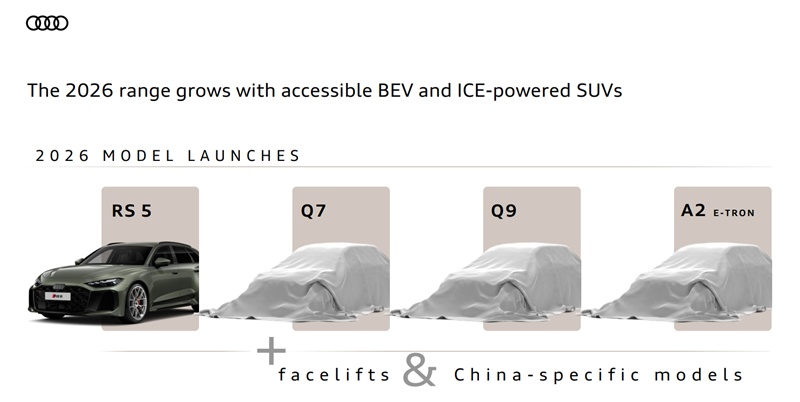
SisaWeek — Reporter Jegal Min Audi Group plans to bolster its lineup by rolling out more than five new models globally this year. Several of those models could arrive in the South Korean market as early as next year.
Audi’s 2026 global slate is expected to include two battery-electric vehicles and three internal-combustion models. The electric additions are a facelifted Q4 e‑tron and an entry-level A2 e‑tron. The combustion models are a high‑performance RS 5 based on the A5, a full redesign of the mid‑to‑large Q7 SUV for its third generation, and the Q9 flagship SUV.
The Q4 e‑tron made its world debut in an online premiere in April 2021. Audi launched sales in Europe beginning in Germany in June 2021, expanded to North America by the end of 2021, and brought the model to Korea in September 2022. With five years elapsed since its debut, Audi is expected to sharpen the Q4’s competitiveness with this year’s facelift.
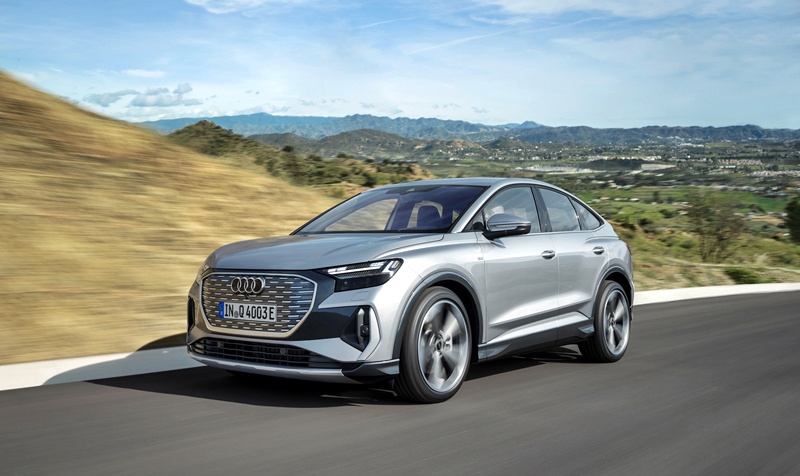
The Q4 e‑tron (including the Sportback) remains a strong seller in Korea and continues to be a key revenue model for Audi Korea. Domestic sales totaled 1,987 units in 2022 when the model first launched, fell to 611 units in 2023 amid supply issues, and then recovered to 3,040 units in 2024 and 3,011 units in 2025 — topping 3,000 units two years running.
Audi expects the facelifted Q4 e‑tron to debut globally in the second half of this year, with a Korean launch likely toward the end of the first half of next year. Audi has been adapting split headlamps that separate the main headlight units from the daytime running lights as part of its family look, and observers are watching to see whether the new Q4 will adopt that styling.
The A2 e‑tron is Audi’s new small entry‑level electric model, positioned to fill the gap left by the discontinued A1 and Q2 with a competitive price point. It’s built on Volkswagen Group’s MEB electric platform. Camouflaged prototypes spotted overseas suggest the A2 is closer to an SUV or hatchback than a sedan; the platform‑shared Volkswagen ID.3 is a hatchback. Audi plans a global reveal of the A2 e‑tron this fall, and a Korean launch is being discussed.
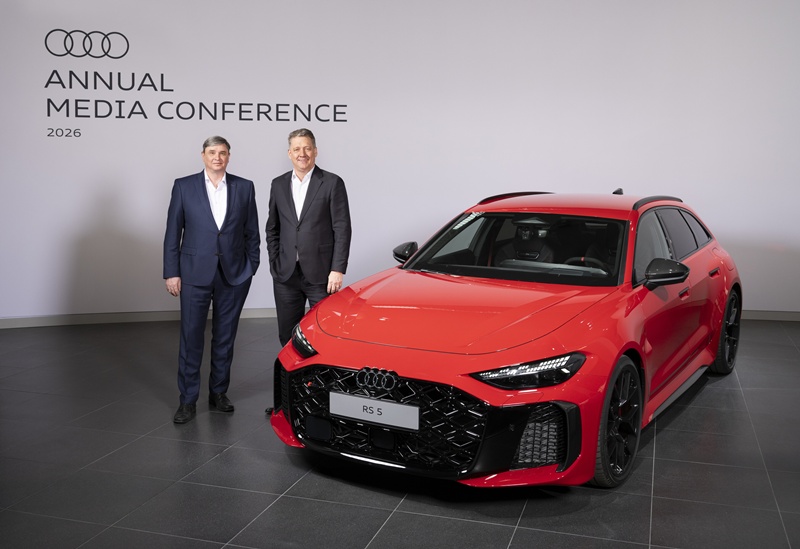
The first internal‑combustion new model scheduled to arrive is the RS 5. Based on last year’s A5 mid‑size sedan introduced in Korea, the RS 5 delivers far more extreme performance than the S5 and targets drivers seeking a more visceral, high‑powered driving experience.
Audi’s performance lineup is split into S and RS variants. S models elevate the performance of Audi’s standard sedan (A) and SUV (Q) ranges, while RS — short for Renn Sport — represents the brand’s hardcore, track‑focused models. In short, S models keep the character of the regular lineup but with performance upgrades; RS cars are aimed more directly at racing‑inspired driving dynamics.
The RS 5 is not intended as a volume seller. It serves as a showcase for Audi’s high‑performance engineering and as an option for a smaller group of enthusiasts who want a powerful, engaging mid‑size sedan. Competitors include the BMW M3 and Mercedes‑Benz AMG C‑Class.
A full redesign of the Q7 mid‑to‑large SUV is slated to reach the U.S. market this year. Industry sources say the third‑generation Q7 is in its final test phase. The Q7 originally debuted globally in 2015 and arrived in Korea in 2016; it has since received facelifts in 2019 and 2024. With a generational change after 11 years, buyers looking for a large family SUV are paying close attention.
Spy photos of the new Q7 show Audi’s latest family‑face treatment on the front end, including split headlamps that convey a unified yet refined look. Powertrains are expected to include 3.0‑liter gasoline and diesel engines paired with a 48‑volt mild‑hybrid (MHEV) system, a 4.0‑liter turbocharged gasoline option for an SQ7 variant, and plug‑in hybrid (PHEV) versions.
With a potential Korean launch as early as the first half of next year, the new Q7 could give Audi Korea a meaningful sales boost in the coming year.
A still larger, full‑size SUV — the Audi Q9 — is also scheduled to debut. Developed with the U.S. market’s appetite for large vehicles in mind, the Q9 may also come to Korea. Given healthy local demand for rivals such as the BMW X7 and Mercedes‑Benz GLS, a Q9 launch in Korea could appeal to buyers who prefer big SUVs. Audi plans a U.S. launch in the fourth quarter of this year; a Korean introduction would likely follow later.
Last year, Audi sold 1,623,551 vehicles globally, a slight decline from 1,671,218 the year before. With a steady stream of new model launches planned this year, the company is aiming to rebound and restore its standing in Europe, the U.S. and Korea.
Meanwhile, Audi Korea plans to strengthen its local lineup by introducing fully redesigned A6 and Q3 models this year.











Most Commented