
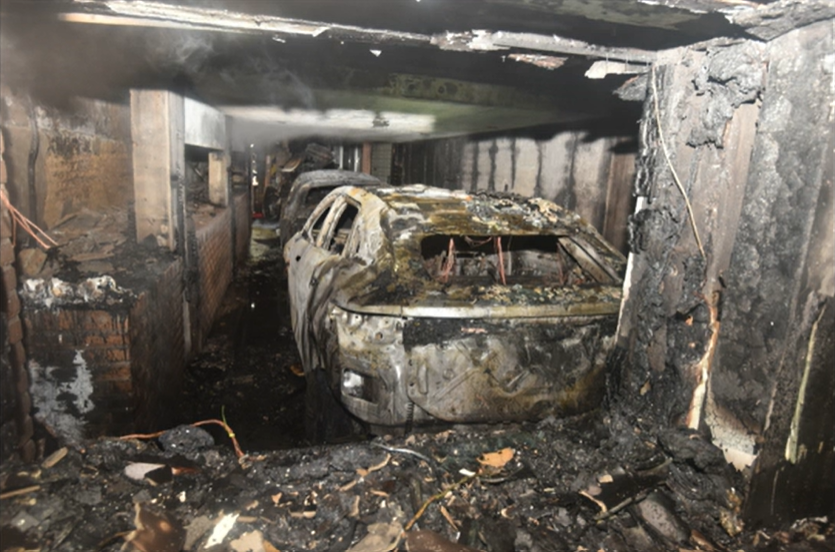
Two parked cars were completely destroyed in the fire, and both happened to be electric vehicles. They were identified as a Hyundai Ioniq 5 and a BYD Sea Lion 7.
The cause of the fire remains under investigation. At this point, it’s premature to conclude that the electric vehicles were the source. Fire officials are working to determine the exact cause and are coordinating with the automakers for a thorough investigation.
BYD stated that they are fully cooperating with authorities and have dispatched an on-site investigation team to ascertain the cause. They assured customers that all necessary measures will be taken to ensure safe vehicle operation.
Hyundai has not issued a statement at this time.
This incident has garnered significant industry attention, not just because it involved electric vehicles, but because it presents a unique comparative scenario. Two vehicles with different technologies were subjected to identical conditions – same time, place, and environment.
If the electric vehicles are identified as the fire’s origin, it could lead to a direct comparison of the two companies’ EV safety standards.
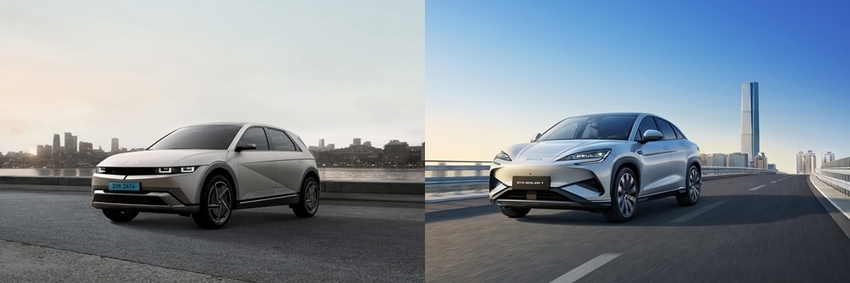
Electric vehicle fires are typically attributed to battery thermal runaway. However, the two vehicles involved use fundamentally different battery technologies.
The BYD Sea Lion 7, on the other hand, uses a lithium iron phosphate (LFP) battery. LFP batteries are generally cheaper and have a longer lifespan than NCM batteries, but with lower energy density.
Experts suggest that NCM batteries may be more susceptible to fires due to their higher energy density, although definitive statistics are lacking.
LFP batteries aren’t immune to fire risks either. Their cell-dense design, aimed at improving energy density, could potentially accelerate heat transfer during a fire.
This incident unexpectedly puts the EV safety of Hyundai, a long-established player in the domestic auto market, and BYD, a newcomer to the scene, under the microscope.













Most Commented