
Electric Cars in 2023: Are You Just Renting Features? Unpacking the Subscription Model
Daniel Kim Views
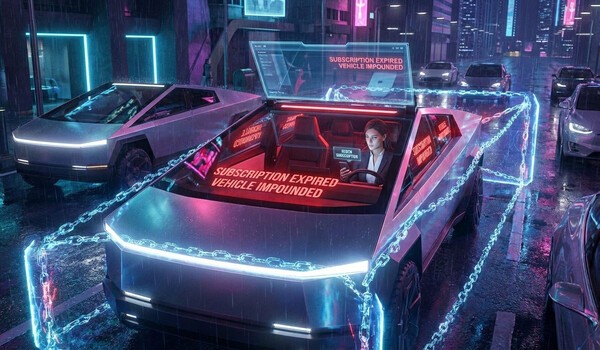
Park, a 44-year-old office worker from Seoul’s Songpa District, recently found himself stranded on his commute when his car’s navigation system failed to start. The display flashed, “Your subscription has expired. Proceed to payment page?” After a quick app payment, the system sprang back to life. “I never thought I’d need to renew a plan just to get directions,” Park said, bewildered.
Park’s ride is last year’s cutting-edge electric vehicle model. The manufacturer packages key features like driver assistance, remote parking, acceleration boost, and infotainment as software sold on a monthly basis. Payment icons have replaced buttons, and activation codes stand in for switches. “It’s less like owning a car and more like logging into the manufacturer’s server,” Park noted.
Industry sources reported on the 10th that software-defined vehicles (SDVs) are reshaping the automotive landscape, transforming cars beyond mere transportation. Electric vehicles are evolving into smart devices on wheels. Yet, this convenience comes at a price – diminished consumer autonomy. We’ve entered an era where drivers must navigate payment screens to access features in their own vehicles.
Pre-installed features become inaccessible without payment
The line between hardware and software in today’s auto market has become increasingly blurred. Previously, buyers chose and paid for options at purchase, resulting in physical installations. Now, most hardware comes pre-installed. Consumers are no longer selecting tangible components but rather the rights to unlock software.
Mercedes-Benz offers ‘Acceleration On-Demand’ for its EQE and EQS models at $60 monthly. Unlocking boosts output by about 80 horsepower, despite the motor remaining unchanged. BMW markets features like rear-wheel steering, remote parking, and driving assistance for 10,000 to 20,000 KRW (about 7.5 to 15 USD) per month.
Tesla’s Full Self-Driving (FSD) has rolled out in Korea as supervised autonomous driving, carrying a monthly fee of about 140,000 KRW (about 105 USD). This premium package includes urban autonomous driving, lane changes, and intersection signal responses, all under the same unlock concept. Hyundai and Kia have also announced plans to expand their driving assistance and infotainment subscriptions via over-the-air updates this year.
Manufacturers justify this approach as necessary for “ongoing quality assurance and server maintenance costs.” However, consumers remain skeptical. Many feel they’re merely renting features in cars they’ve purchased outright. The essence of car ownership is shifting from engines and metal to accounts and cloud access.
Car owners feel trapped in a “digital prison,” considering jailbreaks
Frustrations have fueled a burgeoning underground market for hacks. Online forums are rife with ads promising “subscription unlocks” and “permanent activation tuning.” A Seoul-based coding specialist revealed, “As monthly fees stack up, we’re flooded with requests for permanent unlocks. This involves directly manipulating the vehicle’s electronic control unit (ECU) or bypassing authentication protocols.”
While reminiscent of smartphone jailbreaking, the stakes are higher with vehicles. A single code error could compromise crucial systems like braking or steering. Automakers warn of “high risks of voided warranties and safety hazards.” Yet, some consumers insist that “monthly payments are simply too burdensome.”
The Ministry of Land, Infrastructure and Transport is drafting amendments to regulate unauthorized vehicle software modifications. Current laws impose penalties of up to a year in prison or fines up to 10 million KRW (about 7,500 USD) for unauthorized structural or device alterations. However, industry insiders note that “locks breed inconvenience, and inconvenience drives jailbreaking attempts.”
Subscription models disrupt used car market, leaving buyers in limbo
The subscription model is reshaping the used car market. Cases emerge where lifetime subscriptions, costing hundreds of dollars, vanish upon ownership transfer. While some brands allow autonomous driving features to transfer with the vehicle, connectivity services and charging perks often terminate with the original account.
The Fair Trade Commission is investigating the broader subscription economy, but specific guidelines for automotive feature subscriptions are lacking. Regulations on transferring or inheriting digital features remain undefined.
An industry analyst noted, “While the physical car changes hands, the software assets inside don’t transfer. Consumers aren’t buying a car so much as acquiring a platform usage right.”
He added, “We must distinguish between purely software features like map updates and those tied to physical hardware. Repeatedly charging for features after consumers have paid for the components could infringe on consumer rights.”

Monthly bills pile up as electric vehicles become the automotive world’s Netflix
Electric vehicles are evolving into data hubs for the auto industry. Leveraging over-the-air updates, cloud services, and in-vehicle payment systems, manufacturers are pivoting from one-time sales to recurring subscription revenues. As profits from traditional maintenance and parts dwindle, software subscriptions are filling the gap.
The catch? This financial burden shifts to consumers. Cars were once buy-and-keep investments. Now, with subscription models proliferating, maintenance costs have morphed into fixed monthly outlays. Feature-based subscriptions enable granular service offerings, but consumers’ sense of ownership is fading.
An industry insider observed, “When manufacturers redefine vehicles as platforms rather than products, car owners become mere logged-in users. For this industry shift to progress sustainably, user rights must form the foundation, not an afterthought.”













Most Commented