
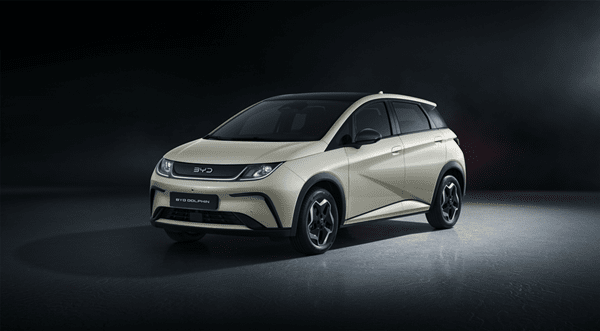
Chinese EV maker BYD is shaking up the South Korean electric vehicle market with the launch of an affordable model, fundamentally reshaping the existing pricing structure. The collapse of the previous 30-40 million KRW (about 22,500-30,000 USD) price range, which acted as a barrier to entry for imported EVs, is expected to usher in a new era of competition among domestic automakers and global brands.
Industry sources reported on the 10th that BYD has officially begun selling its compact EV, the ‘Dolphin,’ in South Korea. Before government and local subsidies, the model is priced in the mid-20 million KRW (about 15,000 USD) range. With full subsidy benefits, the actual purchase price could drop to just over 20 million KRW (about 15,000 USD). This strategic move targets consumers who have been hesitant to buy EVs due to cost concerns.
Despite its affordability, the Dolphin has garnered praise for surpassing market expectations in performance. It offers a driving range of over 300 kilometers on a single charge, sufficient for typical urban driving and commuting. The model can also recharge a significant portion of its battery in about 30 minutes with fast charging, enhancing its practicality for daily use.
Industry experts believe BYD’s move will challenge the notion that affordable EVs lack performance. The company’s pricing strategy could shift the competitive focus in the Korean EV market from sticker price to actual cost after subsidies.
This shift is prompting immediate strategic adjustments from both domestic and foreign automakers. Tesla is already tweaking prices and trim levels in global markets, while Hyundai and Kia are reportedly considering expanding their lineup of compact and affordable EVs. Analysts suggest that global brands with pricing flexibility may also get pulled into a price war.
An industry insider noted, “The EV market is rapidly transitioning from a premium structure focused on early adopters to a value-driven market centered on practicality.” Price competitiveness is becoming the key factor for consumer choice, especially among first-time car buyers, second-car shoppers, and in the corporate and shared vehicle markets.
While EV adoption is seen as temporarily stagnant, BYD’s introduction of its affordable model is expected to reinvigorate the market. If charging infrastructure expansion keeps pace with lower vehicle prices, it could mark a turning point for EVs to become a mainstream transportation option.
BYD’s recent moves signify more than just the entry of another import brand; they represent a lowering of the bar for the Korean EV market. The pace of EV adoption is increasingly likely to be driven by price rather than technology alone.















Most Commented