
Translation result.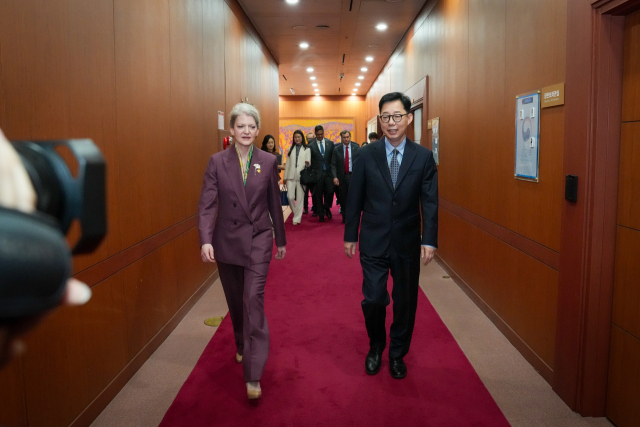
South Korea and the United States have begun mapping out a long‑term security blueprint. Working‑level talks opened to implement security agreements from last year’s Korea‑U.S. summit, including the possible acquisition of nuclear‑powered submarines (SSNs). The negotiations continue through the 3rd. See page 6.
The discussions started later than planned. Seoul and Washington had intended to begin follow‑up consultations earlier this year. The outbreak of the Iran war was a factor, but Washington’s criticism of South Korea’s limited U.S. investment and the fallout from the Coupang controversy also slowed momentum. Still, Seoul says its working‑level teams coordinated closely with U.S. counterparts in preparation for the talks.
From the morning of the 2nd, delegations concentrated on SSN acquisition. Negotiations are organized into three tracks: South Korea’s purchase of nuclear‑powered submarines; Seoul’s authority to enrich uranium and reprocess spent nuclear fuel; and cooperation in shipbuilding. Officials say the most contentious issues — enrichment and reprocessing — are scheduled for discussion on the 3rd because they would require approval from the Donald Trump administration and from Congress.
Seoul’s position is straightforward: it will not pursue nuclear weapons. The government says it will continue to adhere to nonproliferation commitments even after acquiring SSNs and securing enrichment and reprocessing authorities.
U.S. nuclear law permits the sale or transfer of nuclear material for military use if the president determines the transfer will promote collective defense and security without creating unreasonable risk, and if Congress approves. On May 26, the South Korean government announced the “Jangbogo N” program, aiming to field Korean‑style SSNs in the 2030s and explicitly framing the force as a deterrent to North Korea.










Most Commented