
Translation result.
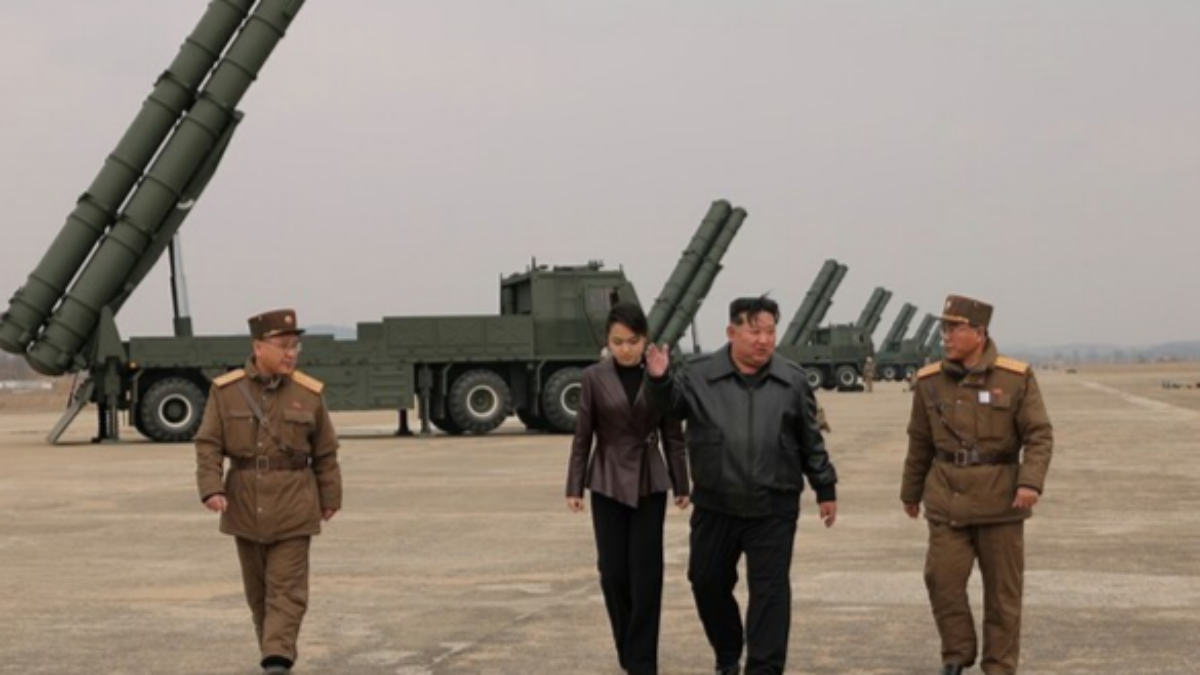
Kim Jong Un’s Shift to ‘War Language’
Over the past several years, Kim Jong Un has increasingly framed South Korea not as a compatriot for dialogue but as an explicit primary enemy and a legitimate target for war.
At a recent Workers’ Party plenary session he framed the armistice as effectively a state of war and spoke about \”reclaiming\” territory in terms that imply military action.
Military analysts say this shift is more than rhetoric: it provides a political mandate that filters down the chain of command, signaling that preparing for war is the proper course.
Seoul’s National Intelligence Service has interpreted these verbal shifts as consistent with orders to complete war preparations reaching as far down as battalion commanders, linking propaganda to operational intent.
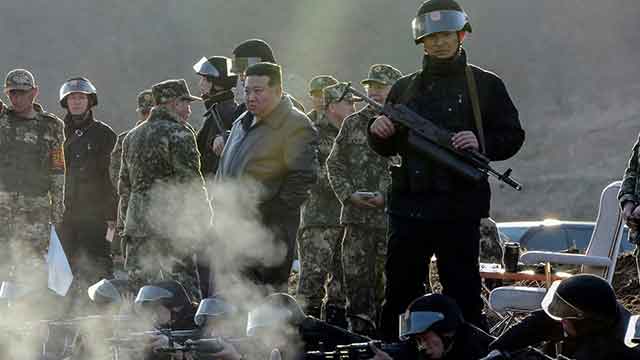
Training Shifts Aimed at Invasion Scenarios
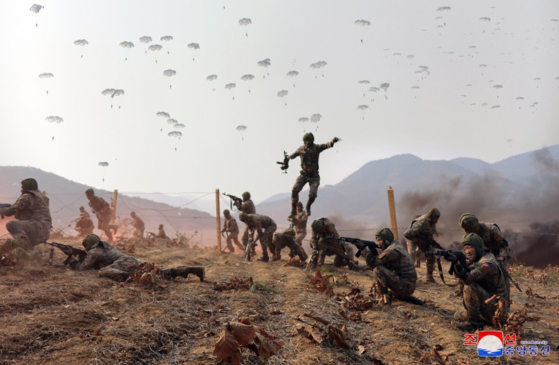
Intelligence has identified training complexes near Nampo Port and the Kaesong industrial area tailored for \”reoccupation\” drills. Landing craft, airborne units, and mechanized formations are repeatedly practicing urban seizure and base seizure operations.
Reported scenarios appear to emphasize port seizures, capture of airports and critical bridges and roads, and maneuvers directed toward Seoul.
At the same time, Pyongyang is staging ICBM and SLBM tests and releasing exercise imagery that highlights or overstresses tactical nuclear employment, crafting the narrative of a combined nuclear-conventional campaign.
Some analysts also warn that Russian-sourced fighters, air-defense components, tanks, and tactical ballistic missile technologies could partially shore up North Korea’s gaps in air, armor, and air-defense capabilities.
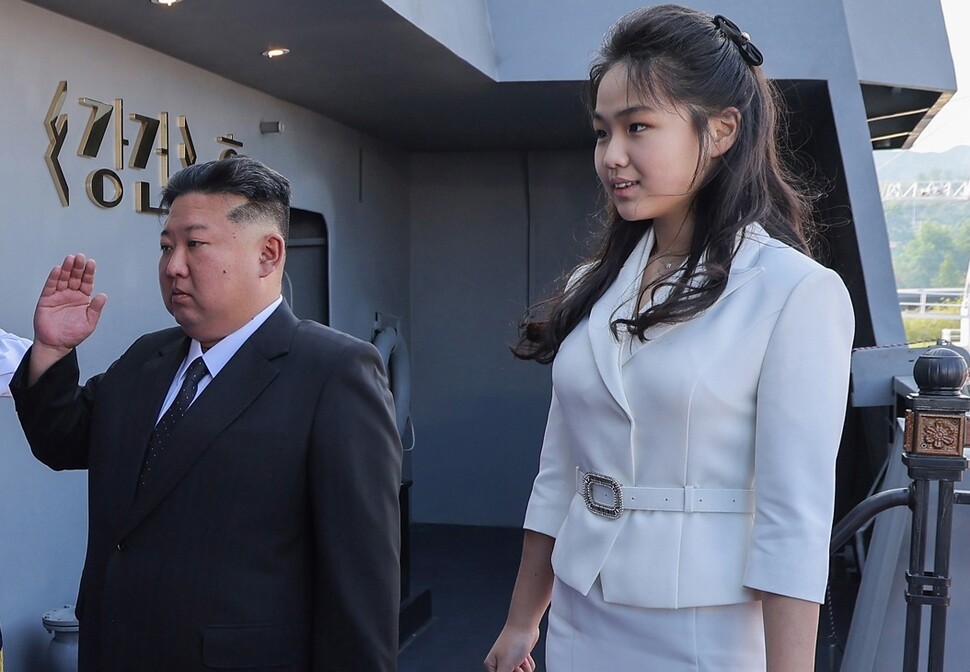
‘Promoting Kim Ju-ae’ and Internal Cohesion
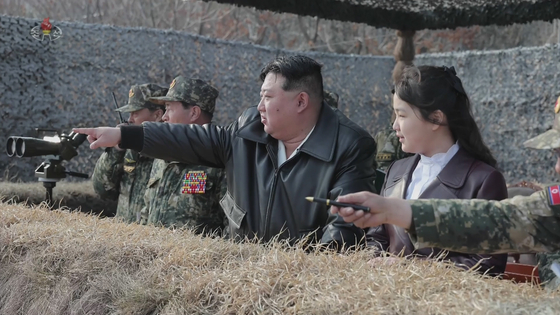
Since 2022, Kim Ju-ae has been increasingly visible at ICBM launches and strategic-weapons events.
State media has recently portrayed her to military audiences as a young leader with exceptional computing and command skills, effectively presenting her as a prospective military figurehead.
Experts say the publicity serves two purposes: to cement a fourth-generation succession narrative inside the regime and to reduce internal fears about Kim Jong Un’s health or the prospect of a coup.
By publicizing a designated successor during heightened preparation or crisis, the regime likely aims to channel the military’s focus toward external mobilization rather than internal power struggles.
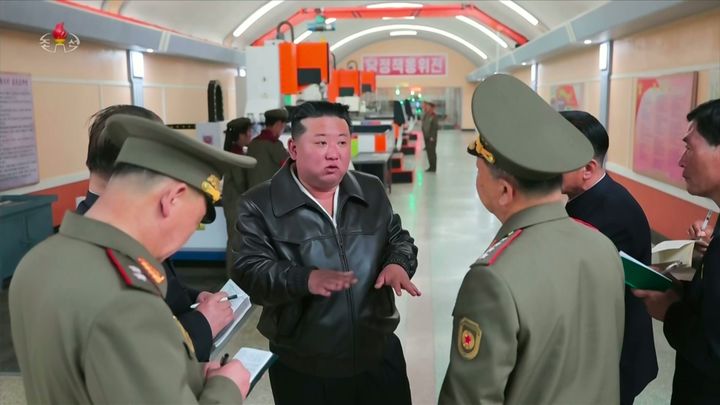
Deals with Russia Could ‘Supplement’ Military Power
Analysts argue that since the Russia–Ukraine war, North Korea has supplied artillery, ammunition, and manpower to Moscow and in return obtained precision-weapons components, air-defense elements, armor, and missile technologies.
Observers speculate systems akin to T-90–class tanks, Iskander-type tactical ballistic missiles, and parts of advanced air-defense networks (S-300/400–class elements) could be integrated into North Korean units.
While such additions would not transform the peninsula’s overall force balance, they could strengthen capabilities for concentrated assaults on specific axes, improve localized air defenses, and enhance armored penetration potential.
Certain defense research bodies have adjusted upward their assessments of North Korea’s limited invasion prospects in light of suspected Russian transfers.
‘Three-Day, One-Week War’ Scenarios: The Intent
North Korean media frequently promotes the image of a short, decisive campaign—paralyzing the capital in 3 or 7 days and blocking allied reinforcement.
These \”3-day\” or \”7-day\” scenarios serve more as tools of internal cohesion and psychological warfare than as realistic operational timetables.
Still, Pyongyang continues to refine the capabilities those scenarios require: forward special operations forces, multiple-rocket launchers, tactical ballistic missiles, drone swarms, and coordinated cyber-attack plans.
Experts caution the real danger is not merely whether such plans are complete but that overconfidence in a short war could lead to miscalculation by North Korean leadership.
How South Korea Should Heed This Warning
Seoul, together with Washington and Tokyo, has sought to blunt North Korea’s warfighting options through combined U.S.-South Korea exercises, layered missile defenses (L-SAM, M-SAM, Patriot), THAAD deployment, improved reconnaissance satellites, and expanded drone capabilities.
Psychological operations—such as leaflet drops or loudspeaker broadcasts—might erode regime cohesion but risk escalating tensions and therefore require careful calibration.
The objective should not be to stoke panic about an imminent invasion, but to ensure Pyongyang cannot turn the option of war into an executable plan by using coordinated military, diplomatic, sanctions, and information measures.
When international analysts warn that North Korea’s \”war plan\” is being completed, they typically mean Pyongyang has begun synchronizing plans, forces, propaganda, and succession messaging—not that an attack is necessarily imminent.














Most Commented