
What Does the Latest Broadcast Media Commission Meeting Mean for South Korea’s Public Trust and Media Transparency?
Daniel Kim Views
Chairman Kim Jong-cheol: We will close the administrative gap and reestablish ourselves as an impartial arbiter of media order
Public-duty conditions imposed, requiring broadcasters to clarify programming committee composition and improve treatment of nonregular workers
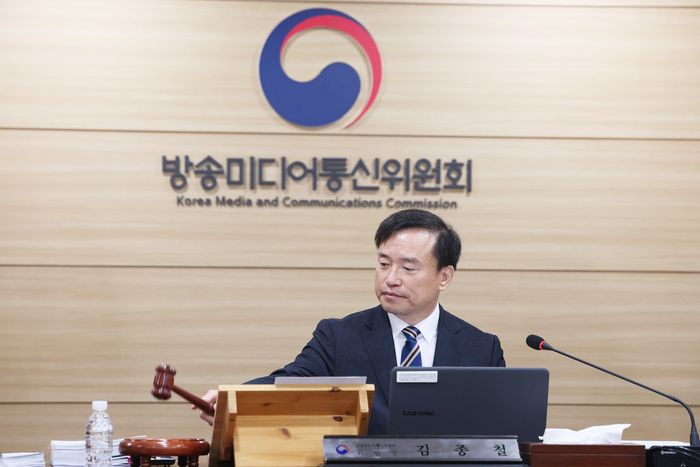
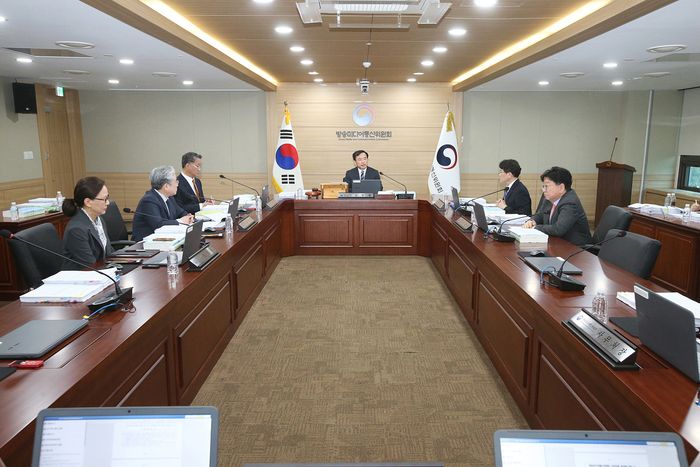
South Korea’s Broadcasting, Media and Communications Commission held its first full meeting, breaking roughly six months of administrative inactivity since the agency was established.
At the meeting, the commission approved follow-up measures tied to the so‑called “three broadcasting laws” and voted on terrestrial re‑licensing. It announced plans to establish a Public Communication Committee and a Working Committee and pledged to do everything possible to restore public trust.
On April 10, commissioners convened to discuss key issues, including implementation steps for the amended broadcasting laws.
The revised Broadcasting Act was promulgated in August last year; the Broadcasting Culture Promotion Act and the Korea Educational Broadcasting System Act took effect in September. At this session, officials reported on the process of drafting and organizing subordinate regulations.
Amendments to the Enforcement Decree of the Broadcasting Act set penalty thresholds for failures such as not appointing programming managers, not complying with programming agreements, and neglecting to implement programming committee decisions.
The commission also mandated that full-service terrestrial radio broadcasters and terrestrial mobile multimedia broadcasters establish viewer advisory committees. It updated its internal rules to clarify which employees qualify as committee staff and to specify the qualifications required of staff representatives.
“Staff” are defined as employees with open‑ended contracts who take part in news gathering, reporting, production, or programming; department heads and above are excluded.
Staff representatives are to be elected by staff vote. If a labor union represents a majority of staff, that union may designate the staff representative.
The commission set criteria for groups eligible to nominate board members—such as broadcasting-related academic societies, bar associations, and education organizations—and will select nominating bodies through public recruitment. It also established standards for polling organizations that may conduct public recommendations for public broadcaster CEO candidates.
Eligible polling organizations must demonstrate a substantial track record in public opinion research and experience conducting government‑approved statistics, and must not have disqualifying offenses—such as violations of the Public Official Election Act—to ensure fairness and credibility.
Kim Jong-cheol said the three broadcasting law revisions aim to improve governance at public broadcasters and to bolster both autonomy and accountability in news and programming to restore public confidence. He described the follow‑up measures as an important institutional step to realize the legislature’s intent in practice.
“In particular, the operation of programming committees and the formation of board‑nominating bodies will be central mechanisms to strengthen internal democracy and transparency at public broadcasters,” Kim said. He added that the commission plans to complete the follow‑up measures after soliciting public comment, consulting relevant ministries, and undergoing legal review by the Office of Government Legislation.
The commission also approved re‑licensing for broadcasters whose license terms had expired.
It reviewed and decided re‑licensing for 150 stations operated by 11 terrestrial broadcasters, including KBS, and five community radio operators that were up for renewal in the first halves of 2024 and 2025.
Recognizing that delays in re‑licensing had left terrestrial broadcasters in prolonged managerial uncertainty, the commission treated the matter as a top priority. While it largely respected the re‑licensing review committee’s evaluations, it also took into account the lengthy time that had passed since those reviews concluded.
Among the 150 stations from 16 broadcasters, the commission granted five‑year re‑licenses to 40 stations that scored 700 or higher out of 1,000, and four‑year re‑licenses to 93 stations that scored between 650 and 699.
The commission attached conditions and recommendations to the re‑licenses covering fulfillment of public duties by terrestrial broadcasters, ensuring management transparency and autonomy, promoting local program production, fostering cooperative production environments, and protecting viewers.
For this round, the commission reinstated a condition—removed in 2023—requiring broadcasters to develop plans to improve the treatment of nonregular workers, and it added a new requirement aimed at preventing workplace harassment. The measures are intended to improve labor conditions and production environments, thereby strengthening fairness and credibility in broadcasting.
“Terrestrial broadcasters operate using public airwaves and must therefore faithfully discharge their public duties,” Kim said. “The commission will use re‑licensing reviews and other tools to help create a broadcasting environment the public can trust.”
Opening the session, Kim noted this was the commission’s first full meeting about six months after the law establishing the body was enacted. He apologized for any inconvenience or concern caused by the prolonged period during which the commission was not fully operational.
He said the meeting represented more than a resumption of paused sessions. It was a starting point for the commission to return to its core role as a guardian of the constitution and an impartial regulator of media order—leading reform in South Korea’s media industry and protecting citizens’ rights.
Kim said the broadcasting, media and communications sector faces many issues that directly affect people’s daily lives. Considering urgency, significance, and the maturity of deliberation, the commission prioritized agenda items such as drafting and amending laws—including the three broadcasting laws—and broadcaster re‑licensing. He expressed hope that the meeting would at least partially close the administrative gap.
He pledged that the commission would operate as a Public Communication Committee that engages the public and as a Working Committee that promptly addresses delayed tasks to restore public trust.
Kim also called on the National Assembly to quickly nominate a candidate to fill the currently vacant standing commissioner seat.
© Dailyan Co. All rights reserved. Unauthorized reproduction or redistribution prohibited.
- [Breaking] Male student jumps from high school building in North Chungcheong; hospitalized
- [Breaking] Woman in her 40s allegedly kills husband and later dies in apartment in Gijang, Busan — ‘We had recently registered our marriage’
- [Breaking] In Tongyeong, a person in their 30s stabbed a man and a woman and then jumped; victim remains in critical condition
- Cho Jae‑bok shows no basic manners… ‘This household is a kingdom of animals’
- Presented as an energy‑crisis response, but an unexpected local currency appears [Column — Politics]















Most Commented