
Translation result.
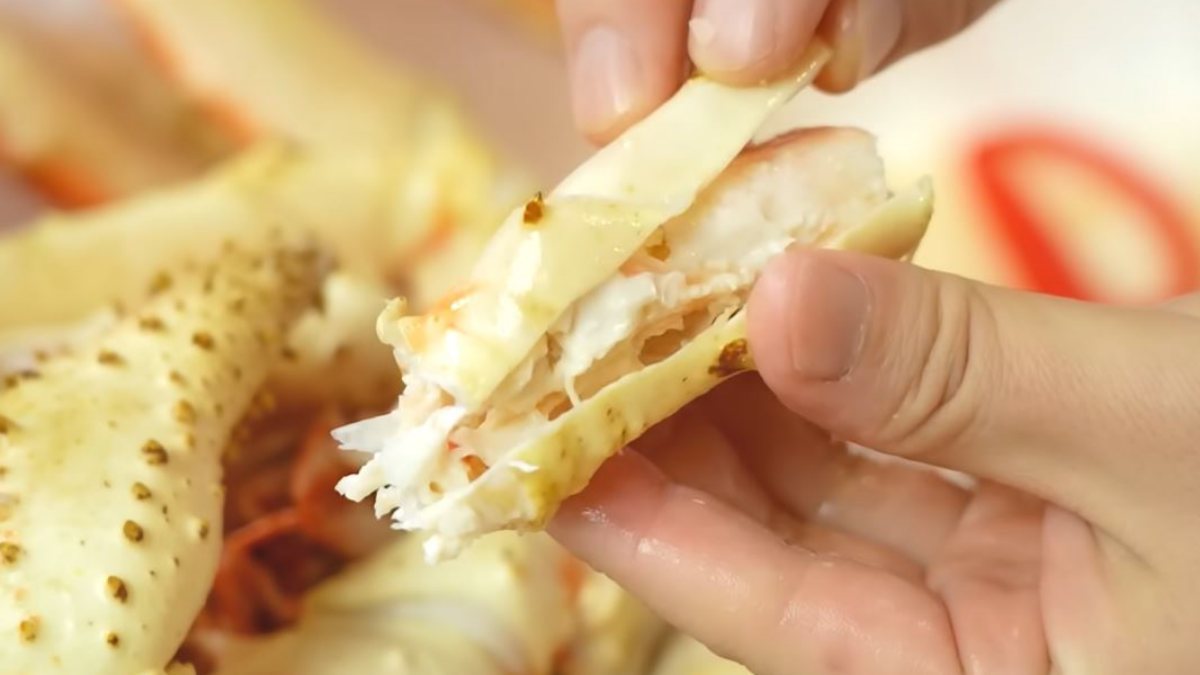
What if you could enjoy king crab — one of the most coveted and expensive seafoods — for roughly half the usual market price? With more online shops pushing “half-price” king crab deals, shoppers are left wondering whether the savings are smart or too good to be true. Seafood expert and YouTuber behind the channel ‘Ipjil’s Memories TV (jiminTV)’ bought a half-price king crab online and carried out a hands-on, meticulous inspection.
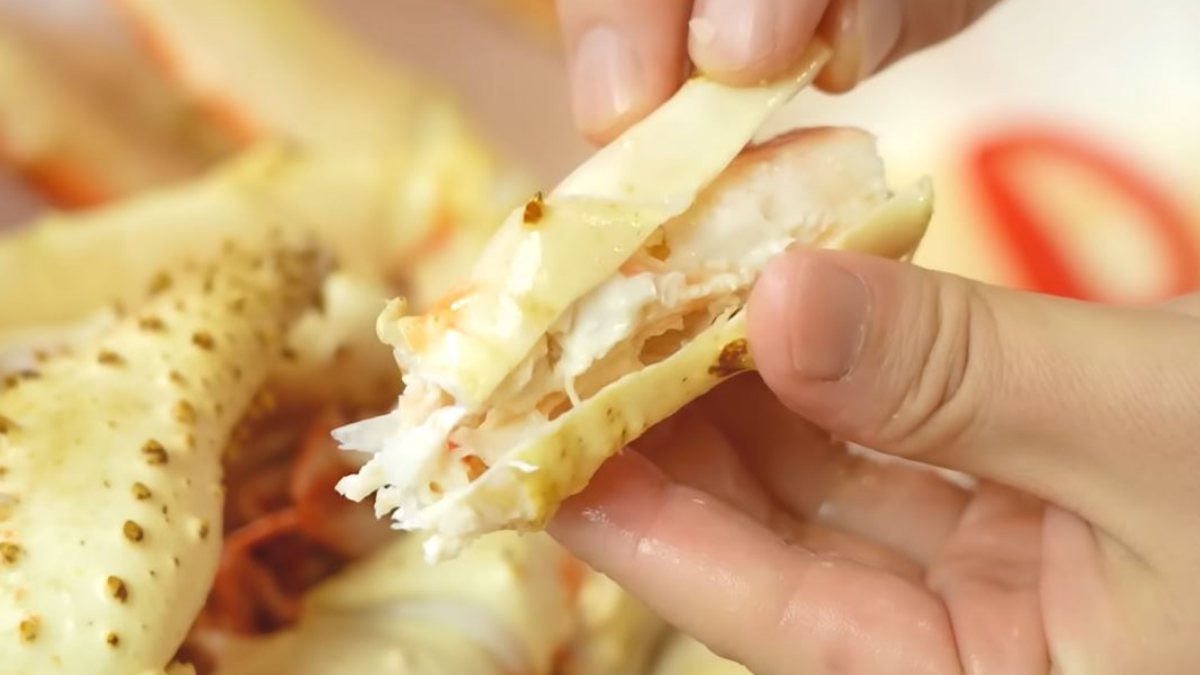
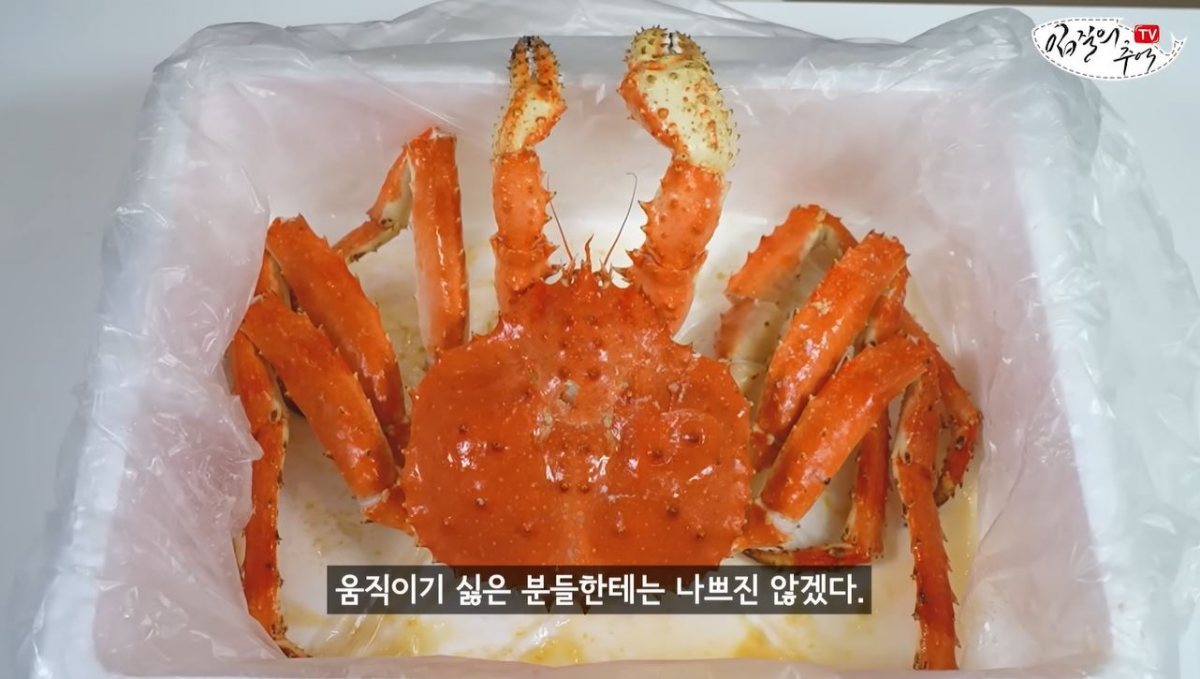
Kim Ji-min, the operator of ‘Ipjil’s Memories TV (jiminTV)’ and a seafood specialist, purchased a steamed blue king crab advertised at ₩59,900 per kilogram (about $44.93/kg) — roughly a 3 kg (≈ 6.6 lb) specimen, priced around half typical retail. With free shipping included, the total cost was about ₩180,000 (≈ $135.00). Online vendors usually label species as red, blue, or brown; most king crab currently on the market are seasonal blue king crab. Red is the most expensive variety, while brown is the cheapest but tends to show large quality variation, so it’s not usually recommended. Also, king crab rarely appears as a single 1 kg individual; for two people, Kim suggests ordering 2–2.5 kg (≈ 4.4–5.5 lb), and for three people, 3 kg (≈ 6.6 lb) or more.

Steaming seafood inevitably causes weight loss as blood drains and moisture evaporates. Top-grade live seafood typically loses 20–25% of its weight; ordinary king crab usually sees 30–35% loss. Individuals that died and filled with seawater can lose as much as 40%. The online product page promised 20–30% weight loss and an 85% meat-yield guarantee, but when Kim weighed the delivered crab, it was only 1.75 kg (≈ 3.86 lb). That’s about a 40% drop — higher than advertised — and understandably disappointing.
Opening it up revealed a surprising turnaround in yield and taste
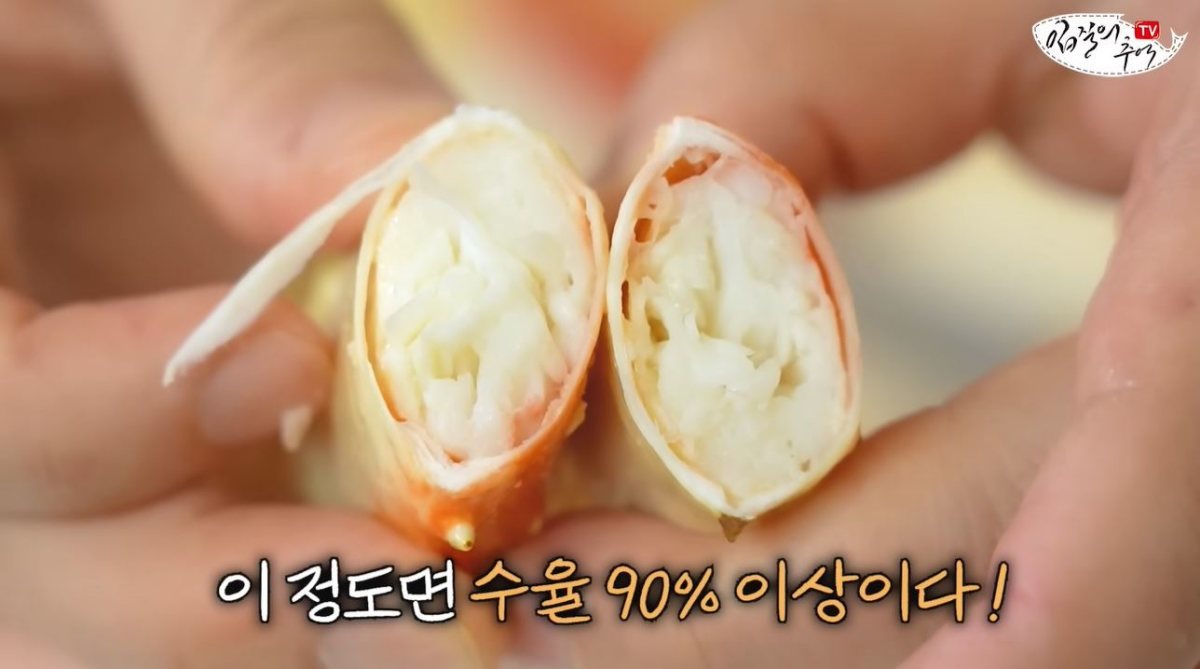
Still, the meat yield and flavor delivered a pleasant surprise. The crab arrived intact, with no missing legs. When they cut a leg to inspect the cross-section, the meat filled 85–90% or more of the shell — an excellent yield. It lacked the overly salty taste often found in specimens that died in tanks, which happens when seawater soaks into the flesh. This product appeared to have been removed from the water either before death or immediately after and then steamed, so it tasted sweet and savory rather than briny. Both the body meat and claw meat were moist and plentiful.
Is it really cheaper than Noryangjin Fish Market?
Whether this online price is reasonable compared with the Noryangjin Fish Market in Seoul depends on market conditions. On the day of filming, retail prices at Noryangjin listed seasonal blue king crab 선어 at ₩45,000 (≈ $33.75) per kg and live specimens at ₩80,000–₩90,000 (≈ $60.00–$67.50) per kg. At wholesale auction prices early in the morning, 선어 with a 70–80% yield sold for ₩38,000 (≈ $28.50)/kg, 꼬물이 (recently vigorous before death) for ₩49,000 (≈ $36.75)/kg, and A-grade live crab ranged from ₩65,000–₩84,000 (≈ $48.75–$63.00)/kg. If you average 선어 at ₩50,000–₩55,000 (≈ $37.50–$41.25)/kg, the online price of ₩59,900 (≈ $44.93)/kg is slightly above market levels.
However, when you factor in the time, transportation, and fuel costs of visiting the market — plus the seller’s free shipping — buying online can be a solid option. Compared with tourist-area restaurants in places like Sokcho, where king crab can retail for ₩120,000–₩130,000 (≈ $90.00–$97.50)/kg, the online price really is about half. Still, if market prices crash temporarily, the perceived value of the online deal can drop.
How to avoid getting ripped off when buying online
To buy king crab online without regrets, Kim recommends checking at least 10 reviews for the seller and verifying key details on the product page. She emphasized confirming the weight-selection method, whether the crab showed movement right before death (‘꼬물이’), the exact species (red/blue/brown), the disclosed weight-loss rate, any note about leg loss (절지), and whether a meat-yield guarantee is provided. If two or more of these items are unclear or missing, it’s safer to skip that seller.
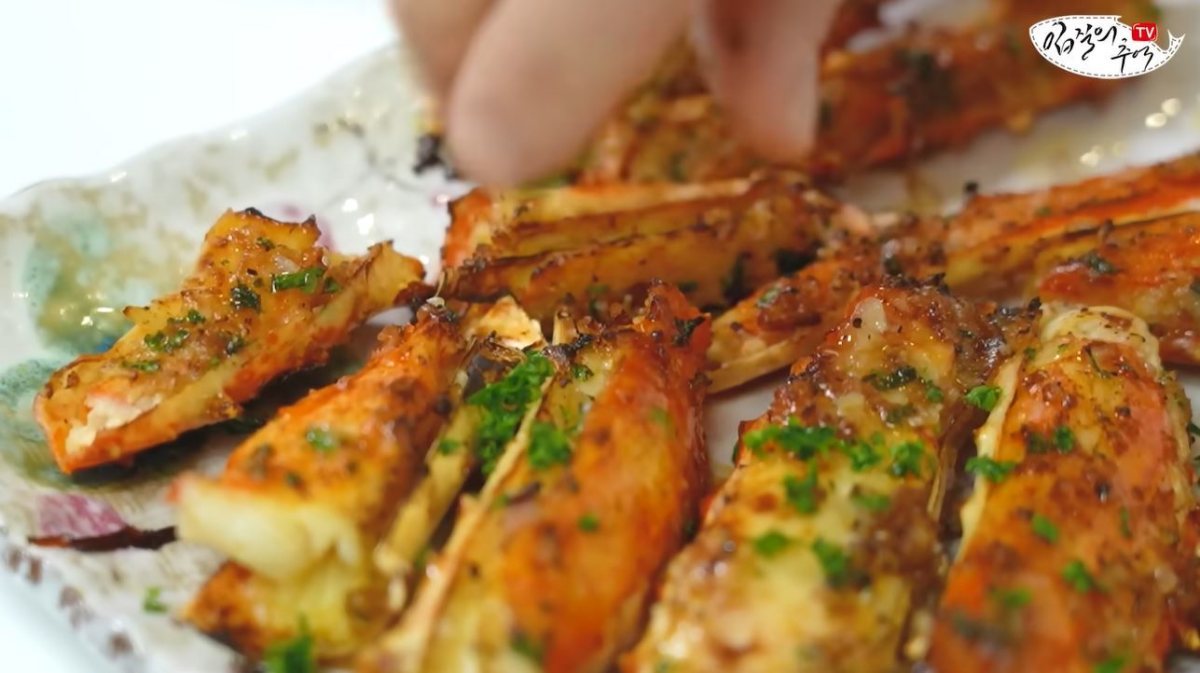
Reheating steamed king crab in a steamer can dry the meat. To keep it moist, place enough water in a pot so the crab is partially submerged (about one-third to one-half underwater), set the shell facing down, and boil on high for 3–5 minutes. For a butter-roasted finish, brush the crab with a mix of butter, minced garlic, salt, sugar, pepper, acacia honey, and parsley, then air-fry at 200°C (≈ 392°F) for 8 minutes for a tasty result. Use leftover meat and innards for fried rice or Chinese-style crab dishes.
Kim said she would repurchase this product if she needed an easy, crowd-pleasing dish for a housewarming and couldn’t travel to buy crab herself. She also urged sellers to honor promised meat-yield guarantees and weight standards honestly so consumers can buy seafood without worrying about scale tricks or haggling.

King crab, the ocean’s monarch: how it differs from ordinary crabs and why it’s special
King crab dominates fish markets with its massive size and striking appearance, earning its nickname the ocean’s monarch. Its chewy texture and sweet, deep flavor make it a favorite among food lovers, but many consumers don’t know how this giant differs biologically from ordinary crabs.
Biologists say king crab doesn’t belong to the same true-crab group as familiar species like snow crab or blue swimmer crab. Snow and blue swimmer crabs are part of the Brachyura infraorder, while king crab falls into the Anomura family, Lithodidae — in other words, king crab is biologically closer to hermit crabs than to the “true” crabs people usually imagine.
That evolutionary difference shows clearly in its appearance. Ordinary crabs display ten visible legs including the claws. King crab, by contrast, looks like it has eight visible legs because one pair of walking legs has shrunk and hides near the gills; you mainly see one pair of claws and three pairs of walking legs. The tiny fifth pair is used to clean the gills and groom the body. The asymmetrical folding of the abdomen also reflects its anomuran ancestry.
King crab also has a distinct habitat. It lives at depths of 200–800 m (≈ 656–2,624 ft) in frigid northern seas such as the North Pacific, the Bering Sea, and the Sea of Okhotsk. Growing slowly in cold, deep water, it reaches large size and develops a hard shell and spines to defend against predators.
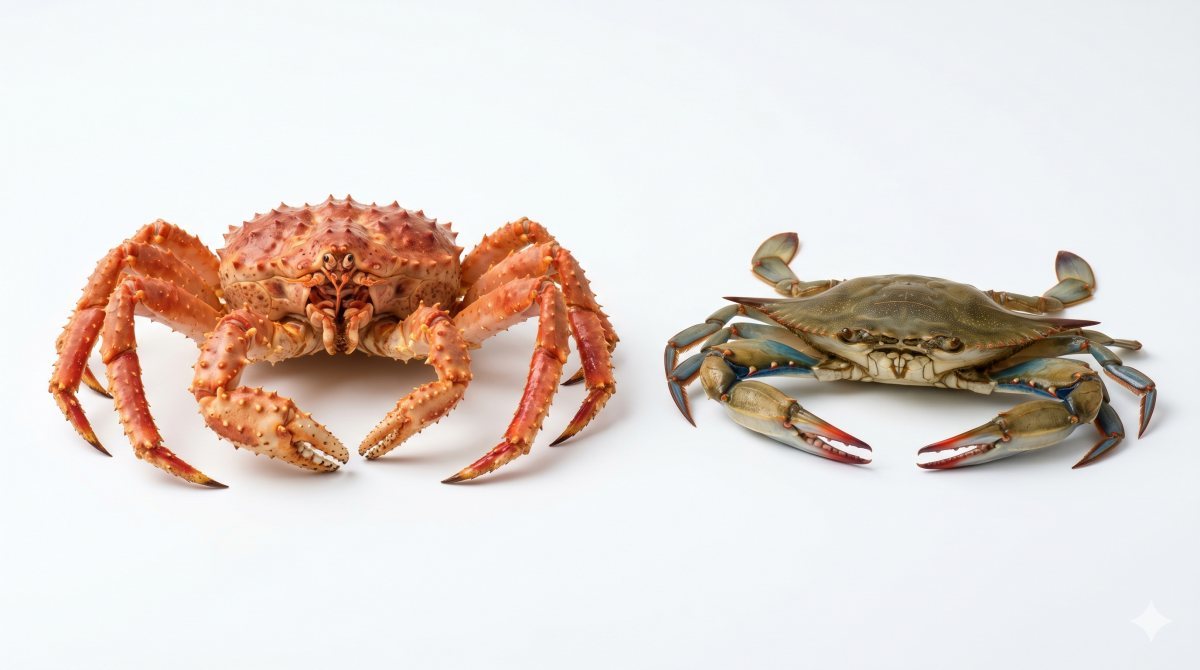
So how do taste and texture compare with ordinary crabs? Blue swimmer and snow crabs offer a delicate, tender sweetness and their meat flakes apart easily. King crab, by contrast, has firmer, meatier flesh closer to lobster, delivering a satisfying chew. Its thick chunks of meat and rich umami intensify as you chew, giving king crab its unique appeal. Both the legs and body are packed with meat, so a single crab can be quite filling.
Most king crab sold domestically is imported from countries like Russia or Norway and gets classified by shell color and shape as red, blue, or brown. Red is the most popular and prized for its sweet flavor and high yield. Blue, common in spring and summer imports, shows a bluish tint when alive and tends to be chewier. Brown, a yellow-brown color, lives in very deep water and is rarer but generally cheaper than other varieties.










Most Commented