
Translation result.

Daiso has surprised shoppers again with a delightfully unexpected must-have.

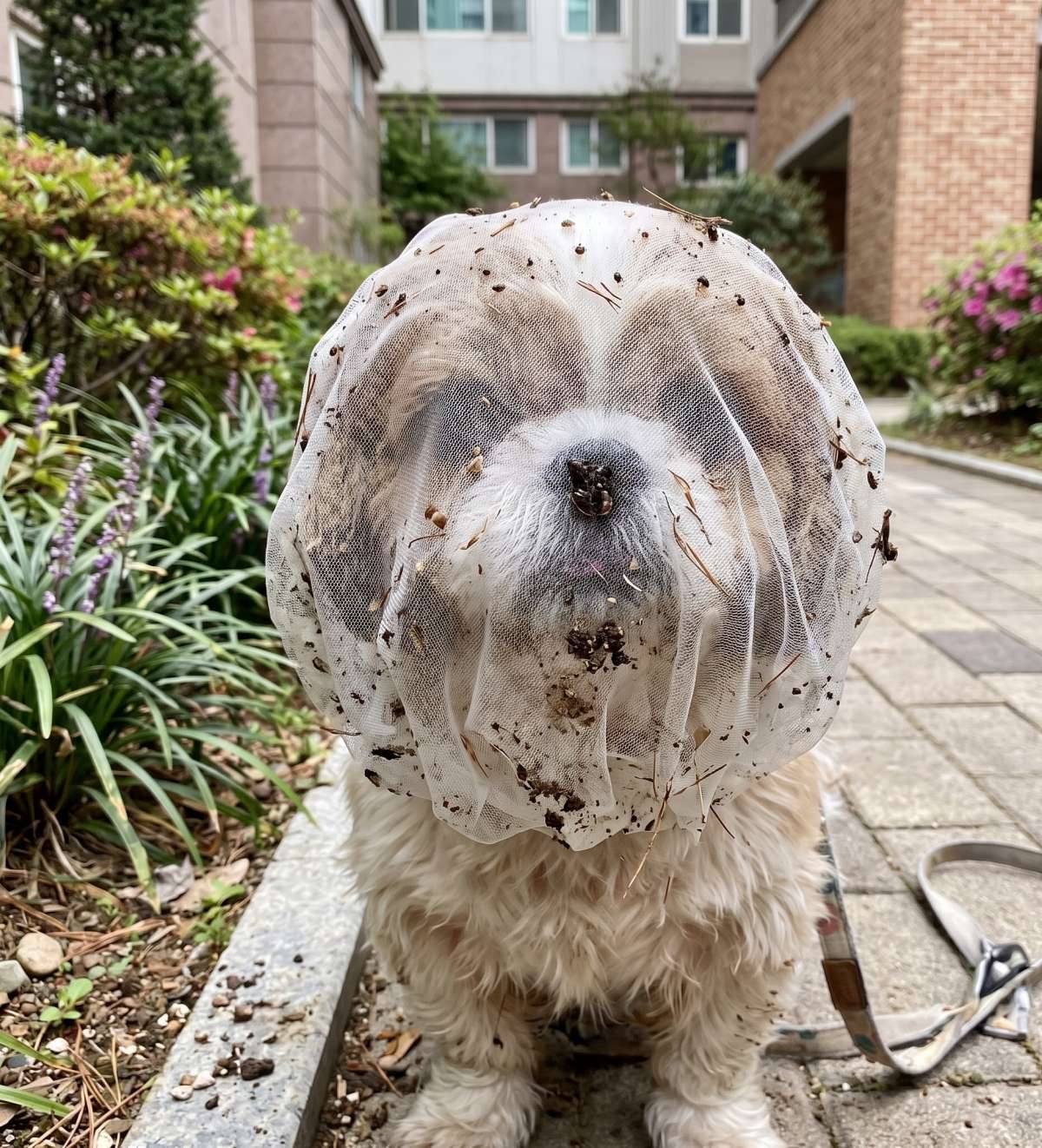
The buzz is around a mesh jangdok cover Daiso sells for just 1,000 KRW (about $0.75). Pet owners have started repurposing it in a surprising way. Available in two diameters—23 cm and 30 cm—the cover’s intended job is to sit over the opening of traditional jars used for soy sauce or fermented paste, letting air circulate while keeping pests out. Lately, though, people have discovered it works great as a face protection cover for dogs on walks, and the trend has taken off across social platforms and pet communities.
On Instagram Reels, in comment threads and on pet forums, real users are posting things like, “Saw it on a Reel and bought one,” “If you hadn’t said anything, I would’ve thought it was a new pet product,” and “It actually works.” The clear value for the price has spread by word of mouth, and owners are already calling it a walking cheat code.
Why use a jar cover for dog walks?
There are two big reasons owners are embracing this hack: preventing dogs from eating dangerous objects and keeping pests away from their faces.


Many dogs pick up things off the ground while on walks—stones, cigarette butts, food scraps. Veterinarians call this behavior pica. It’s not just poor manners or greed; it can come from nutritional imbalances, anxiety, or compulsive behaviors. The stakes are high: swallowed objects can get stuck in the digestive tract, causing blockages, and sharp items can perforate the gut. Both problems often require emergency surgery, which can cost hundreds to thousands of dollars. Cigarette butts are especially dangerous—nicotine poisoning can be fatal in small dogs. Rotten food or street scraps can expose pups to bacteria like Salmonella or Campylobacter. Many emergency visits happen because owners didn’t see the dog swallow something and only noticed later. One owner said their dog used to try to chew stones; after putting the cover on, the dog couldn’t grab anything and still breathed comfortably, which was a huge relief.
Users also praise the cover’s pest-blocking benefits. When the weather warms up, ticks and flying insects become a real problem. Ticks often attach near the face and ears, and flying bugs can get in the eyes, causing conjunctivitis or other eye issues. Some ticks can transmit zoonotic illnesses—like severe fever with thrombocytopenia syndrome (SFTS) and Lyme disease—so they’re a risk to both pets and people. Because the face and ears have less fur, ticks can latch on more easily, and pre- and post-walk checks alone aren’t foolproof. The mesh’s breathability is a plus: dogs usually don’t feel as restricted as they might with a rigid muzzle. One user even joked that their dog seems to run with extra confidence once it’s on—walks have twice the energy.

How to choose and use one
If you’re using a mesh jangdok cover for walks, check a few basics. First, pick the right size: based on user feedback, 23 cm usually fits small dogs, while 30 cm is better for medium breeds. Make sure the elastic isn’t too tight—there should be room for one or two fingers under it. Too-tight elastic can cut circulation or irritate skin. The mesh is easy to clean, so rinse it after each walk for hygiene.
Dedicated snoods or dog face masks typically sell for 10,000–30,000 KRW (about $7.50–$22.50) or more. Getting the same function from a 1,000 KRW item (about $0.75) is a great example of low-cost, high-impact problem solving from pet owners.
Top 5 walking precautions owners often miss
Using a jangdok cover to block debris and pests is helpful, but the basics of safe walking matter just as much. Owners sometimes shrug off small details and end up in risky situations. Here are five commonly overlooked precautions, listed from the less obvious to the most critical.
Letting dogs sniff each other is often promoted as good for socialization, but it can be risky. The other dog might be nervous, sick, or in training, and its owner might not want an interaction. Approaching without permission isn’t a greeting—it’s an intrusion. If the other dog’s tail or body is stiff, keep moving. If you want a meet-and-greet, always ask, “Is it OK if they say hi?” first.
Many people only wipe paws after a walk, but ticks hide in warm, dark spots like armpits, behind ears and between toes. Grass seeds can embed in the skin and cause infection or require surgical removal. Make it a habit to brush your dog with a slicker brush and run your hands over their whole body right after walks. If you find a new lump or scab, get it checked promptly.
Even on mild days, sun-baked asphalt heats up far above air temperature. Shoes hide that heat for humans, but a dog’s bare paws can suffer serious burns. If you press the back of your hand to the pavement for five seconds and can’t stand it, it’s too hot for your dog. On hot days, stick to shaded routes or walk after sunset.
People often remember water in summer but forget it in cool weather. Dogs need fluids year-round to regulate body temperature. Heavy panting during a walk means mild dehydration has begun; prolonged dehydration stresses the kidneys. For walks longer than 30 minutes, bring a portable water bottle. Older dogs and brachycephalic breeds (like pugs and bulldogs) struggle more with temperature regulation and should be offered water frequently.
Retractable leashes are popular but prone to accidents when owners lose control of length. When extended 3–5 meters, the risk of collisions with bikes or people around corners jumps. Owners trying to stop a dog with the lock can snap the leash or suffer finger abrasions. In busy areas or narrow alleys, keep the leash around 1.5 meters. Experts say a fixed-length leash paired with an H-style harness offers better control and bonding than a retractable.















Most Commented