
Translation result
Is there anyone who grew up in Korea without a tteokbokki memory? Maybe it’s the sweet-and-spicy plate from the tiny snack shop in front of your school, the steaming fish‑cake broth that warmed you on a freezing evening, or pooling cash with friends for instant tteokbokki and fried rice. Tteokbokki isn’t just a dish — it’s a shared, cross‑generational memory. Trendy spins like rose, cheese, and mala pop up all the time, but people always come back to that familiar gochujang‑based flavor.
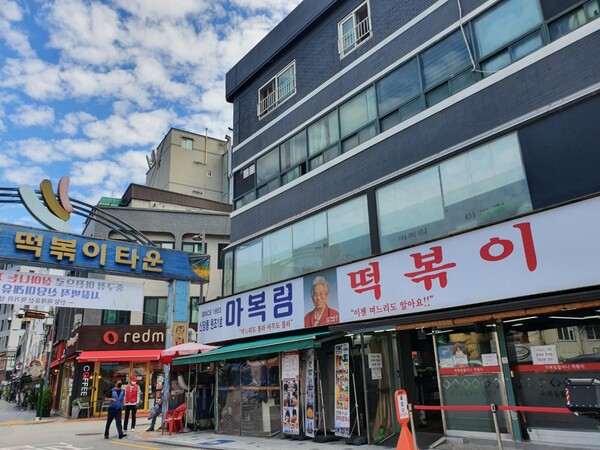
At the heart of this comfort food story is one shop. Today we’re spotlighting Mabokrim Tteokbokki in Sindang‑dong — the place credited with inventing the instant tteokbokki that became Korea’s iconic street snack.
◇ The legendary start of the Sindang‑dong tteokbokki alley
Walk into Sindang‑dong and you’ll spot the arch proclaiming the area the “Seoul Future Heritage Sindang‑dong Tteokbokki Food Alley.” In the early 2000s the alley was shoulder‑to‑shoulder with visitors; it’s a bit calmer now, but many shops still thrive. Leading the pack is Mabokrim Tteokbokki, a place that’s been anchoring the neighborhood for decades.
The story begins in 1953. Right after the Korean War, food was scarce. Grandma Mabokrim, who had moved from Gwangju in South Jeolla, set up a small stall in Sindang‑dong to make ends meet. Legend has it she was inspired by the way jajang sauce clung to sliced rice cake at a Chinese restaurant and experimented by blending gochujang with jajang. Cooking rice cakes and vegetables in a pot over a briquette fire felt revolutionary then, and 1960s policies that encouraged wheat‑based foods helped snack dishes like hers spread.
From the late 1970s, tteokbokki stalls clustered into a true alley. By the 1980s the neighborhood had a youthful energy — some shops even had DJ boxes and music, turning it into a popular date spot. Students heading to nearby Dongdaemun Stadium would often drop by for a “round two.” In a time when food doubled as city entertainment, Sindang‑dong was the crossroads. Mabokrim became famous nationwide, helped along by the catchy slogan “Even a daughter‑in‑law wouldn’t know.”
◇ “Even a daughter‑in‑law wouldn’t know” — the secret that turned out to be jajang
Tteokbokki actually has roots in royal cuisine, where rice cakes were briefly fried and tossed with beef and vegetables in a soy‑based sauce. Back then, rice cakes, oil, and beef were luxury ingredients, so that version wasn’t something ordinary people ate often. If you’re after a traditional soy‑sauce style, there are vendors at Tongin Market who still make oil‑fried tteokbokki by marinating rice cakes in soy sauce and frying them.
Grandma Mabokrim’s twist came from a happy accident. After tasting jajang‑coated rice cake at a Chinese place, she swapped out a purely soy base for jajang and added gochujang for a spicy kick. The result was a balanced sauce with spicy, sweet, and savory notes — the Sindang‑dong signature. The phrase “Even a daughter‑in‑law wouldn’t know,” which popped up in a 1990s gochujang ad, marked when that secret sauce entered public memory. After Grandma Mabokrim passed away in 2011, her daughters‑in‑law kept the recipe alive. Today the grandchildren run the shop, preserving the original seasoning and cooking method she taught for more than 70 years.
◇ The full K‑bunsik course: tteokbokki, then fried rice
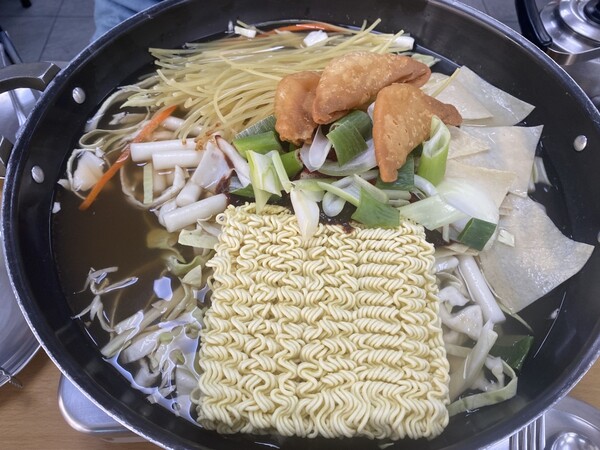
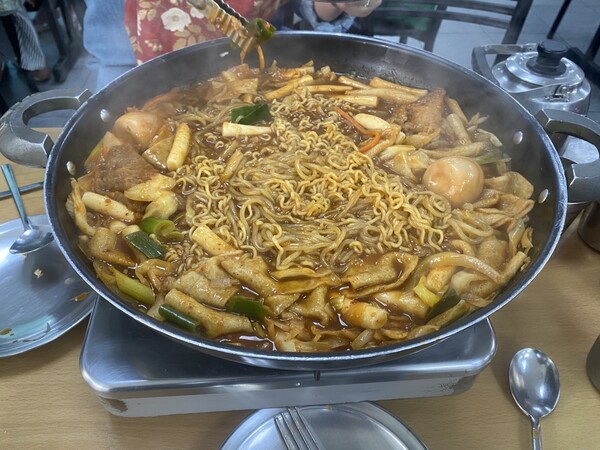
The signature is, unsurprisingly, instant tteokbokki. Portions come for 2 to 5 people. The pan arrives loaded with wheat rice cakes, fish cakes, ramen, chewy noodles (jjolmyeon), yakimandu (fried dumplings), and cabbage. The sauce has a deep reddish‑brown hue thanks to the jajang. When the burner at your table is lit, the sauce thins, then bubbles and thickens. The rice cakes glisten as the seasoning seeps in. One bite delivers a satisfyingly chewy texture, then a sweet‑then‑mildly‑spicy flavor that teases the nose. It’s not overpowering, so anyone can enjoy it — and that addictive balance draws international visitors, too.
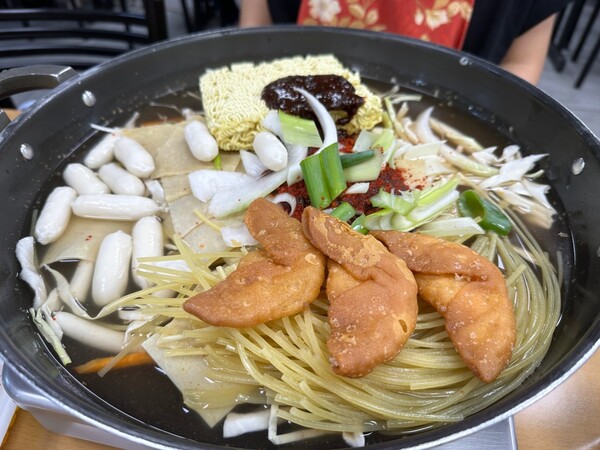
One great thing about instant tteokbokki is the add‑ins. Where once cheese rice cake was the only extra, you can now choose rice cake, fish cake, ramen, jjolmyeon, smoked egg, cheese, and more. Personally, I love yakimandu and egg. The dumplings soak up the sauce and turn tender, creating a rich, oily contrast that plays beautifully with the seasoning. Try breaking the egg yolk with a spoon and stirring it into the sauce — it amplifies the dish’s nutty richness.
Don’t skip the fried rice at the end. In the past the main location was so packed that customers had to head to a family branch to try it, but now the flagship offers fried rice, too. On a flat pan they mix rice with sesame oil and crushed laver flakes, pressing and frying it until crispy. The leftover sauce slips between each grain, delivering an explosion of savory, toasted flavor. A crunchy fried‑rice finish is the perfect grand finale.
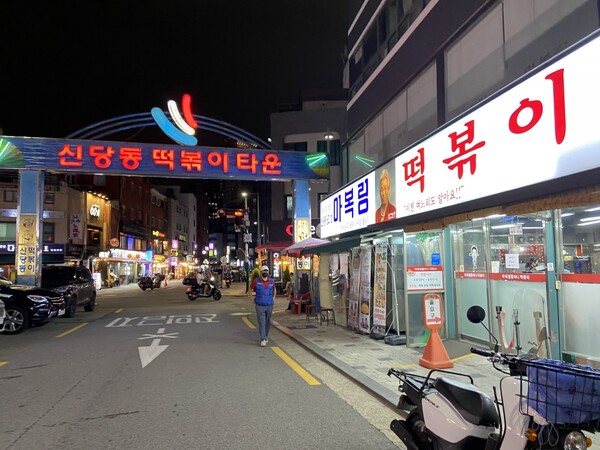
◇ The original’s pride: preserving a landmark alley
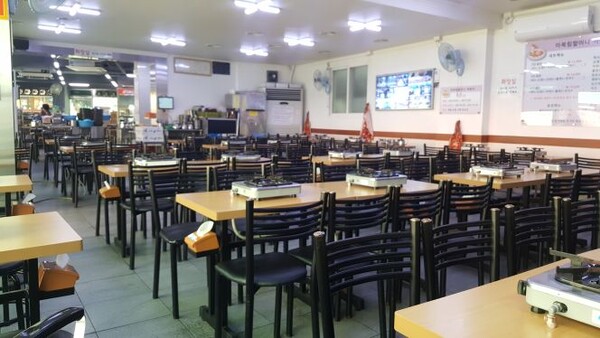
At mealtimes the alley still fills up — it’s busy enough they even offer valet during peak hours. Inside, a long, narrow dining room packs tables close together, keeping that cozy, bustling neighborhood feel. Renovations have brightened the space, but old stainless bowls and the simple décor remain, preserving the nostalgic charm.
The dining room is nearly always full and buzzing with friendly energy. Every table’s gas burner bubbles with tteokbokki, adding to the lively scene. Generations who remember school‑front snack shops and travelers chasing time‑honored city flavors all find themselves around the same bubbling pot.
While palates have shifted toward hotter, more intense versions over the years, Mabokrim stays true to Grandma’s balanced seasoning. That steadiness keeps families and international visitors coming back across generations. With spring warming up, why not take a day trip to Sindang‑dong to taste that nostalgic instant tteokbokki? Grandma’s creativity and care are still keeping Sindang‑dong warm, one spicy bowl at a time.
▲Name: Mabokrim Tteokbokki
▲Address: 5 Dasan‑ro 35‑gil, Jung‑gu, Seoul
▲ Siksin star rating: 2 stars
▲Hours: Daily 09:00–22:50; closed on the 2nd and 4th Monday of each month
▲Recommended menu and prices: 2‑person set 17,000 KRW (≈ $12.75), 3‑person set 20,000 KRW (≈ $15.00), smoked egg add‑on 1,000 KRW (≈ $0.75)
▲Siksin user ‘kongbear’ review: As the original Sindang‑dong tteokbokki from Grandma Mabokrim, the black sauce goes great with ramen, jjolmyeon, and yakimandu — it’s delicious^^
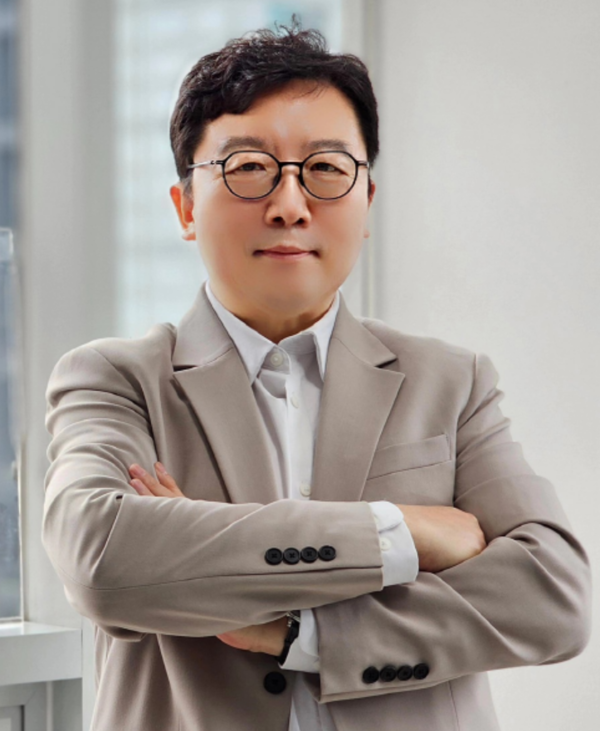
/Ahn Byung‑ik, CEO of Siksin
Co‑chair, Korea FoodTech Council, 2022–2024
President, Korea FoodTech Association, July 2017–May 2022
CEO, Siksin, since May 2010
Director, Korea Internet Professional Association, since 2015
Adjunct Professor, Graduate School of Industry, Entrepreneurship & Management, Chung‑Ang University, 2012–2019
Adjunct Professor, Graduate School of Information and Communication, Konkuk University, 2010–2017










Most Commented