
Translation result
Samgyeopsal — pork belly — is South Korea’s most beloved restaurant dish and a household staple. But almost everyone knows the awkward moment of shoving leftovers into a plastic bag, tossing them in the freezer, and later unearthing a solid block of meat. Its alternating layers of fat and lean make it incredibly flavorful, but they also leave it vulnerable to air and quick to spoil. How you store, cook, and clean up samgyeopsal can make a big difference.
Pork belly tastes amazing because of those layers of fat and meat, but that structure also means it’s especially exposed to air. The good news? You can store samgyeopsal at home without drama.
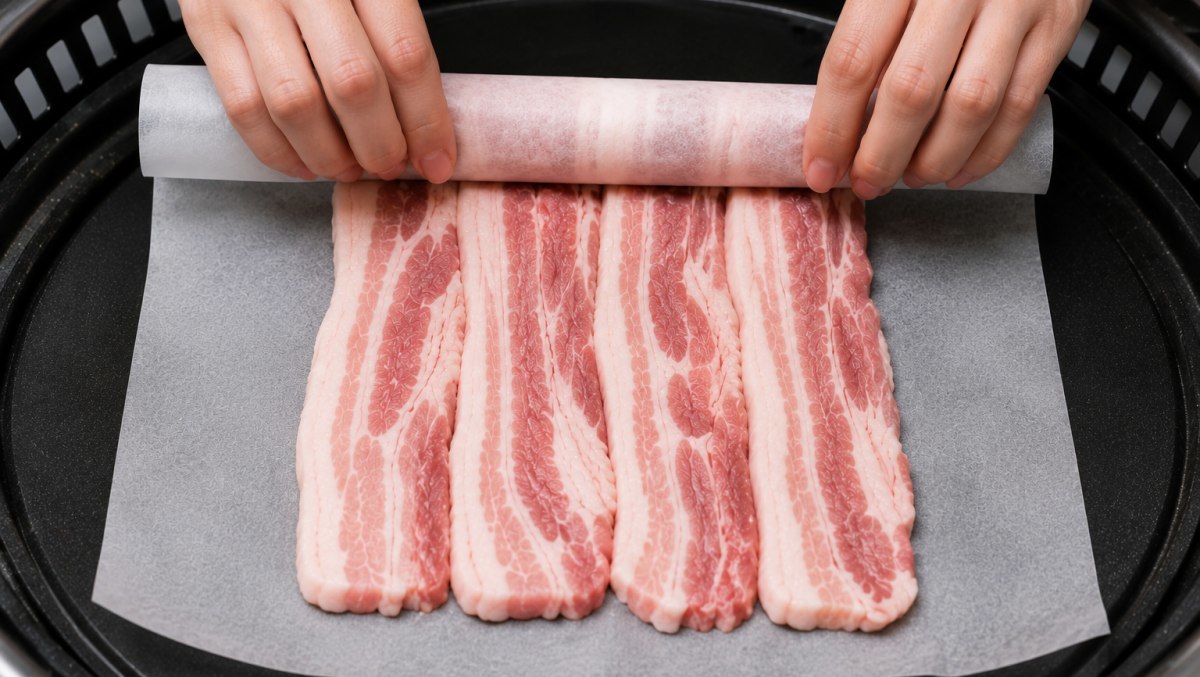
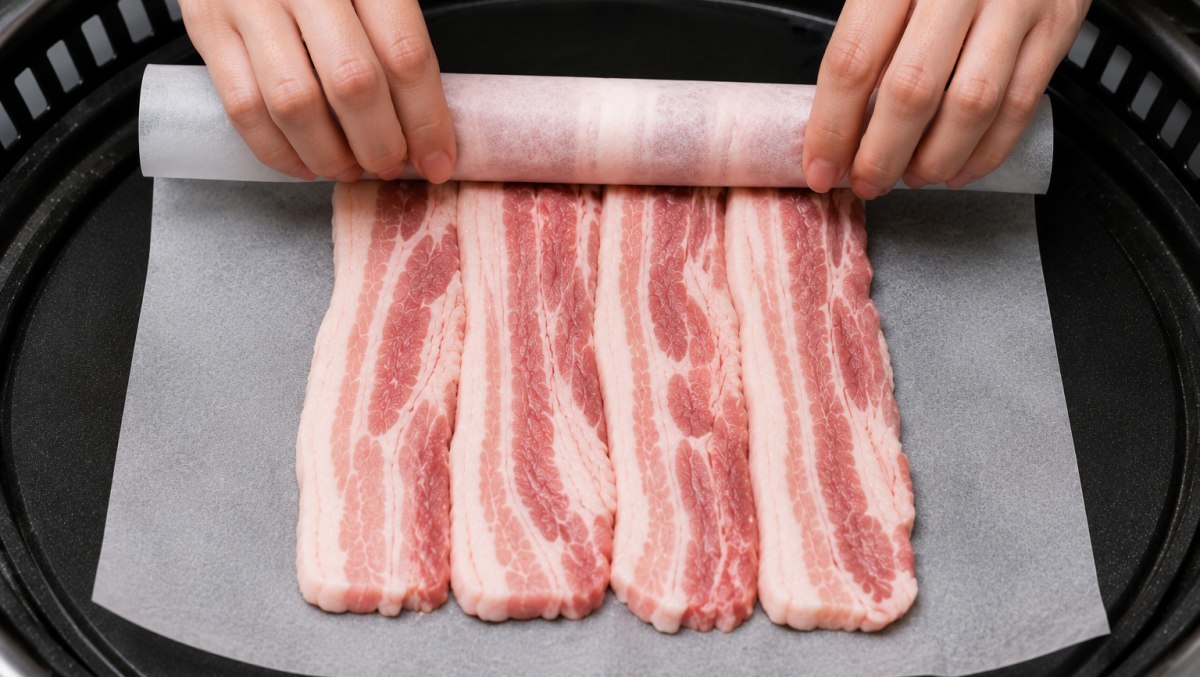
One simple trick from the YouTube channel ‘Jinjja Ggultip’: if you just toss leftover slices into a bag, they’ll often freeze into one sticky lump. Instead, lay the slices neatly on a sheet of parchment paper and roll them up snugly.
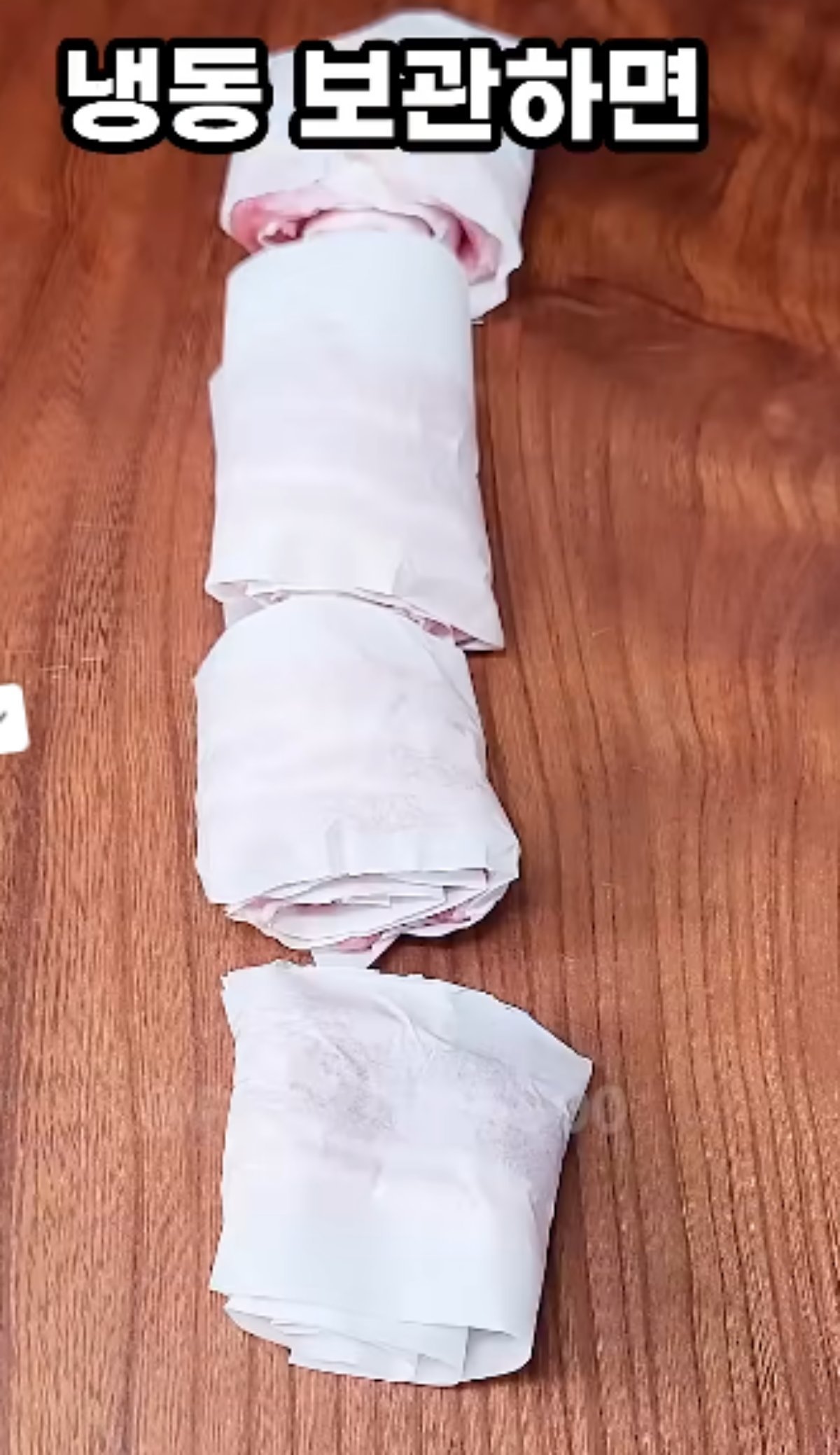
Then use scissors to cut the roll into portion-sized pieces and freeze them. When you want to cook, pull out just what you need. Unroll the parchment and use exactly the amount you want—no more chipping away at a frozen block.
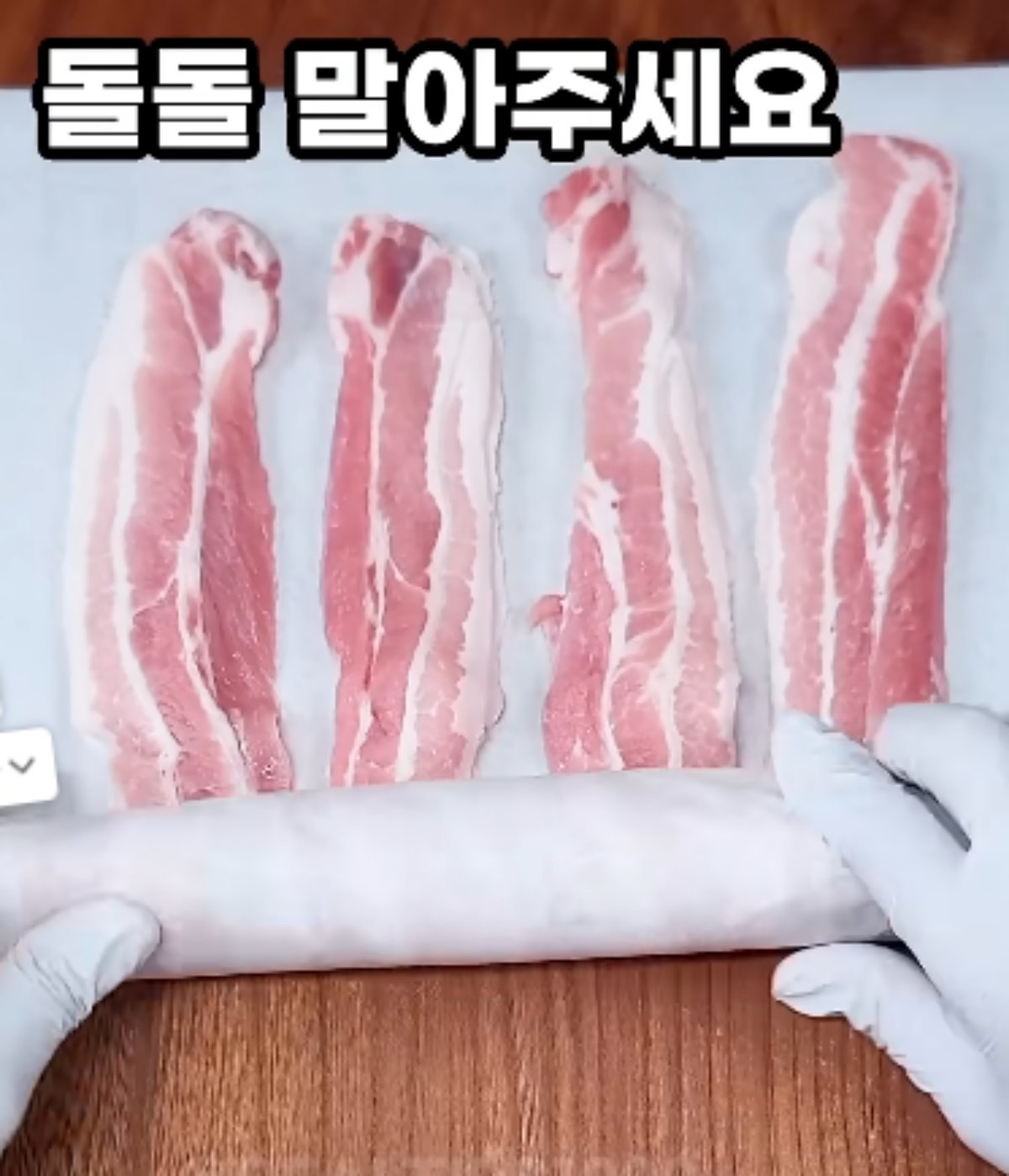
The secret to keeping samgyeopsal fresh is minimizing air exposure and making it easy to pull small portions as you need them. Rolling the slices prevents them from freezing into a single mass and saves time—just unroll and cook.
Other effective options are vacuum sealing and lightly coating the meat with cooking oil. No vacuum sealer? Put the meat in a zip-top bag and slowly lower it into a basin of water to push the air out with water pressure—a DIY vacuum hack. For refrigerated storage, a light brush of oil on the surface slows moisture loss and helps preserve texture. When thawing frozen meat, avoid microwaving; instead, move it to the fridge a day before cooking to thaw slowly. Low-temperature thawing is the best way to preserve juices.
How do you get better results when grilling?
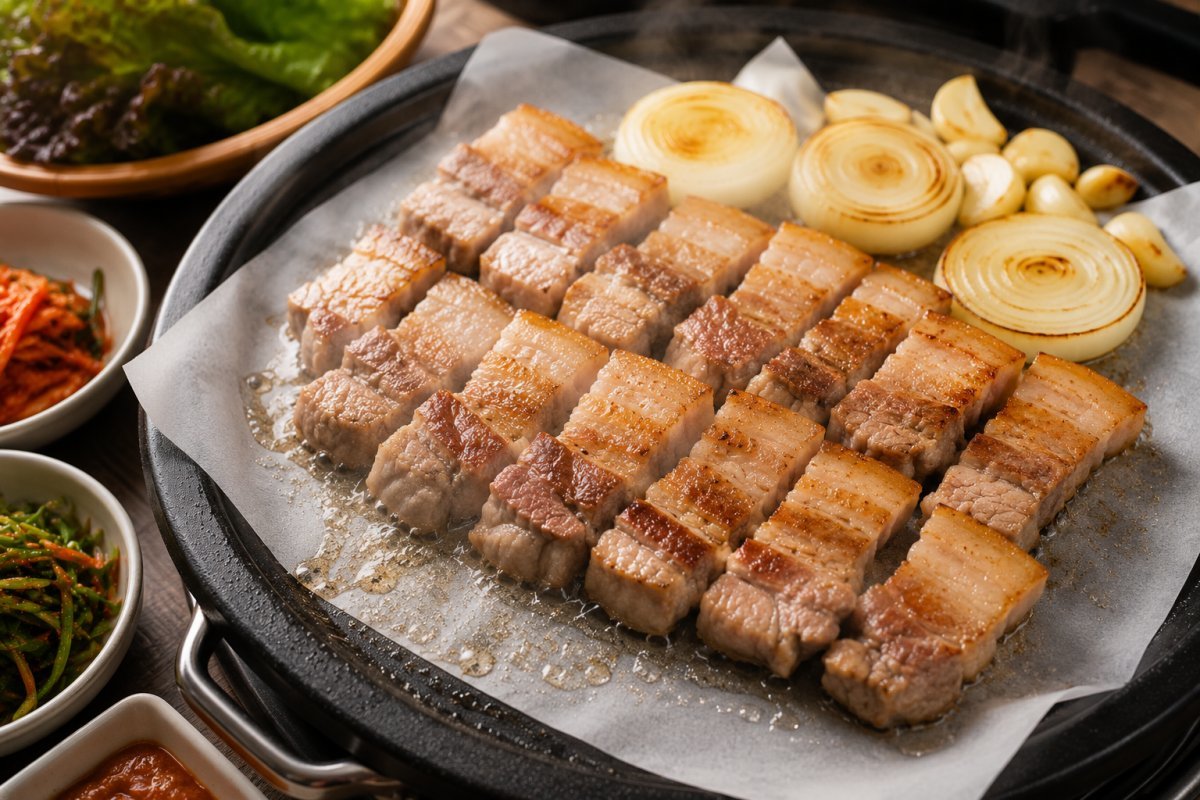
Take the meat out of the fridge and let it sit at room temperature for 15–20 minutes before grilling so the center and surface even out. Put the meat on the grill only after the surface hits at least 180°C (356°F) — that high heat maximizes the Maillard reaction and gives you deeper flavor. Resist the urge to flip frequently; wait until one side turns golden, then flip once or twice so juices stay locked in.
Cutting down on smoke and smell matters, too. Lining the griddle with parchment paper before cooking helps prevent oil splatter and keeps the meat from sticking, making cleanup a breeze. Grill garlic or onions alongside the pork for added flavor—their aroma also helps mask any off-notes. Using an air fryer? Try 180°C (356°F) for 10 minutes, flip, then 5–7 more minutes for that coveted crispy-outside, tender-inside texture.
How should you dispose of leftover oil?
Dealing with leftover pork fat matters for your pipes. Because pork fat solidifies at room temperature, pouring it down the sink can coat pipe walls and cause clogs. The best approach is to pour liquid fat into a paper cup or empty milk carton while it’s still warm, stuff it with newspaper or a paper towel to soak it up, then toss it in your regular trash in the appropriate bag.
If you have only a little oil, sprinkle baking soda into the hot pan right after cooking to absorb the grease, then wipe it clean—this cuts down on detergent use. Want to reuse the fat? Strain it through a coffee filter to remove impurities and keep it refrigerated for small uses like fried rice or stews. Reused fat goes rancid quickly, so aim to use it within a week.
Samgyeopsal storage and cooking guide
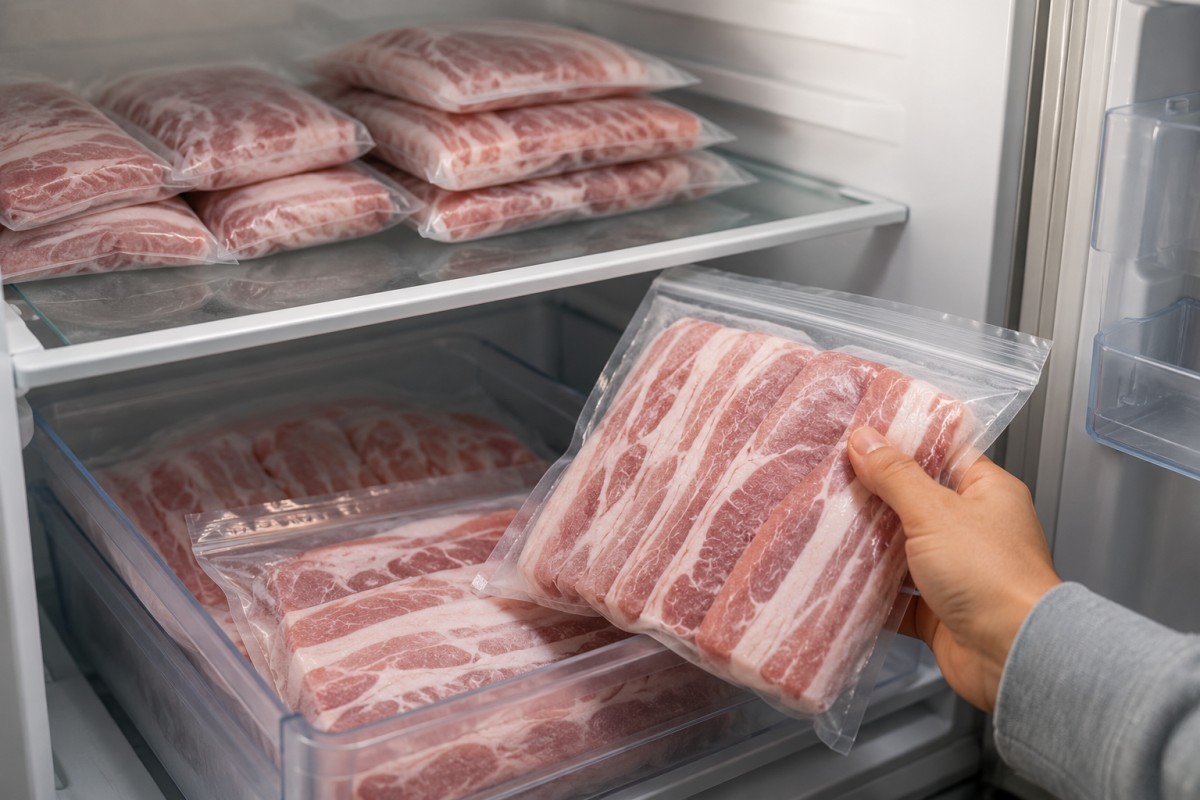
To protect both flavor and food safety, keep samgyeopsal at the right temperature from the moment you buy it. Refrigerate at 5°C (41°F) or below and eat within 2–3 days of purchase. If you need to store it longer, freeze it right away—microbial growth can accelerate after that short window.
Frozen at −18°C (0°F) or colder, samgyeopsal can be safe for up to four months in theory. In practice, temperature fluctuations from opening the freezer mean it will taste best if you eat it within about two months. The longer it’s frozen, the tougher the texture and the more flavor you’ll lose.
Check for spoilage with your eyes, nose, and touch. Fresh pork belly is bright pink-red; when it starts to go bad, the surface turns gray or brown. If the meat feels sticky or slimy, or if it gives off a sharp, unpleasant sour smell, bacteria have likely taken hold—discard it immediately, regardless of whether you plan to cook it.
How to prevent oil from splattering
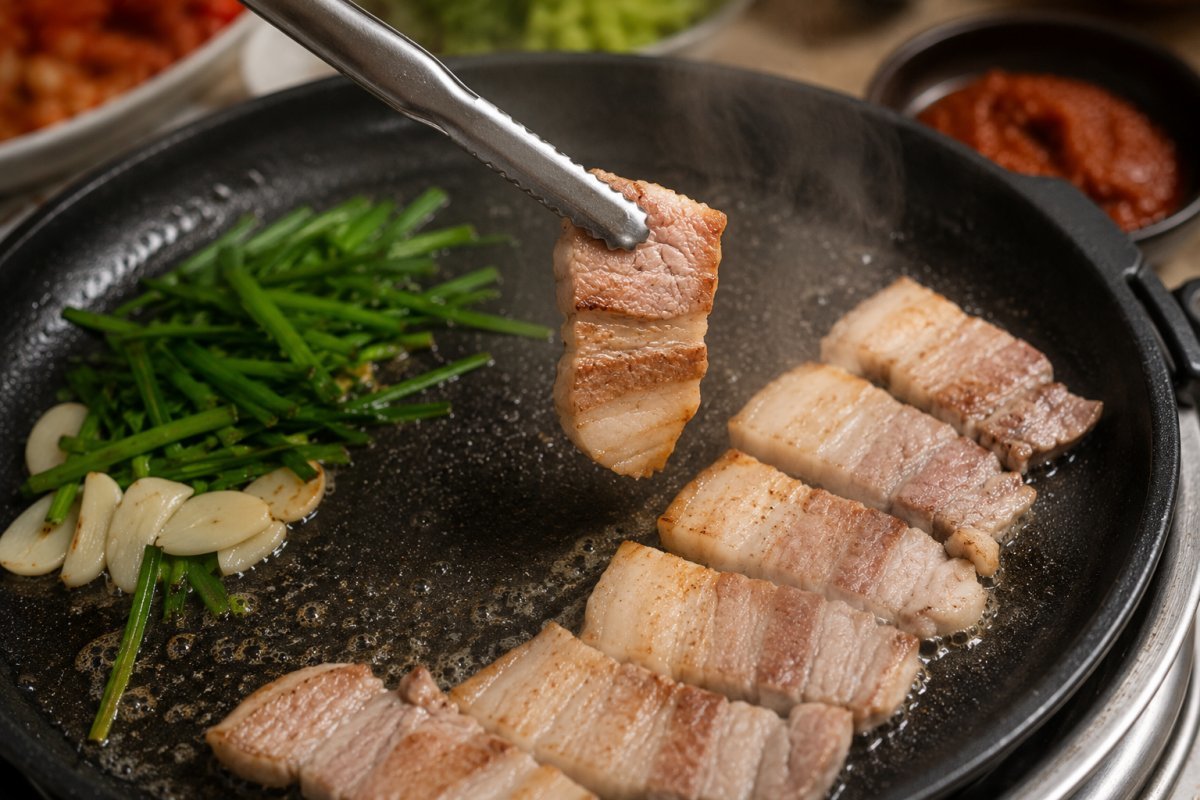
One of the biggest annoyances when cooking samgyeopsal is oil splatter. The most effective fix is surprisingly simple: remove surface moisture. Pat the pork thoroughly with paper towels before it hits the grill to cut splattering dramatically.
Letting the meat warm slightly at room temperature before cooking also helps. Cold meat hitting a hot grill causes rapid temperature change and moisture condensation, which ramps up splatter.
What pairs well with samgyeopsal?
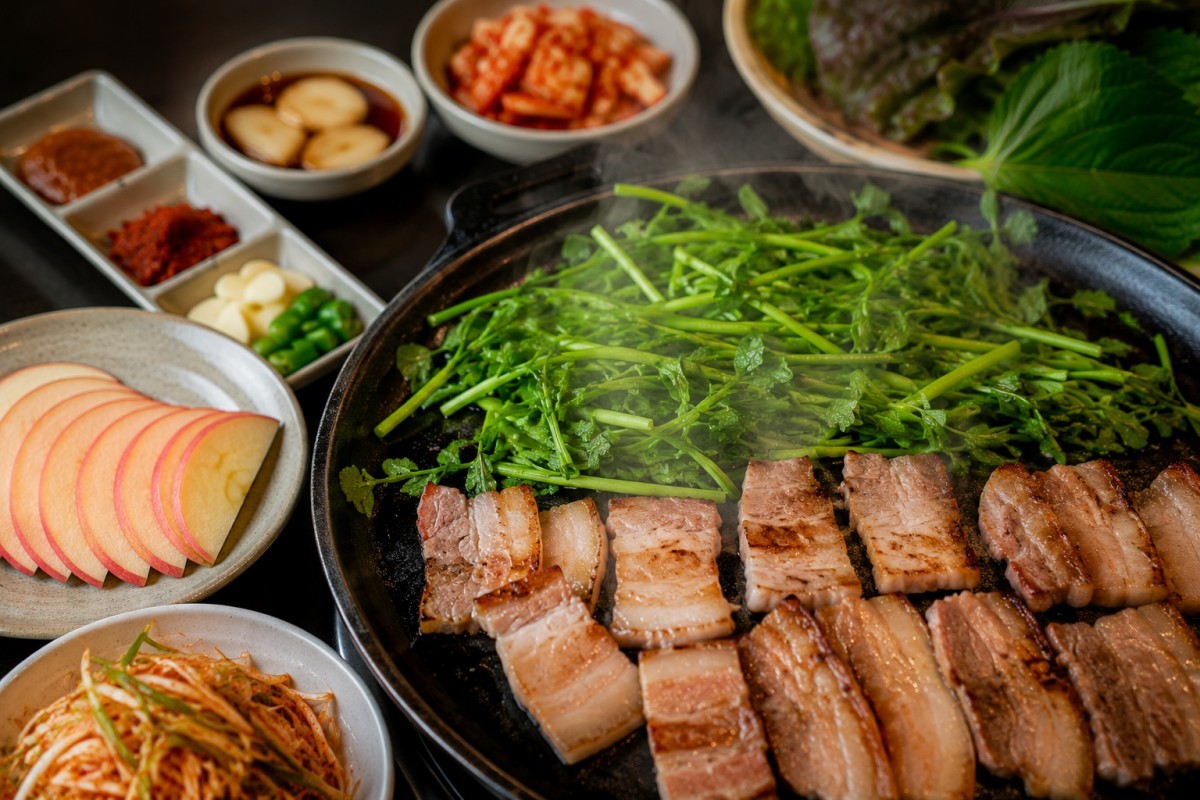
Pork belly is high in saturated fat, so pairing it with water dropwort (minari) is smart. The fiber in minari can bind with fat in the gut and help reduce excessive absorption. Its distinct aroma also masks porky odors and may support liver detoxification.
Eat it fresh as part of a lettuce wrap or lay minari on the grill just before the pork is done so it wilts slightly. Don’t leave it on the hot plate too long—overcooking makes the fiber tough and destroys nutrients. You just want a light hint of pork oil on it.
Condiments like ssamjang, kimchi, and pickles are delicious but often high in sodium. Serve apples alongside the meal: the potassium in apples helps balance sodium and promotes its excretion, which can reduce post-meal bloating and help prevent sudden blood pressure spikes.
Apples also contain organic acids that act as gentle digestive aids for pork protein. Thinly slice apples to use in place of lettuce for a wrap, or julienne them and toss into a quick dressed salad. Their bright acidity cuts the richness of the pork, keeping your palate refreshed. Grilled apples get sweeter and create an unexpectedly delightful contrast with the meat.










Most Commented