
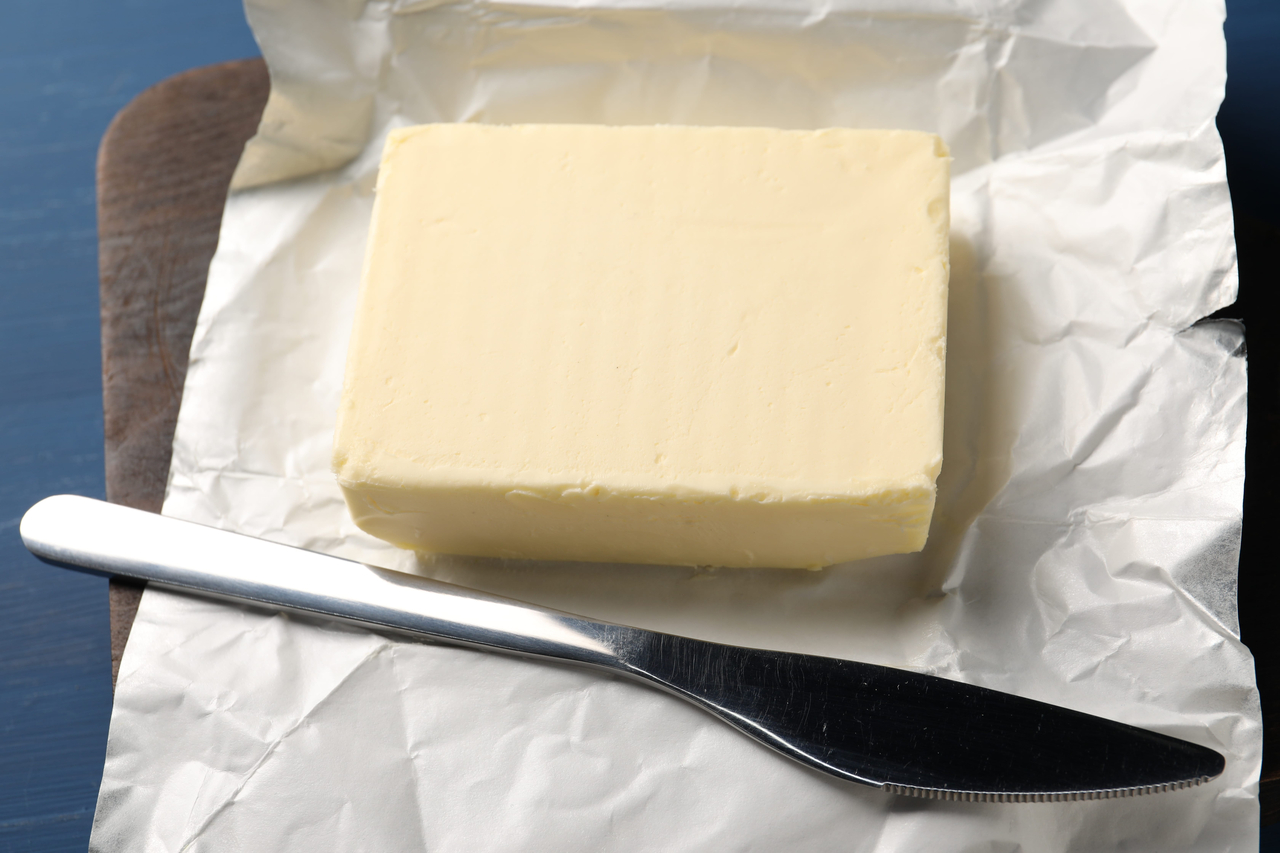
 [RealFood=Reporter Yuk Sung-yeon] “It says ‘milk butter’ — isn’t this natural butter?”
A woman in her 30s, identified as Gu, said she didn’t realize the butter she bought at a convenience store was processed butter. “I bought it to avoid margarine — I dislike palm oil and additives — but it turned out to be processed butter,” she complained.
Butter might seem like one straightforward food, but it’s divided into “natural butter” and “processed butter.” Both can be labeled simply as “butter,” which tricks some shoppers into thinking they’re buying the natural kind.
Butter is a dairy product made by separating milk fat from raw milk or other milk products, or by fermenting them. Processed butter is what you get when manufacturers add other foods or food additives to that butter. In plain terms, the butter most people picture is a single-ingredient product made only from milk. Processed butter is a blended product that mixes butter with vegetable fats and additives.
If the food type is listed as “butter,” the ingredient list is usually short — cream, salt, cultures, and so on. Processed butter, by contrast, includes a wider range of ingredients beyond milk fat, such as palm oil, hydrogenated oils, preservatives, and emulsifiers.
The biggest difference is milk-fat content. Under South Korea’s Ministry of Food and Drug Safety (MFDS) food code, butter must contain at least 80% milk fat. Processed butter contains 30% or more. That higher milk-fat content is what gives natural butter its rich, characteristic flavor.
Processed butter’s advantages are lower cost, a longer shelf life thanks to additives, and a texture that stays soft and spreadable straight from the fridge.
If you want to avoid additives or savor real butter flavor, choose natural butter over processed. The problem is that telling them apart isn’t always easy. Current rules allow processed butter to be labeled simply as “butter.” Names like “milk butter” or “savory butter” without a clear “processed butter” tag can confuse consumers.
To be sure, don’t trust the product name — check the “food type” listed on the back or bottom of the package. That line will tell you whether it’s natural butter or processed butter. The food code requires this label, but it’s often printed in very small type and can be hard to spot.
If a product is processed butter, study the nutrition facts. Under an MFDS revision being rolled out this year, butter must include nutrition labeling. Labels will show calories, sodium, sugars, fat, protein, and other nutrients. The MFDS expanded mandatory nutrition labeling from the previous 182 items to 259 processed foods, now including butter and processed butter.









Most Commented