
Translation result 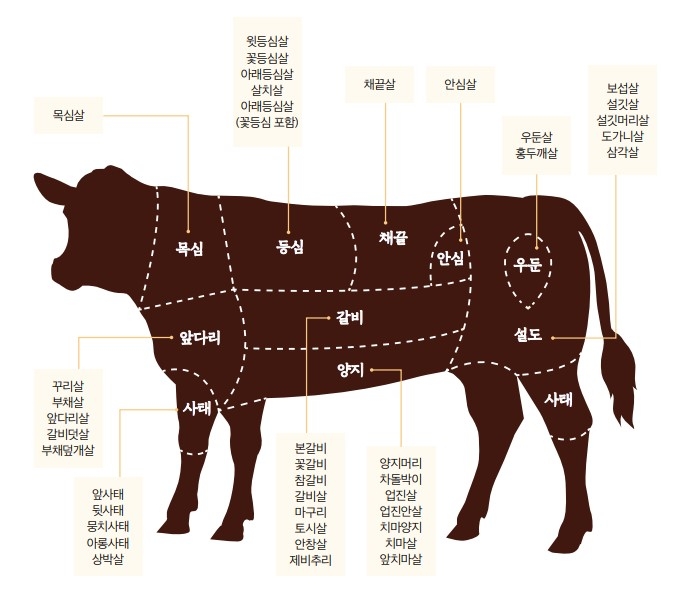 [Real Food = Reporter Yuk Seong-yeon] The Hanwoo Beef Management Committee recently spotlighted the stories behind the names of Hanwoo beef cuts.
On the 30th, the committee explained that while Western cooks often sort beef by how it’s best prepared, Koreans break a cow down much more precisely—considering muscle grain, texture and fat distribution. In fact, the Korean dictionary lists more than 100 distinct names for beef cuts.
Each name tells a little story. ‘chadolbagi’ is named for its look—tiny white ribbons of fat that appear embedded in the meat. ‘boseupsal’ takes its name from a shape that resembles a blade fitted to the tip of a plow.
Other cuts have equally vivid images behind them: ‘jebichuri’ is said to resemble a swallow spreading its wings; ‘tosisal’ looks like a traditional wrist guard; and ‘arongsatae’ was named because its muscle grain fans out like flower petals and seems to shimmer in the eye.
Korea’s beef-butcher tradition is unique on the world stage. Anthropologist Margaret Mead noted her amazement that Koreans divide a cow into more than 100 parts, praising the precision of the practice.
Cooking techniques tailored to each cut have also evolved. Lean, well-grained pieces such as udunsal and kkurisal are often served as yukhoe, Korean-style raw beef.
Noh Go-eun, president of the Korea Food Tourism Organization, said, “The distinctive names of Hanwoo cuts help people discover and enjoy each piece’s unique flavor and texture. I hope everyone gets to taste the rich variety Hanwoo has to offer.”










Most Commented