
Translation result.
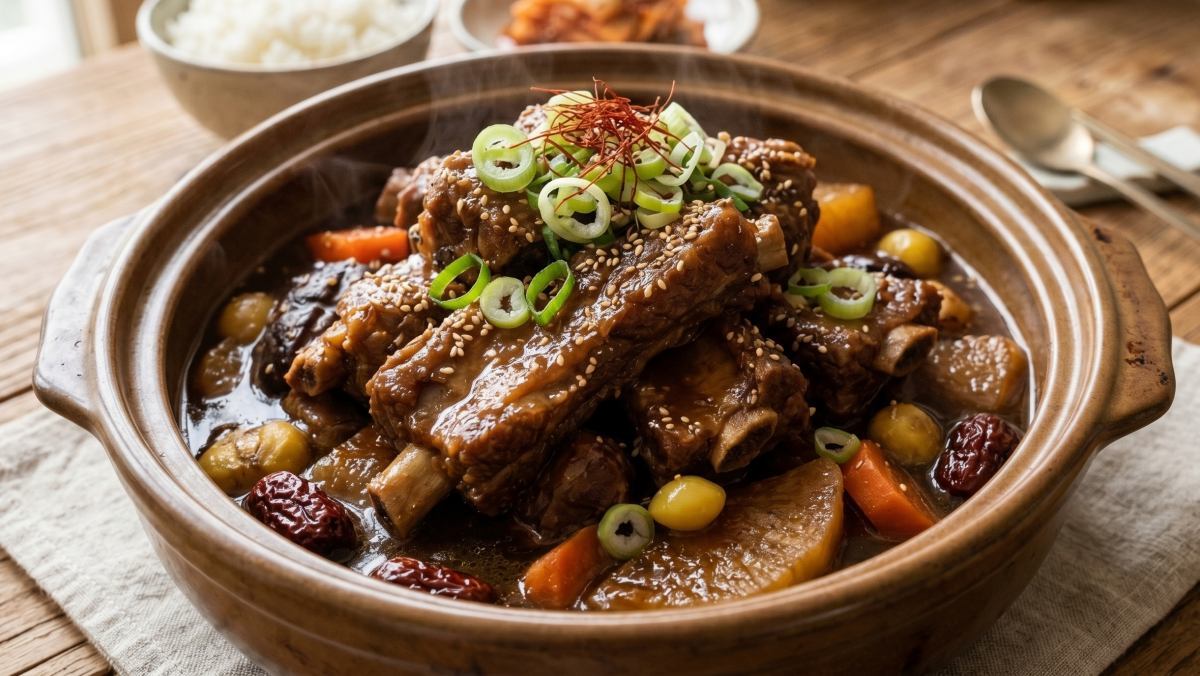
Pork back ribs are a crowd-pleaser — there’s something irresistible about pulling tender meat from the bone and enjoying its rich, savory flavor. Many home cooks assume you have to soak ribs in cold water for hours to draw out blood before cooking, but that isn’t always necessary.
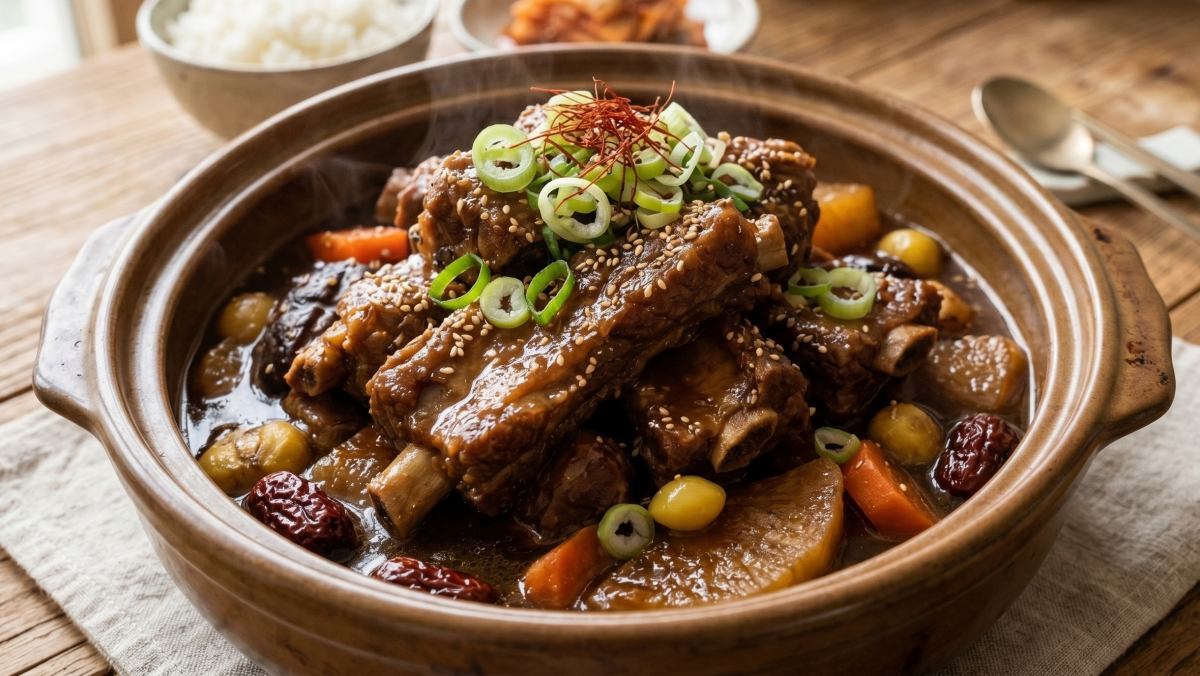
If you start with fresh, never-frozen ribs and adjust the cooking order, you can skip the lengthy soaking step, eliminate off-odors, and still get melt-in-your-mouth braised ribs. This streamlined method saves time while keeping maximum flavor — perfect for busy weeknights.
What part of the pig are back ribs, and when did people start eating them?
Pork back ribs come from the rib bones attached to the loin and the meat surrounding them. In Korea, “galbi” once brought beef ribs to mind first — beef was expensive and reserved for holidays or special occasions. Pork was commonly eaten as belly or lean cuts, and the rib section didn’t get much attention.
Back ribs only rose to popularity relatively recently. From the 1970s and 1980s, butchers began selling meat cut by specific parts, and by the late 1990s more restaurants specializing in grilled back ribs appeared. The meat around the ribs gets plenty of use, so it has a nice chew and a balanced bit of fat. That makes it ideal for braising, where the seasonings can soak in. When simmered in a sweet-and-salty soy-based sauce, back ribs become a comforting dish that appeals to everyone, from kids to grandparents.
Why you can skip soaking the ribs
Soaking ribs is a time-consuming step many cooks rely on to remove blood and avoid a gamey smell or cloudy broth. But if you buy fresh, unfrozen ribs, you can confidently skip it.
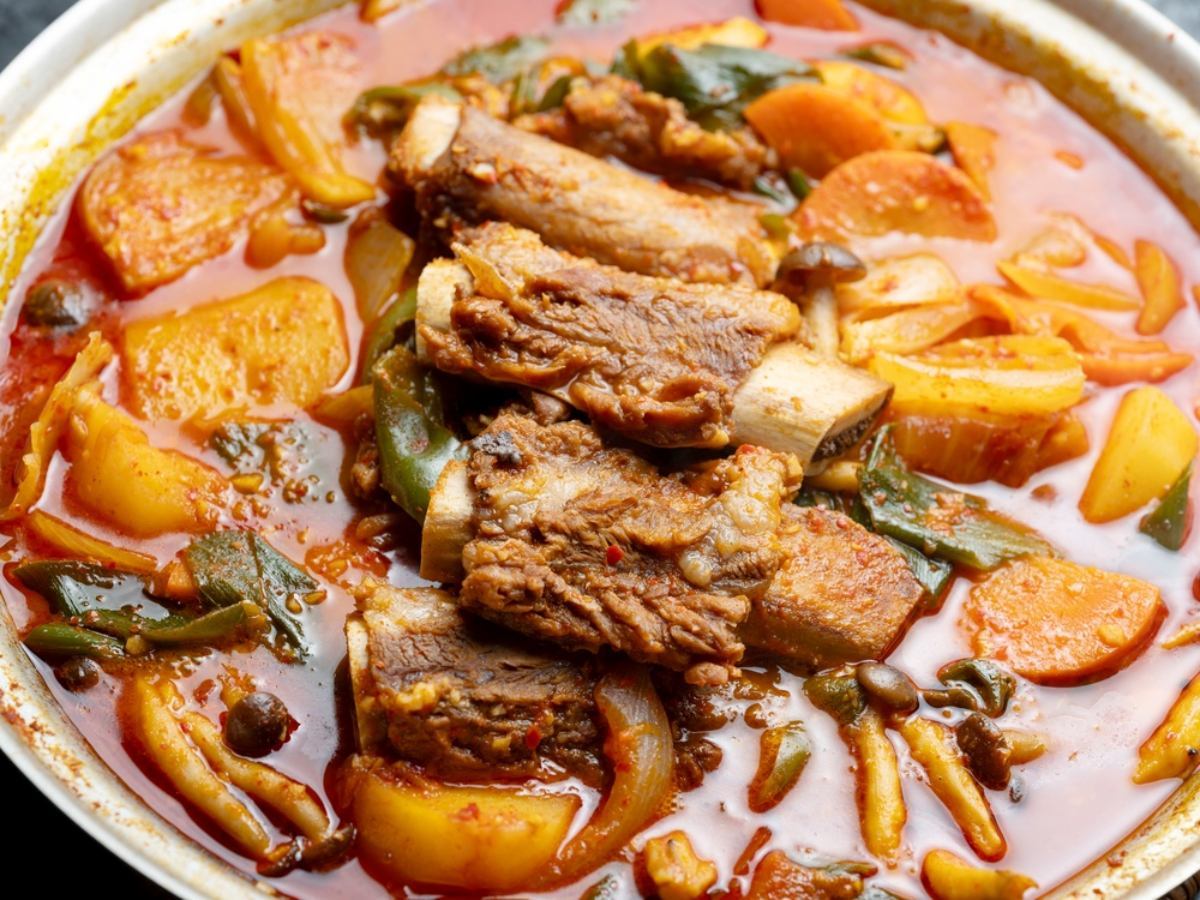
Fresh, never-frozen meat has very little inherent odor. Long soaks in cold water can wash away those delicious flavor compounds and leave the meat dry. Instead, blanch the ribs briefly in boiling water with aromatics. The high heat quickly sets the exterior, sealing juices inside, while impurities and surface odors are released into the water. This shortcut can shave off more than two hours of prep time and help the meat stay tender.
The secret to a clean, natural sweetness in this braise is using store-bought pear drink (bottled pear juice or puree commonly sold in Asian grocery aisles) instead of loading up on sugar. The pear’s enzymes help tenderize the meat and add a fresh sweetness. You’ll need one pack of fresh back ribs, 4 liters of water, one green onion, one onion, and two spoonfuls of pepper for the initial blanch. For the sauce: 1 1/2 cups dark soy sauce, 1/2 cup cooking wine, 3 tablespoons oyster sauce, 3 tablespoons minced garlic, and 8 cups of pear drink.
Begin by blanching the meat. Pour 4 liters of water into a large pot, add the cleaned green onion, a halved onion, and two spoonfuls of pepper, and bring to a rolling boil. When the water is vigorously boiling, add the fresh back ribs (no pre-soak) and simmer them for 20 minutes. While the ribs blanch, prepare the sauce in a wide pan: combine 1 1/2 cups dark soy sauce, 1/2 cup cooking wine, 3 tablespoons oyster sauce, and 3 tablespoons minced garlic, then stir in 8 cups of pear drink so the mixture is well combined.
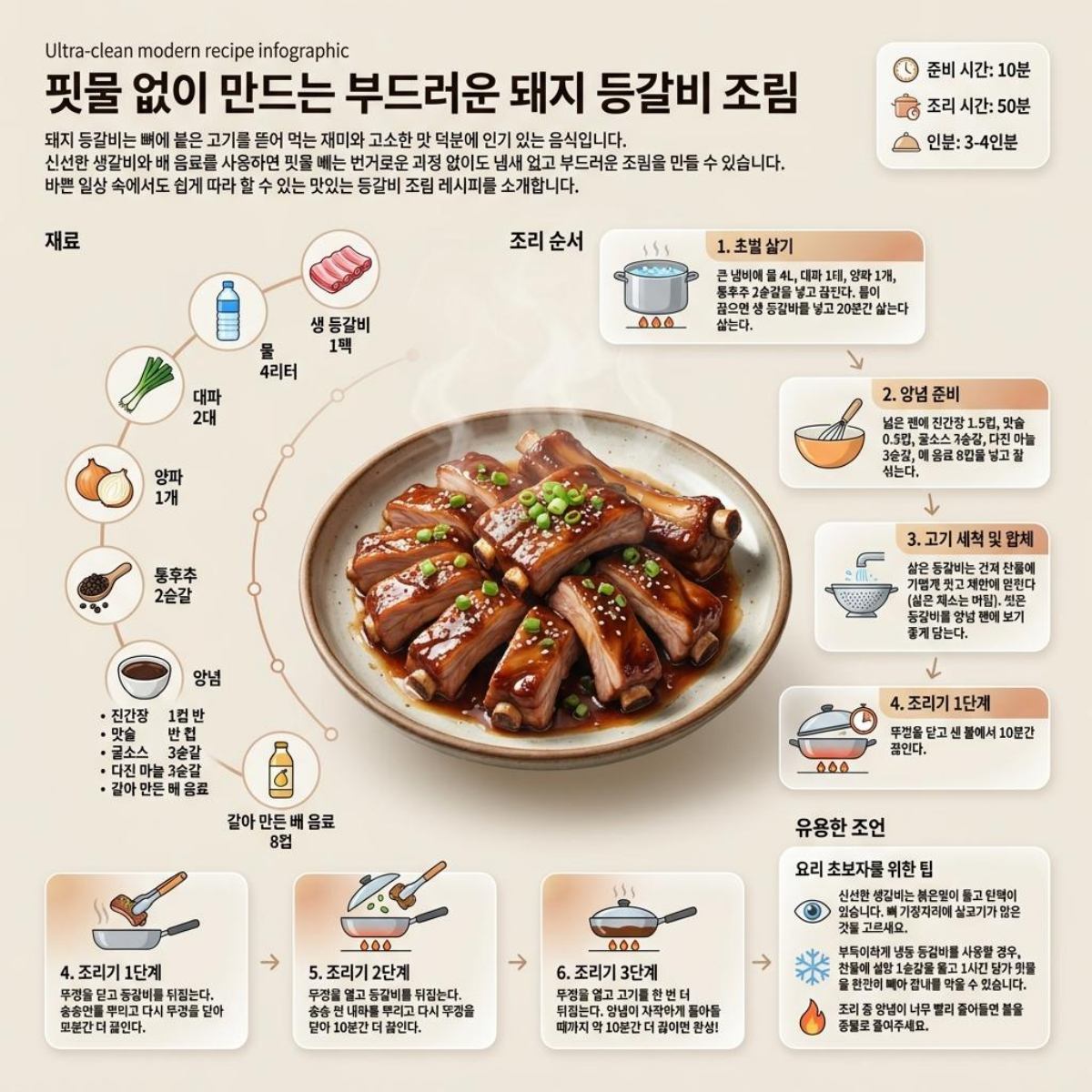
After 20 minutes, lift the ribs out and drain them in a colander, then rinse the surface briefly under cold running water. Discard the green onion and onion used for blanching. Arrange the cleaned ribs neatly in the pan with the sauce. Cover and simmer on high heat for 10 minutes. Open the lid, flip the ribs once, sprinkle freshly chopped green onion evenly over the meat, cover again, and simmer 10 more minutes. Finally, uncover, flip the ribs one last time, and cook for another 10 minutes until the sauce reduces to a glossy glaze. The result is tender, flavorful braised ribs that practically fall off the bone.
Tips for cooking beginners
To get the best braised ribs, choose fresh meat. Look for ribs with a reddish color and a springy, firm texture. Pick cuts with a good layer of meat along the bone so you’ll have plenty to enjoy after braising. If you must use frozen ribs, dissolve one tablespoon of sugar in cold water and soak them for about an hour to remove any off-odors before cooking.
If the sauce is reducing too quickly while braising, lower the heat to medium. Flipping the ribs every 10 minutes helps the sauce penetrate evenly. Adding the green onion in the second stage lets its flavor infuse the meat without turning mushy. Follow these steps, and even beginner cooks can pull off a reliable, delicious braise that will make any meal feel special.










Most Commented