
Translation result
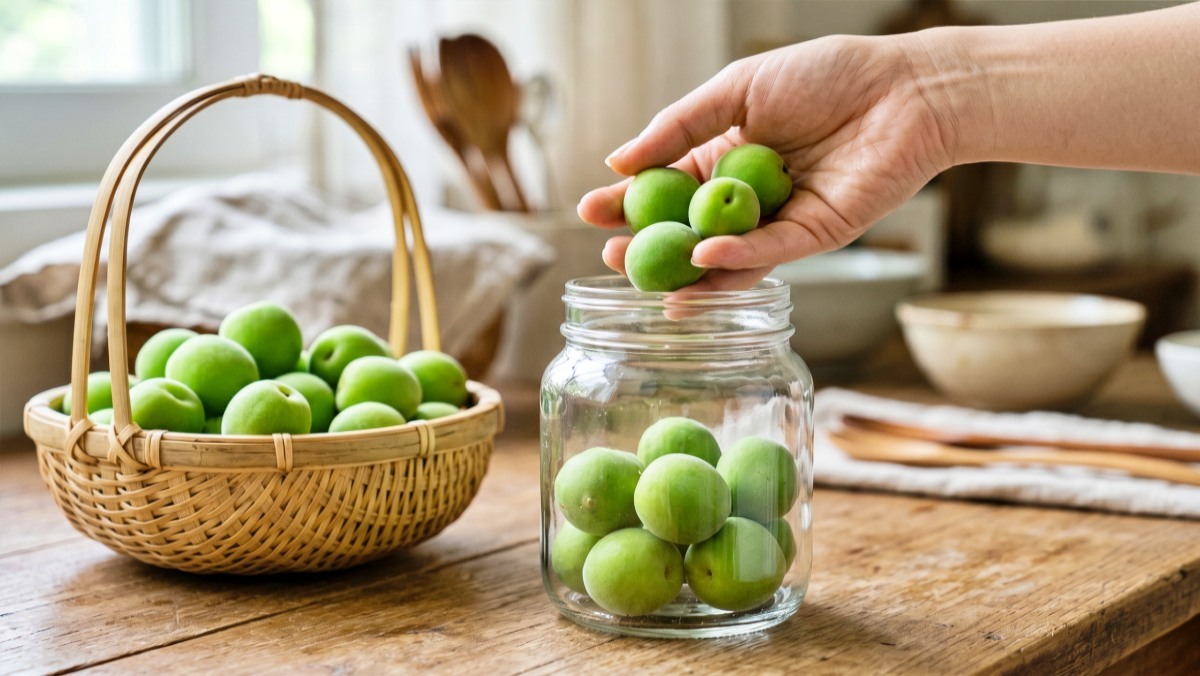
One well-made jar of plum syrup can elevate everything from side dishes to drinks. This seasonal guide walks you through choosing plums, a foolproof way to make plum syrup, and easy everyday uses.
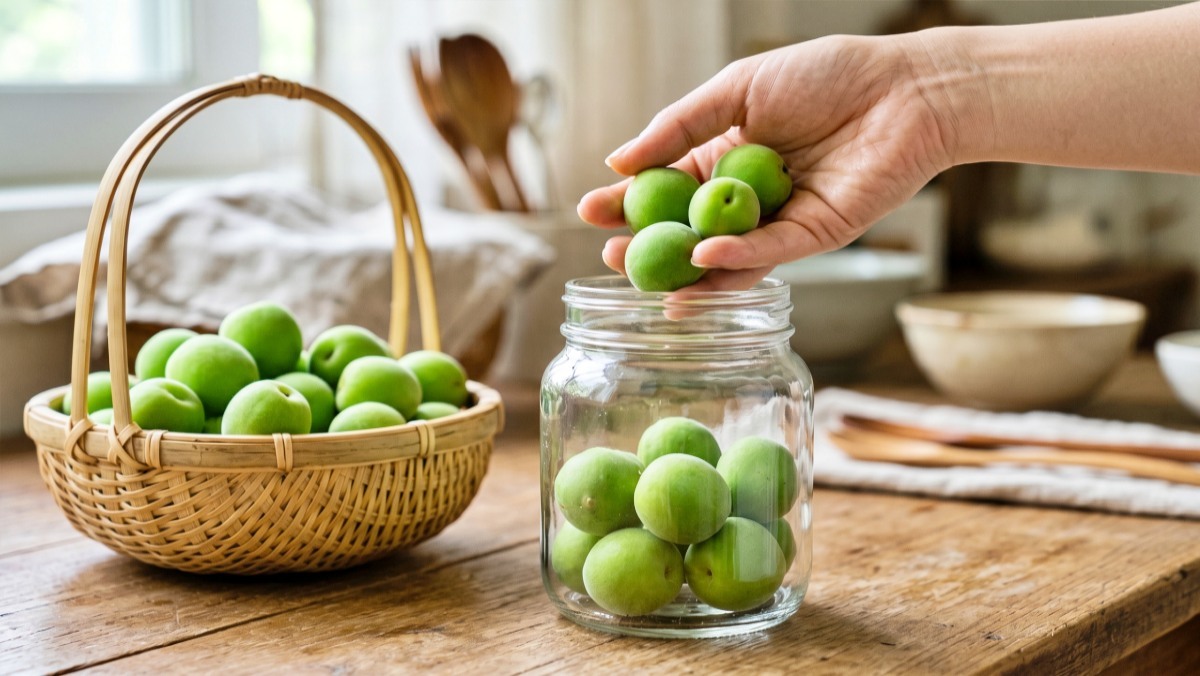
Use equal amounts of plums and sugar
The essentials are fresh plums and sugar. Aim for a 1:1 ratio—so if you have 5 kg of plums, use 5 kg of sugar. Sugar does more than sweeten: it pulls moisture from the fruit and helps slow spoilage. Too little sugar increases the risk of mold or off-flavors during fermentation, so measure carefully from the start.
Pick plums with few surface blemishes and a firm feel. Avoid fruit that squishes easily or has many brown spots—damaged plums break down during fermentation and can taint the batch. If you bought plums in bulk, inspect each one and discard any that are soft or smell off. Do not eat raw plums because they contain a toxin called amygdalin. This compound decreases during fermentation, but for safety and health it’s best to let the syrup ferment for at least 100 days.
Remove stems and dry the plums first
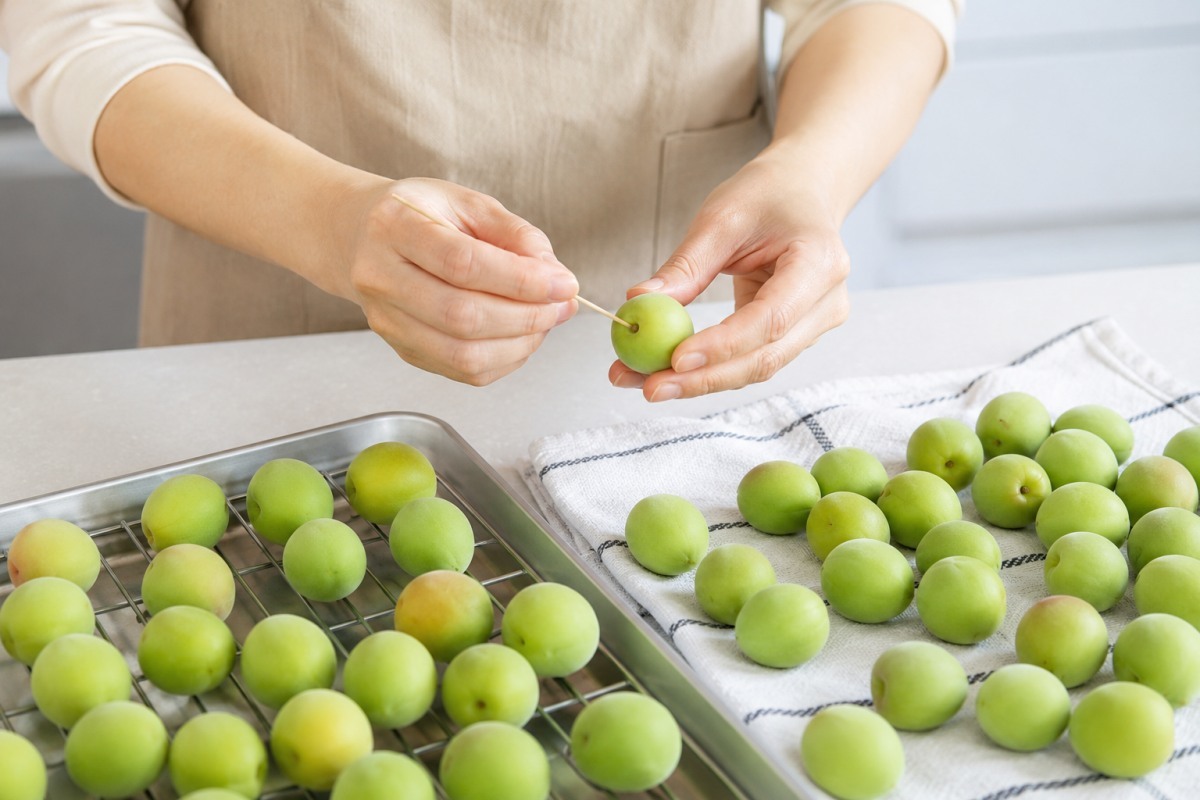
Start by washing and removing stems. Rinse plums under running water several times to clear away dirt. Use a toothpick or needle to pop out each stem—leftover stems can add bitterness and make the syrup look cloudy.
Drain washed plums in a colander and dry them completely. This step is crucial: any remaining surface moisture makes mold more likely during fermentation. If you have the time, air-dry them in a well-ventilated spot. Short on time? Wipe them with a dry kitchen cloth and use a fan to speed evaporation. Only mix the plums with sugar once the surface feels dry to the touch.
Sterilize containers before use
Use glass jars or earthenware crocks for storing plums. Glass is great because you can see what’s inside and it’s easy to clean. Sterilize containers in hot water before use and make sure they’re completely dry inside—adding plums to a damp jar raises the mold risk.
Earthenware crocks breathe and can help fermentation, but they need extra care. Ensure the interior is clean and fully dry before using. Whatever vessel you choose, don’t seal it airtight at the start. Cover the opening with hanji paper or a clean cloth and place the lid loosely so gases can escape during early fermentation—sealing completely can build pressure inside.
Cover with sugar to limit air contact
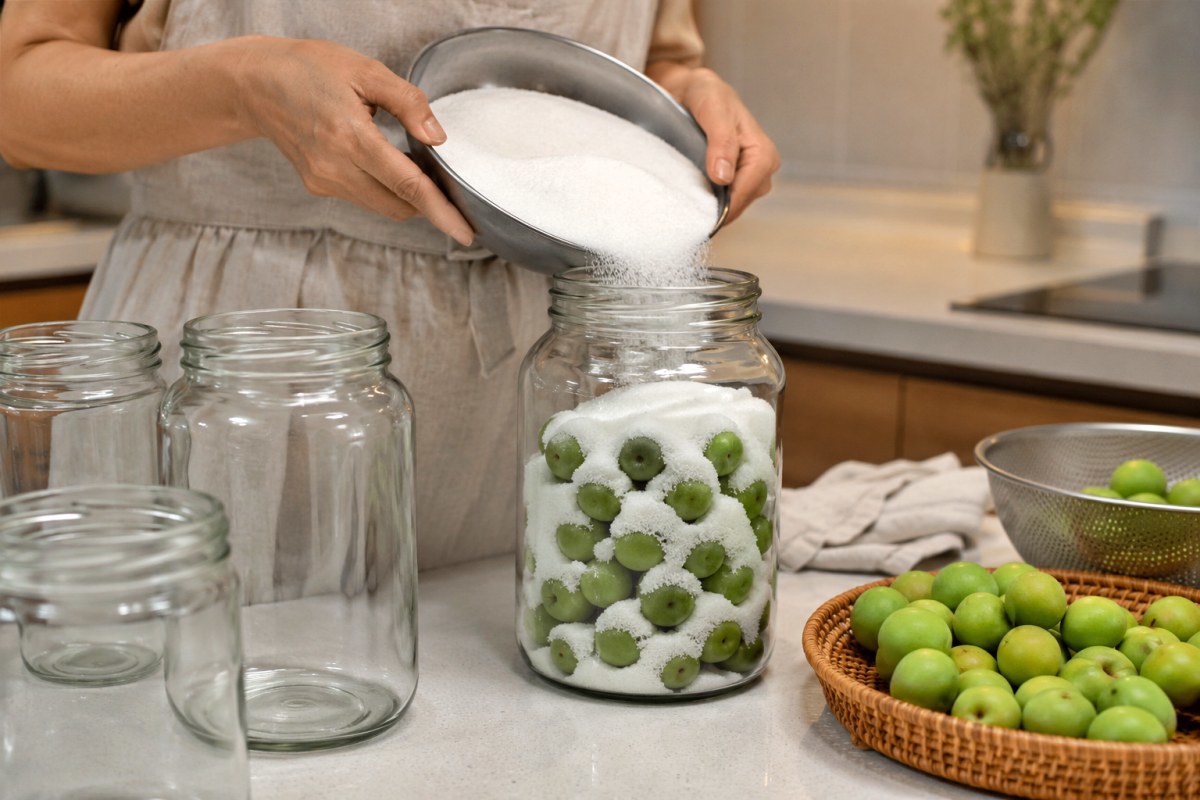
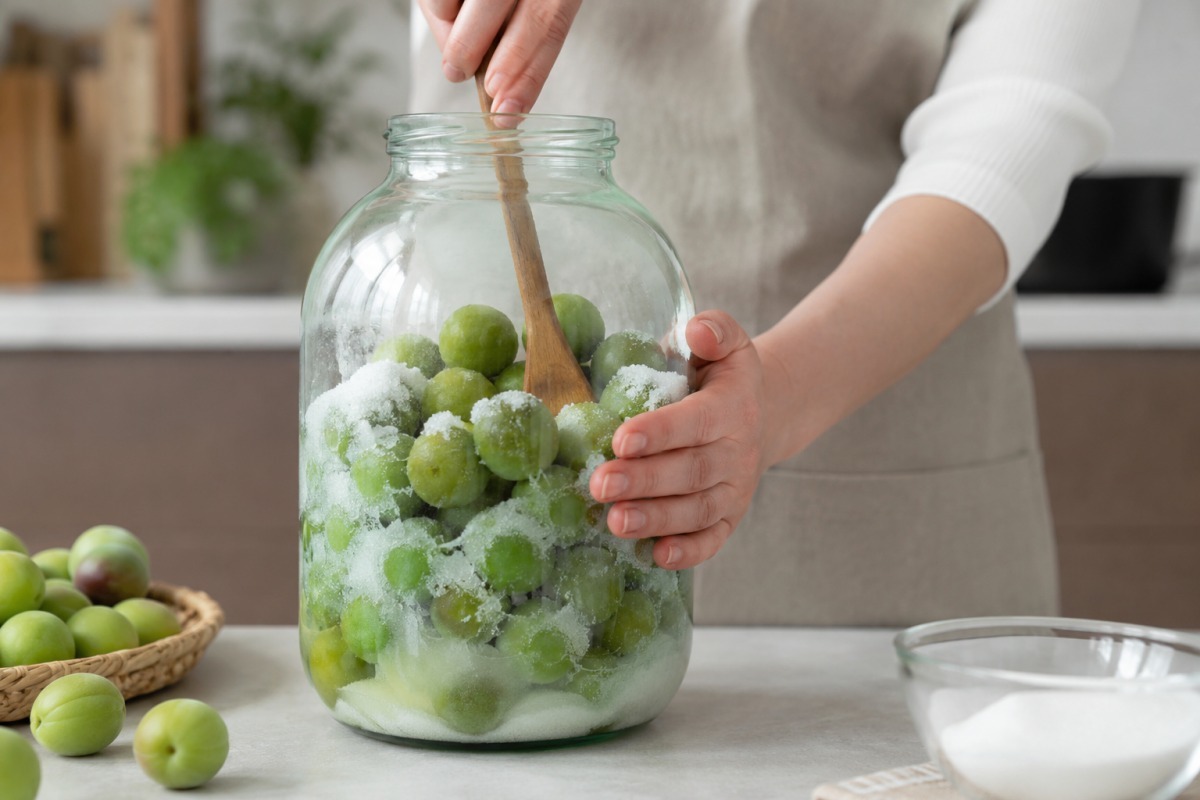
Put the dried plums into the jar with sugar. You can layer plums and sugar, or mix about 80% of the plums and sugar in a large bowl first and then transfer the mix to the jar. Pre-mixing helps the sugar dissolve faster and encourages moisture to release from the plums.
After filling the jar, pile the remaining sugar thickly on top. That sugar layer reduces direct air contact. If plums float and touch air, mold can form, so check during the first few days to ensure the sugar is dissolving properly. Keep the jar opening, ladle, and your hands dry throughout.
Dissolve the sugar well during the early fermentation
The first one to two weeks need attention. If sugar sinks and hardens on the bottom, the syrup won’t ferment evenly. Tilt or gently shake the container so the sugar and plum juices mix. If necessary, stir carefully with a clean, dry ladle or spatula.
Tool choice matters. If you use a wooden spatula, make sure it’s fully dry. Avoid leaving metal tools in contact with the mixture for long periods or using them roughly—acids in the plums can react with metal. As sugar dissolves and plums release moisture, the liquid will rise and fermentation will stabilize.
Age in a cool, dark place
Keep your jars in a cool, dark spot away from direct sunlight. High temperatures speed fermentation and can produce an alcoholic odor or sharp sourness; too cold and sugar won’t dissolve well and aging will drag. A cool room in the house is usually ideal.
Avoid sunny windowsills or balconies—the light and heat can change the plums’ color and aroma. In the kitchen, steer clear of heat sources like stoves, ovens, or rice cookers. Choose a storage spot with stable temperatures and good ventilation.
Remove the plums after 100 days
After roughly 100 days, strain out the plums. By then, the fruit’s flavor and aroma have infused the liquid and the sugar has usually dissolved. Some people worry about seeds early on, but the normal practice is to remove the plums after about 100 days and keep the liquid for further aging.
Check the plums when you remove them. If they’re shriveled and dry, that’s a good sign. Don’t toss them—remove the pits and repurpose the flesh. It makes great pickles or a tangy condiment; try mixing it with a gochujang-based sauce or finely chopping it for a sweet-and-tangy side.
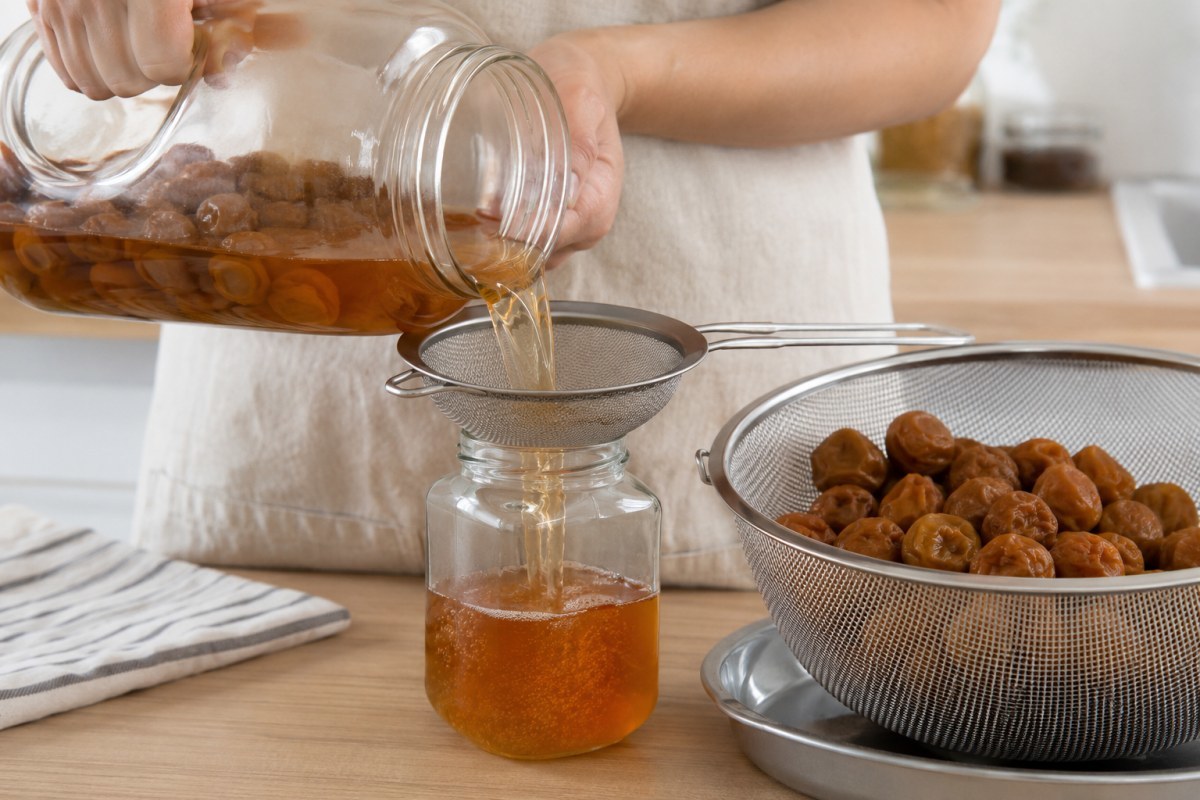
Transfer the strained liquid into a clean, sterilized jar and store it. Again, make sure the jar is completely dry after sterilizing. The flavor of plum syrup often mellows over time, so taste and age it further if you like.
Difference between green and yellow plums
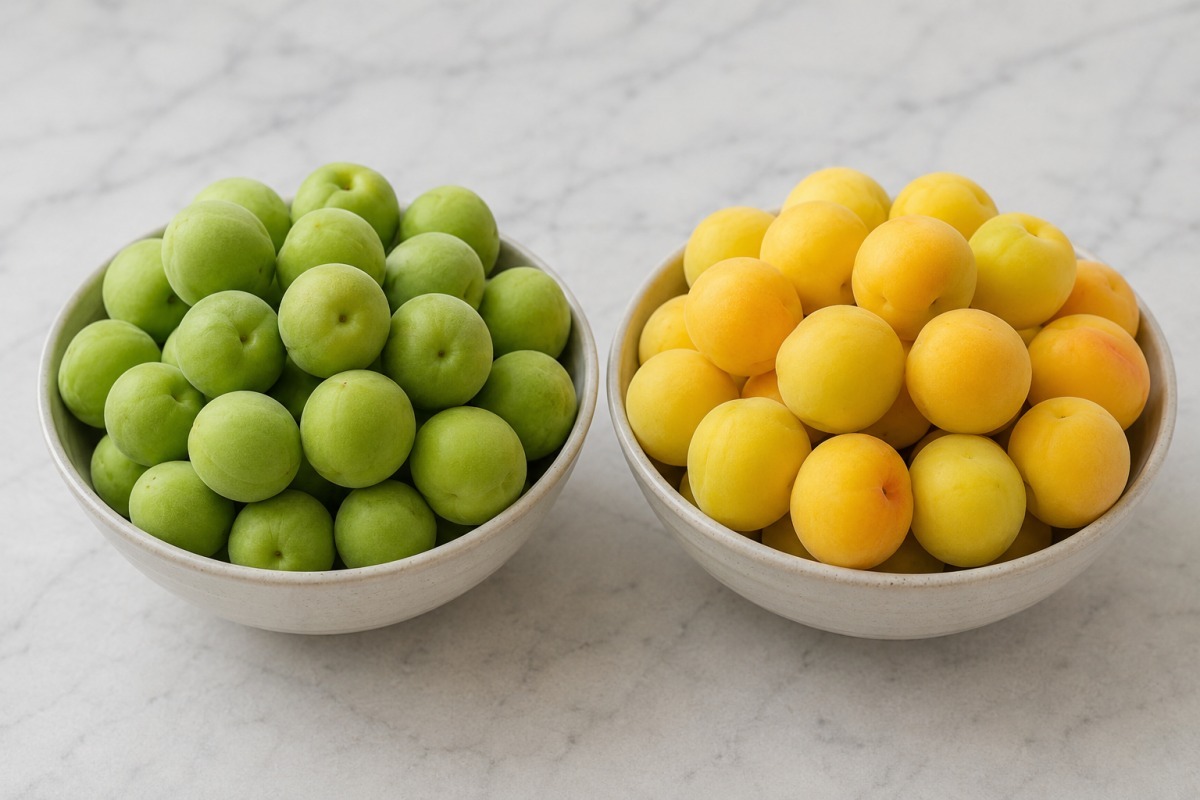
Plum syrup flavor depends on the fruit. Early-summer green plums have firm flesh and bright tartness, giving a clean, refreshing syrup—perfect for classic plum syrup. Ripe yellow plums are sweeter and more aromatic, so choose them if you want richer fruitiness and sweetness.
No matter the variety, prioritize firm plums with few blemishes. Overripe or split fruit can spoil during fermentation. If you can’t make syrup right away after buying plums, process them as soon as possible.
Choose sugar based on taste, too. White sugar preserves the plum’s natural color and scent, while brown sugar yields a darker color and deeper flavor. More important than sugar type are the correct ratio and strict hygiene.
Always dilute plum syrup before drinking
Plum syrup makes a lovely drink base, but remember it’s high in sugar. Instead of drinking it straight and often, dilute it with water or sparkling water and enjoy in moderation. Some people sip plum tea for an upset stomach, but the acidity can be harsh for others—those with sensitive stomachs or who must limit sugar should watch portions.
Plum syrup contains beneficial compounds but it’s not medicine. If digestive issues persist, don’t rely solely on syrup—seek appropriate care. When serving children, always dilute it well.
Home-café drinks you can make with plum syrup
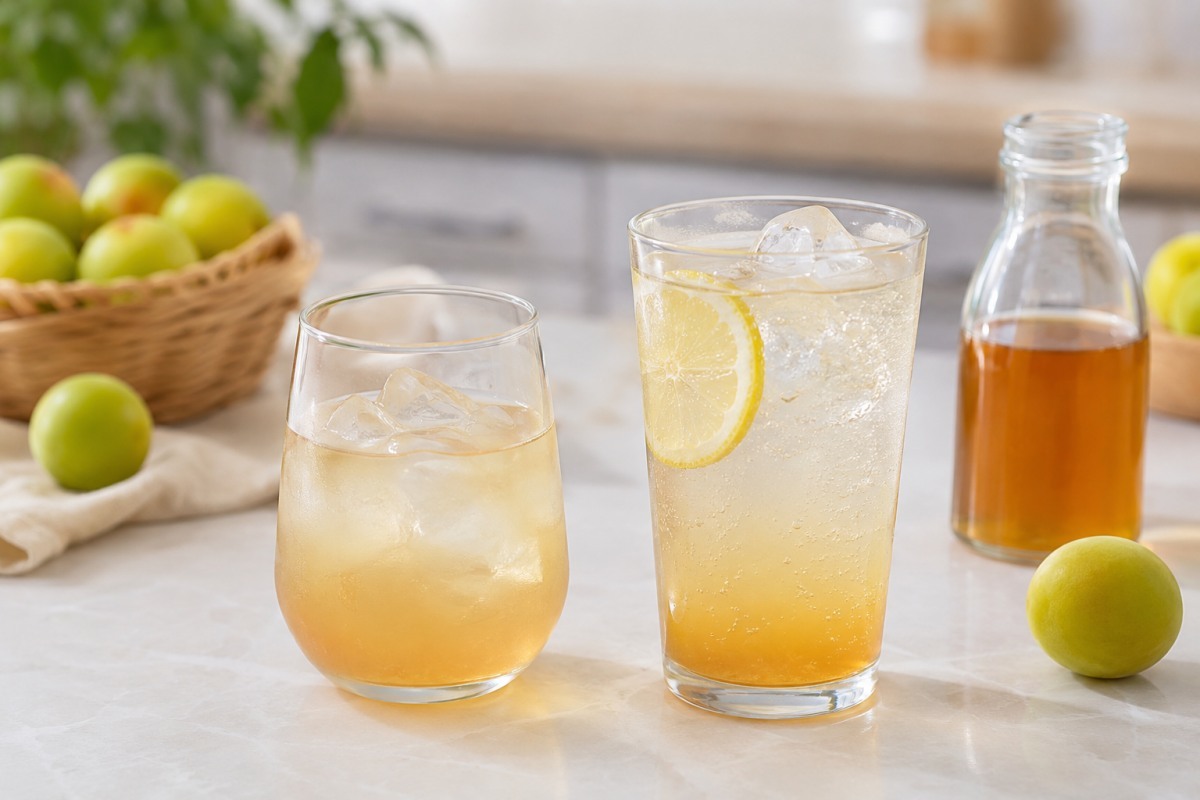
Homemade plum syrup is an effortless drink base. Start by mixing syrup with cold water—try 1 part syrup to 4 parts water and adjust to taste. Add ice for an instantly refreshing summer plum tea.
For fizz, use sparkling water. Fill a glass with ice, add plum syrup, then slowly top with sparkling water for a plum ade. A lemon wedge brightens the acidity and lifts the flavor. Note that flavored sparkling waters with added sweetness or aroma can change the plum syrup’s profile, so pick one that suits your palate.
Plum syrup pairs well with black or green tea, too. Stir a little into strongly brewed, cooled black tea for a sweet plum iced tea. A splash in green tea balances bitterness with tangy sweetness. In winter, dissolve plum syrup in warm water for a gentle, comforting tea.
Use it to add sweetness and acidity in cooking
Plum syrup is kitchen-friendly. Use it instead of sugar or syrup—its acidity helps balance flavors. Add a touch to marinades for bulgogi (Korean marinated beef), spicy pork stir-fries, or pork ribs to add sweetness and tame strong meat odors. Because it’s already sweet, reduce other sugars when using it.
Start with one or two tablespoons when testing sauces and adjust to taste—too much can make a dish overly sweet. When combined with soy sauce, gochujang, or red pepper powder, plum syrup smooths and ties flavors together. You can use it in long-simmered braises, but add gradually and taste as you go.
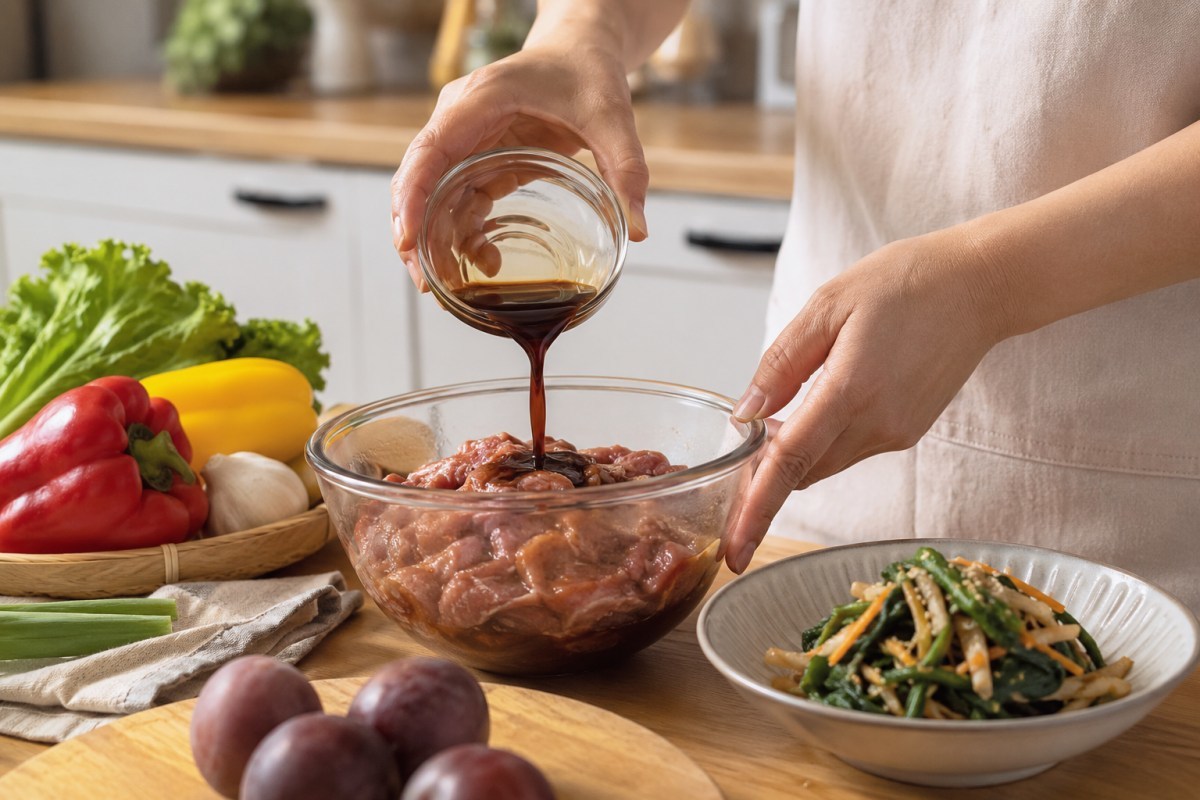
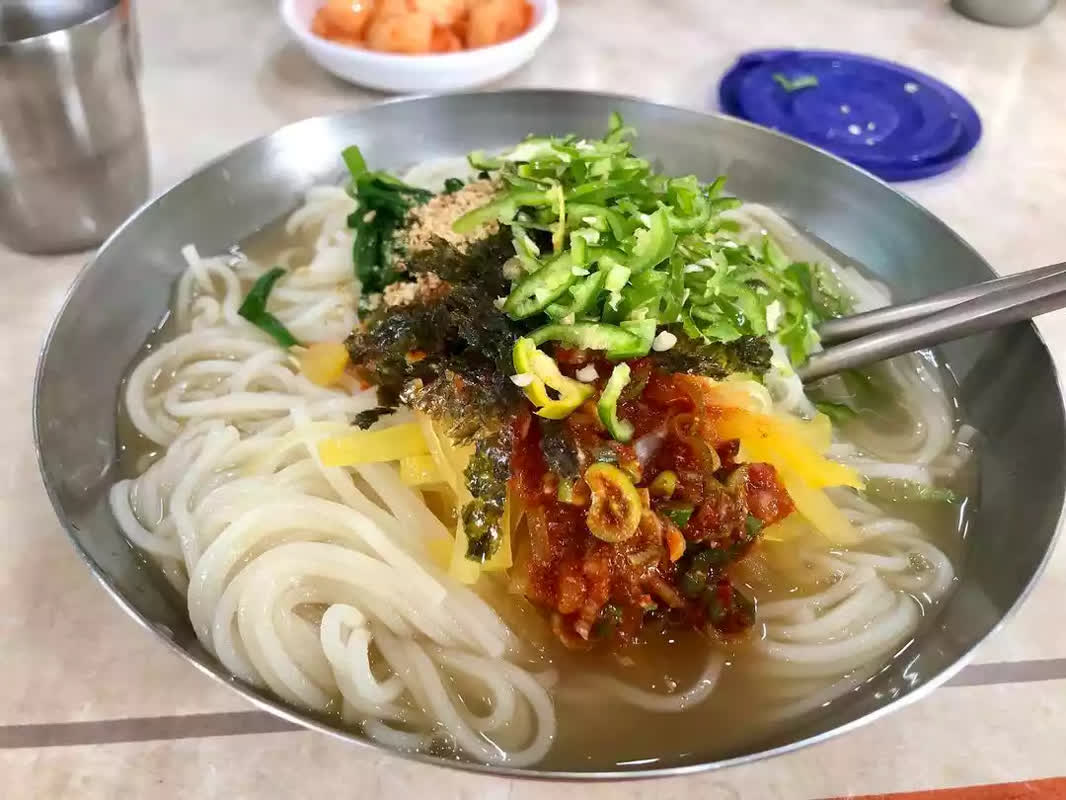
Plum syrup also works beautifully in quick vegetable dishes and crisp salads. Add it to cucumber salad, shredded radish, or chive mixes where a sweet-and-tangy touch helps tame vinegar’s sharpness. Swap some sugar for plum syrup in a chili-vinegar paste to add both sweetness and acidity. It’s great in noodle sauces for bibim-guksu or chewy noodles, cutting heaviness and brightening the overall flavor.
Use it as a salad-dressing base, too. Mix soy sauce, vinegar, plum syrup, and sesame or olive oil for an easy dressing. A little minced garlic or sesame seeds amps up the flavor for vegetables or salads. Plum syrup tends to blend in and add gentle sweetness and acidity rather than overpowering—perfect for home cooking.










Most Commented