
Garlic is basically non-negotiable on a Korean dinner table — and honestly, it’s a staple in kitchens everywhere. A little goes a long way in soups, stews, stir-fries, and salads, bringing bright aroma and savory depth. Mincing right before cooking is ideal for peak flavor, but busy cooks often prep a batch all at once.
The issue? Minced garlic changes color and loses its punch over time. With a few smart habits — controlling moisture, limiting air exposure, and keeping it cold — you can keep it tasting fresher, longer.
Why minced garlic goes bad faster
Mincing garlic speeds up its breakdown compared with keeping cloves whole. When you chop it, cells break open and release the compounds that make garlic smell and taste sharp. That boosts flavor in the moment, but it also increases the surface area exposed to air, which makes oxidation happen faster. Over time, the bite mellows and the flavor can turn flat.
You’ll also sometimes see garlic turn green or blue — a reaction triggered by temperature, acidity, or enzyme activity. It’s usually safe to eat, but the color change makes food look less appealing and can affect a dish’s presentation. The bottom line: keep minced garlic dry, shielded from air, and cold.
Dry the cloves before you prep
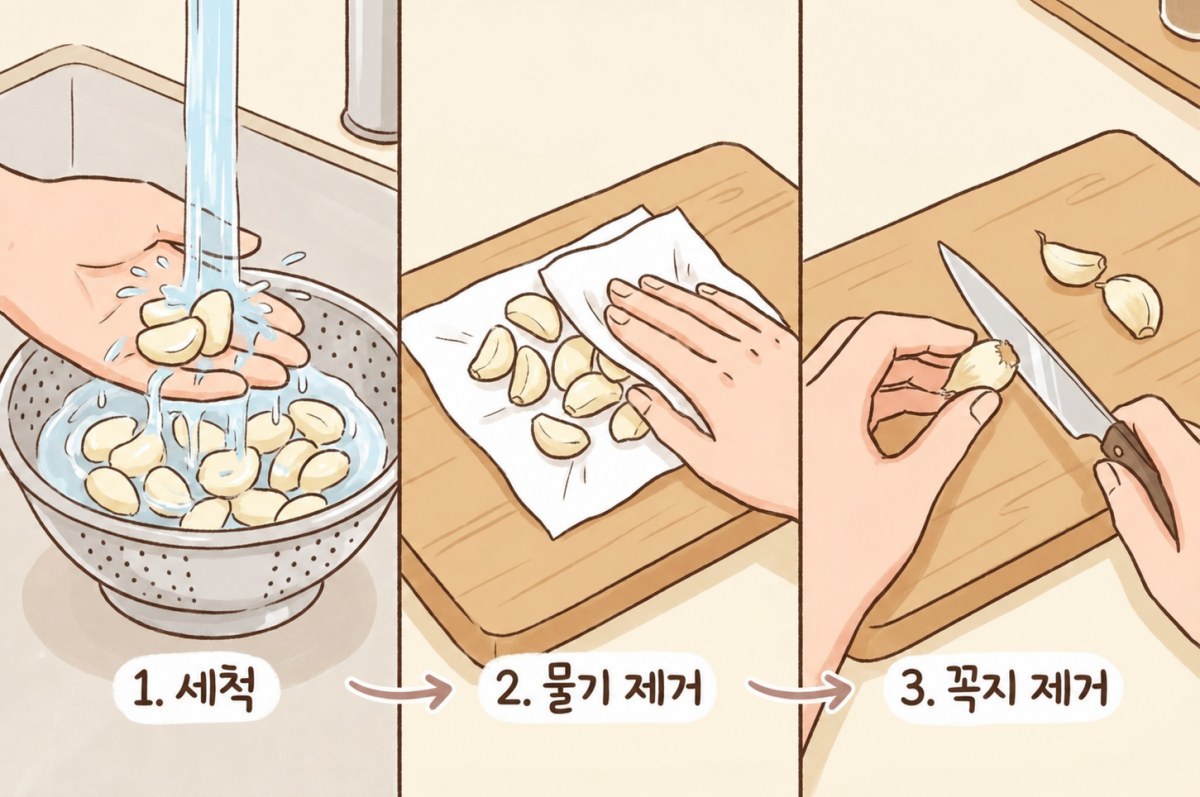
Longer storage starts before you even mince. After peeling, make sure cloves are completely dry. Any surface water will make them soggy and can change their smell during storage. Drain washed cloves in a colander, pat them with a kitchen towel, and if you have time, spread them out to air-dry briefly before mincing.
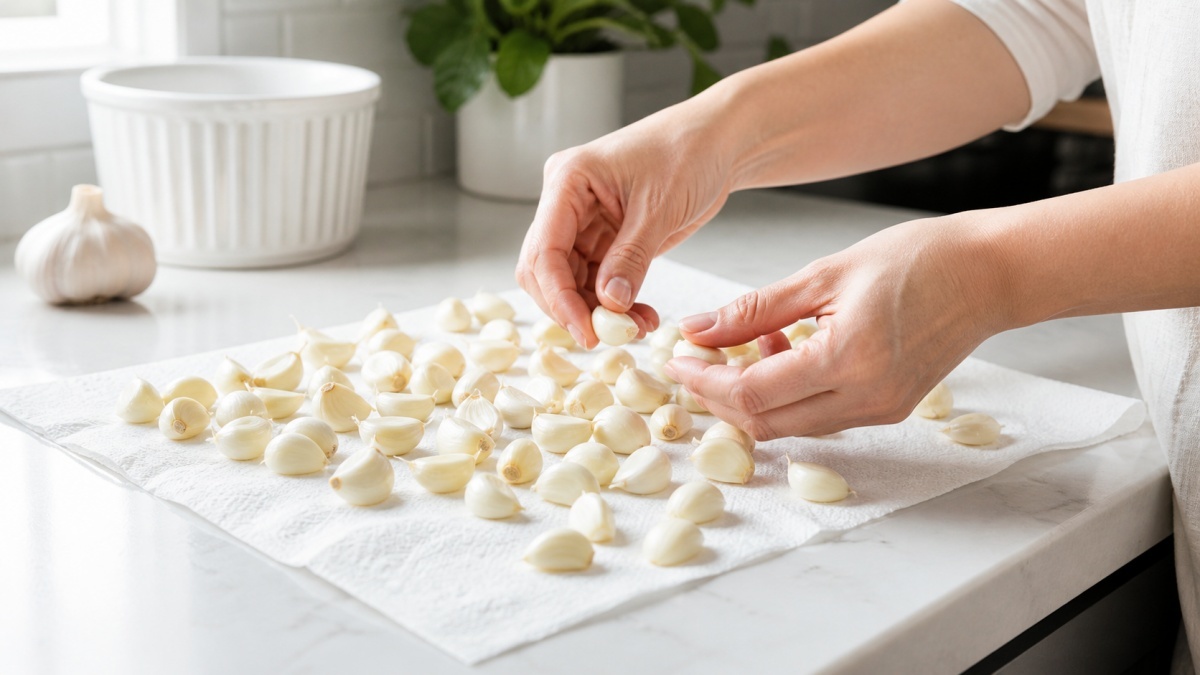
Trim the stem ends cleanly, too. They can hold dirt and make the texture gritty when minced. For garlic destined for storage, a little extra attention here pays off. Separate out any soft or discolored cloves — use only firm, fresh ones to extend shelf life.
How you mince matters
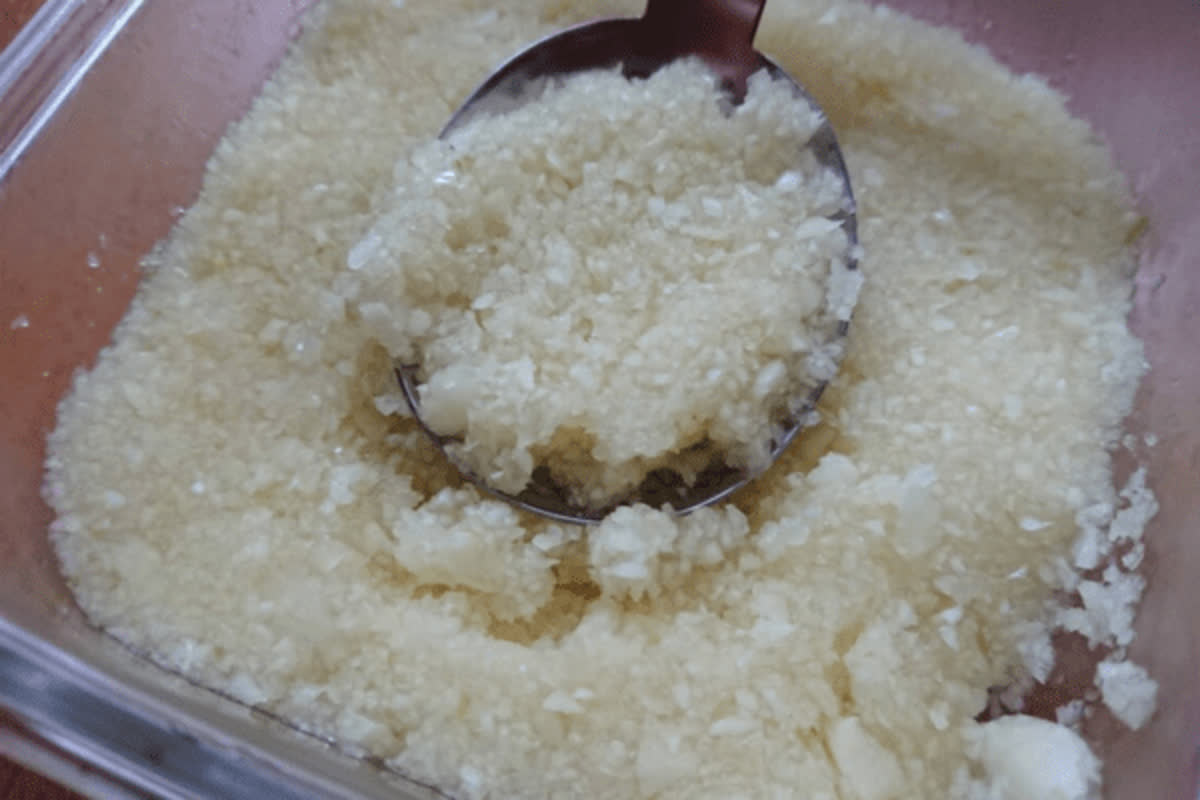
How finely you chop garlic affects how well it stores. Electric food processors and choppers are fast, but if you grind garlic into a paste it releases more juice and softens quickly. Storing minced garlic that’s full of liquid speeds up aroma loss and spoilage.
If you want it to keep, stop short of a puree and leave a little texture. Knife-chopped garlic takes longer but holds up better. If you use a processor, pulse in short bursts to minimize heat and over-grinding. With a mortar and pestle, don’t overwork it — just crush as needed.
Freeze in portions
Freezing is the most practical way to store minced garlic for the long haul. Don’t freeze one giant block, though — constant thawing and refreezing will sap flavor and quality. Portion it into single-use amounts before freezing.
Zip-top bags are an easy option. Spread minced garlic in a bag into a thin layer about 5–10 mm thick (0.2–0.4 in). Press out as much air as you can and seal, then score the surface with the back of a knife or a ruler in a grid pattern so you can snap off pieces when you need them. Thin layers freeze and thaw quickly and save freezer space.
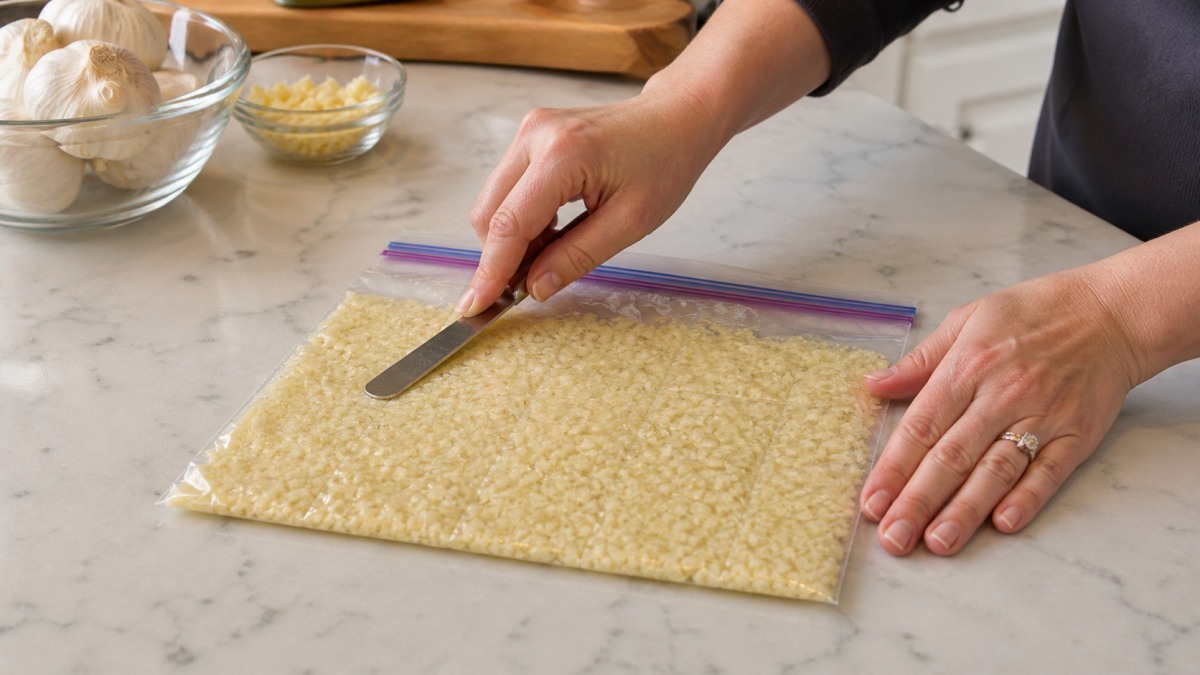
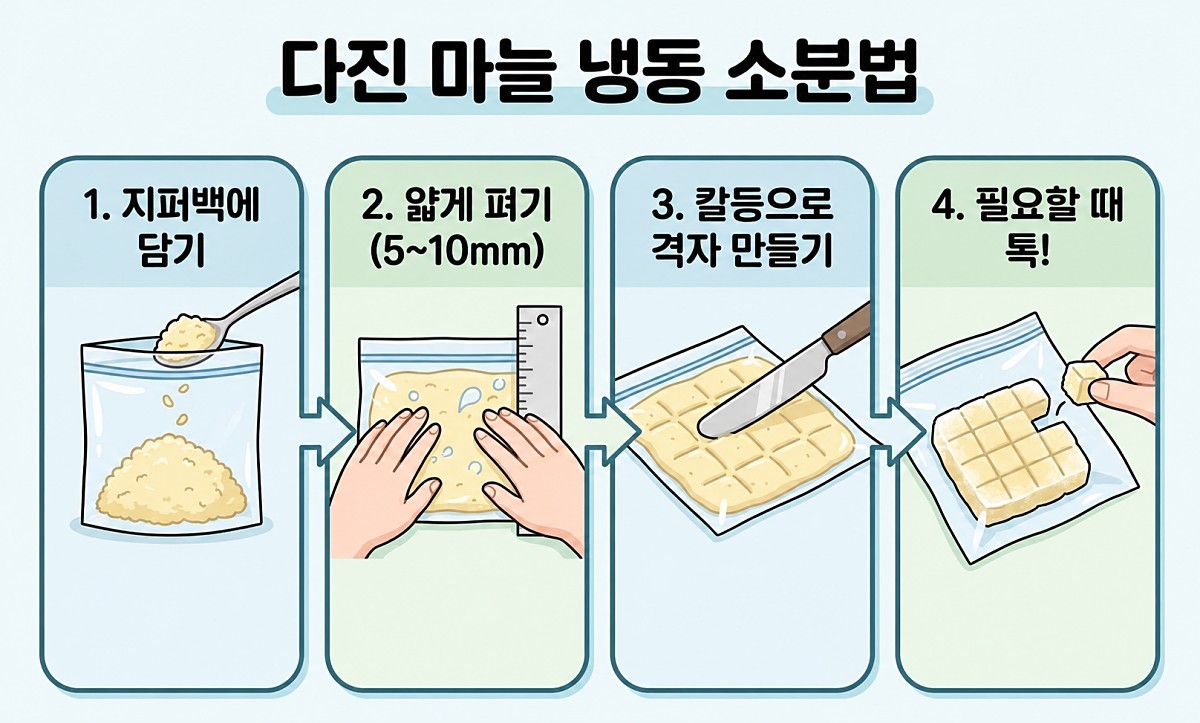
Silicone ice cube trays are another winner. Spoon about 1 tablespoon into each compartment, freeze, and when solid transfer the cubes to a freezer-safe container or bag. That way you can drop a cube straight into a stir-fry, stew, or soup. For best flavor, use frozen garlic within 2–3 months — it will last longer but the aroma fades over time.
Keep refrigerated storage short
If you’ll use minced garlic within a few days, the fridge is fine. It’s not ideal for long-term storage, though: minced garlic exposes more surface area to air and moisture and can change quickly even when chilled. Use a clean airtight container and aim to use it within about a week.
To reduce moisture in the container, line the bottom with a kitchen towel and place the garlic on top so the towel soaks up excess liquid. Another trick is to add a thin layer of sugar to the bottom, cover it with a towel or paper, and then put the garlic on top — just be careful the sugar doesn’t mix into the garlic. Replace the towel if it gets damp.
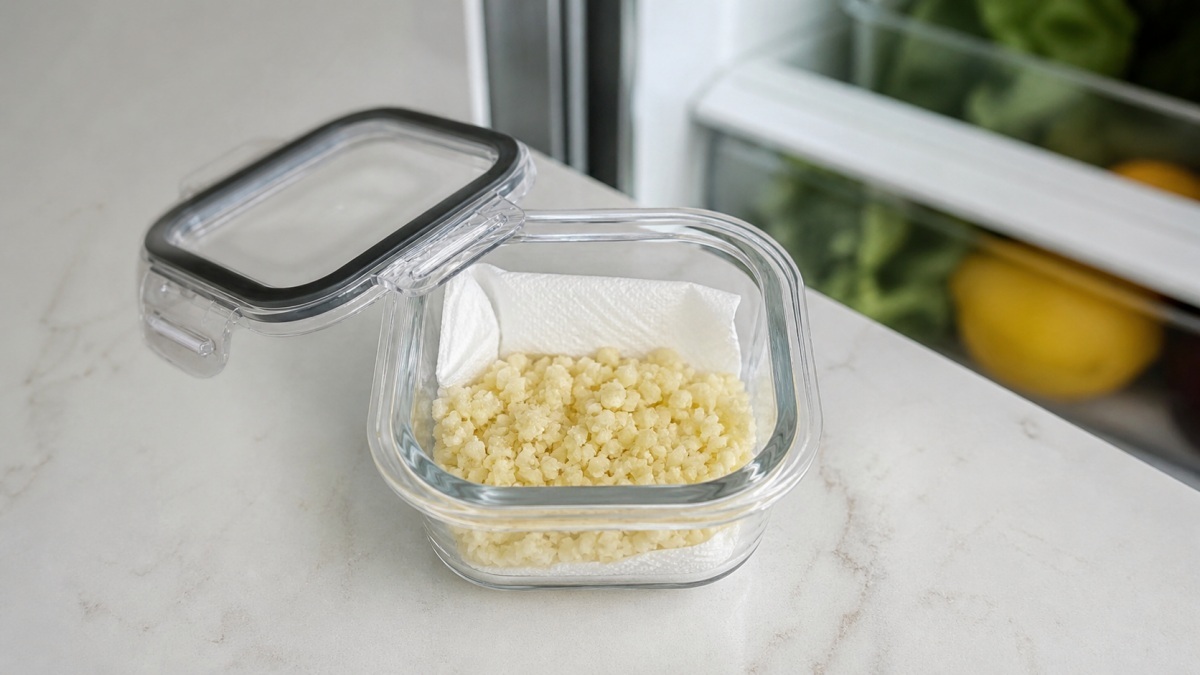
Salt is sometimes used as a preservative, but too much pulls out moisture and alters the flavor, which can affect later cooking. If you do use salt, go light and always scoop with a clean, dry spoon — return the container to the fridge immediately after serving.
Reduce discoloration
To minimize color changes, cut down on oxygen exposure. When packing garlic into a sealed container, press the surface flat to reduce air contact and divide it into small containers if you can. Storing everything in one large tub means air gets in every time you open it and speeds up color and taste changes.
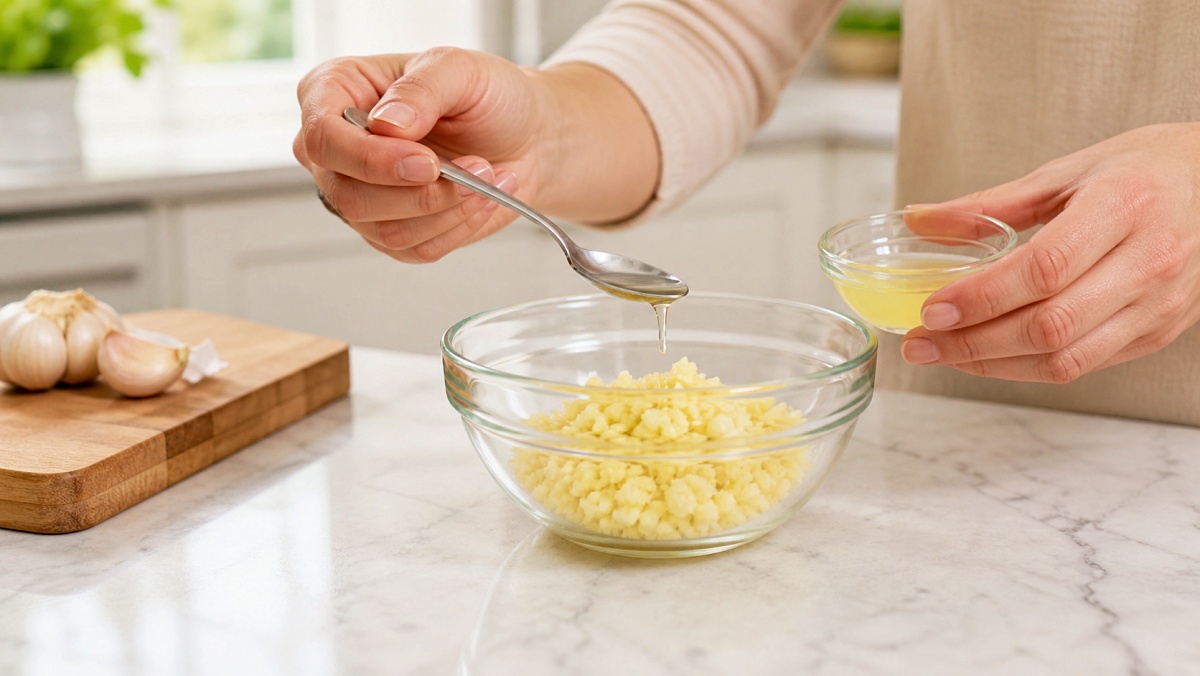
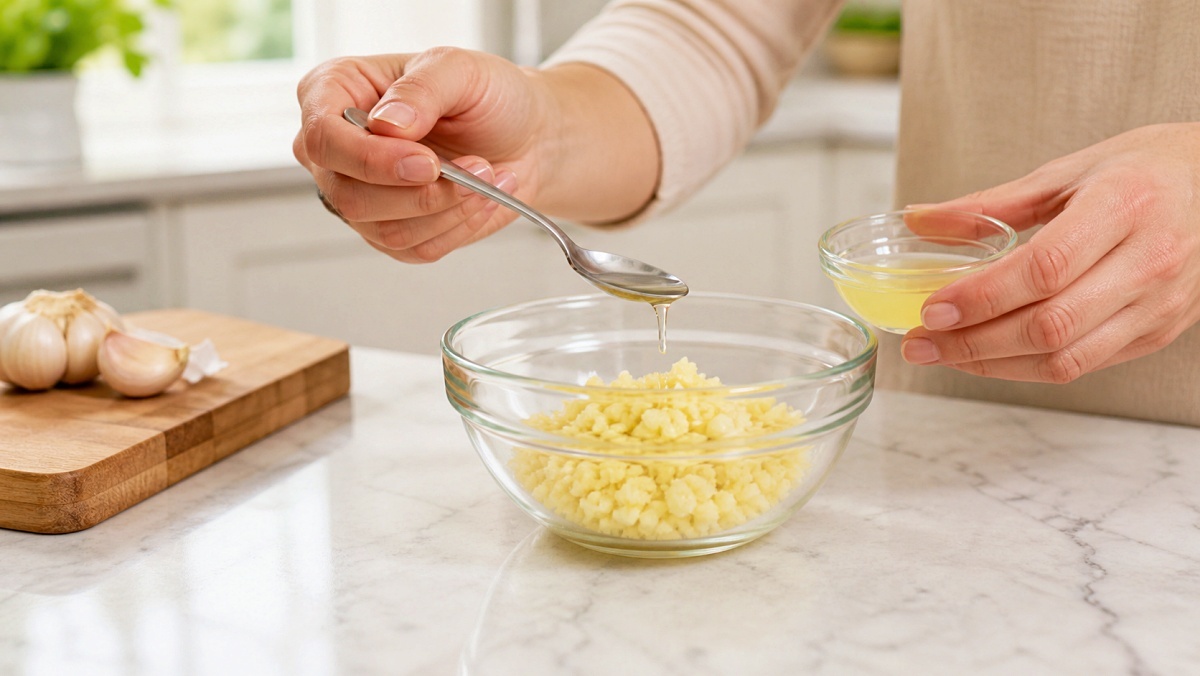
A small splash of vinegar or lemon juice can also help. Acidity slows discoloration a bit, but too much will change the garlic’s flavor. For 500 g (about 1.1 lb) of garlic, add just a few drops up to about half a teaspoon and mix evenly. If you’re worried about acidity, reserve this method for garlic meant for sauces rather than frying or stews.
People sometimes mix in a bit of onion, but that won’t suit every dish — onion flavor can change the garlic’s character. In general, store minced garlic plain and add other seasonings when you cook.
Storing garlic in oil: be cautious
Putting minced garlic in oil keeps the aroma and makes it handy for cooking, but it comes with risks. Garlic submerged in oil creates a low-oxygen environment, which can encourage harmful bacteria if left at room temperature. Don’t store garlic-in-oil at room temp.
If you make garlic oil, refrigerate it and use it quickly. For safer long-term use, freeze portioned minced garlic and sauté it in oil when you cook. Discard it if it smells sour, changes color oddly, or develops bubbles or sliminess.
Practice clean serving habits
Contamination can spoil a whole batch fast. Never return a spoon that touched a pan, a wet spoon, or a utensil coated with other sauces back into the garlic container. Always use a dry, clean spoon and only take the amount you need, then seal the container right away.
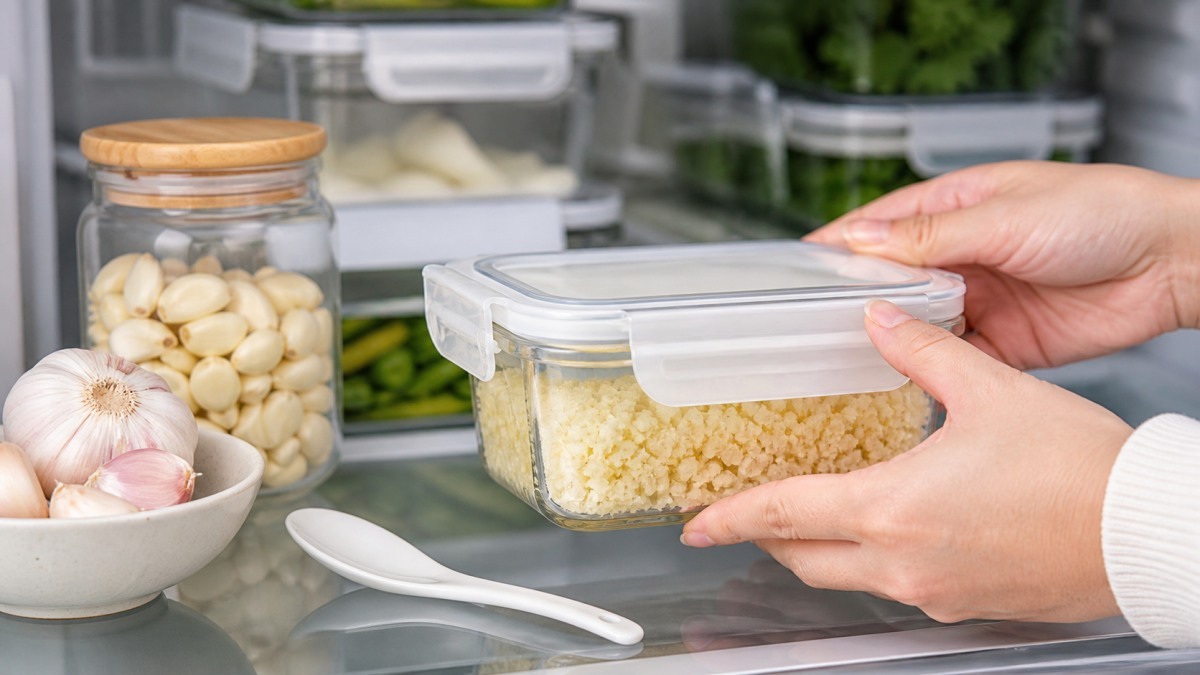
The same goes for frozen garlic: thaw only the pieces you need and return the rest to the freezer immediately. Leaving frozen garlic out too long lets the surface thaw and refreeze, which hurts quality. Squeeze air from zipper bags after use to reduce freezer odors, and label packages with dates so you use older batches first.
How to tell if garlic has gone bad
Check minced garlic by color, smell, and texture. If it becomes slimy, smells sour or musty, don’t use it. If you see mold, throw the whole batch away — don’t try to salvage it. Garlic’s strong aroma can hide spoilage, so inspect it closely if it’s been stored for a while.
Frozen garlic may look a little faded or smell milder, and that doesn’t always mean it’s spoiled. But if it has strong freezer odors or heavy ice crystals on the surface, its quality has declined — use it cooked rather than raw.
What to make with minced garlic
Well-stored minced garlic is a timesaver. Garlic bread is the simplest: mix minced garlic into soft butter with a touch of honey or sugar and parsley, spread on sliced bread or a baguette, and bake in an air fryer or oven. If the garlic is frozen, thaw it briefly so it blends evenly with the butter.
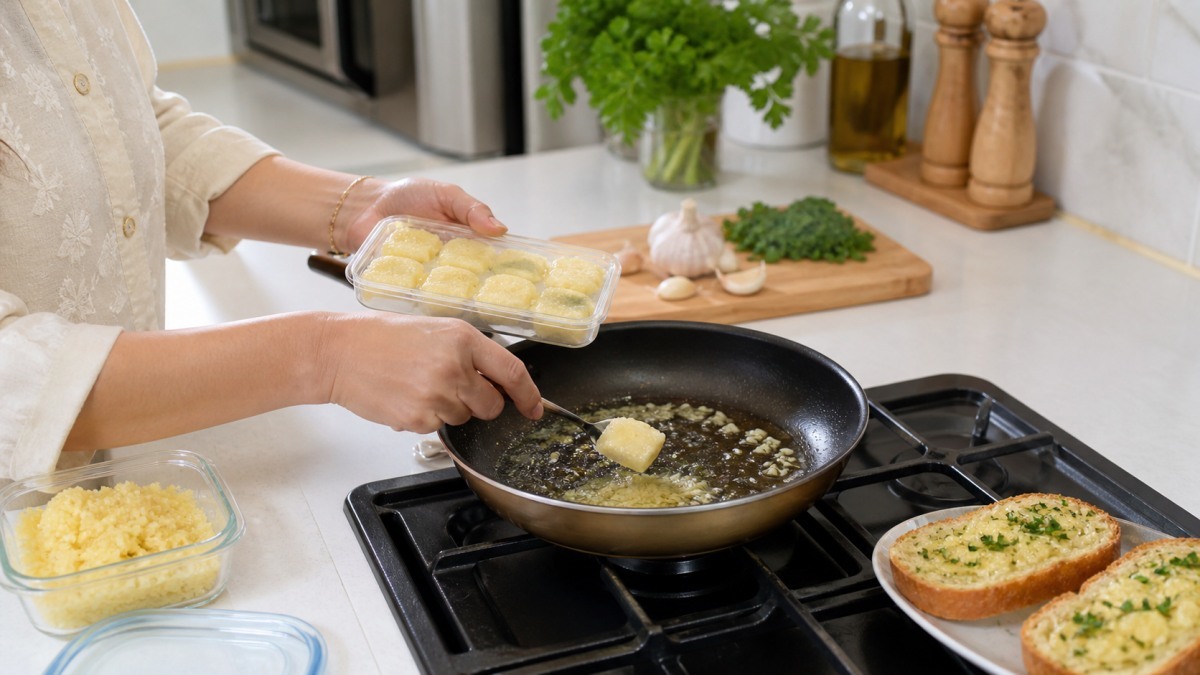
Garlic fried rice is another quick win. Gently fry minced garlic in oil over low heat to draw out the aroma, then add rice and season with salt or soy sauce. Keep the heat low — garlic burns fast and turns bitter.
Minced garlic also speeds up dishes like gambas al ajillo: infuse olive oil with garlic over low heat, then add shrimp and red pepper flakes. It pairs beautifully with meat and fish, too — mix with doenjang, soy sauce, or sesame oil for a quick marinade or toss into stir-fries to boost flavor.
The essentials for keeping minced garlic at its best are the same: remove moisture, portion it, seal it tightly, and keep it cold. Clean and dry cloves before mincing, divide into usable portions, and freeze for convenience. Refrigerate only for short-term use and always serve with clean utensils. A few small changes to how you store frequently used ingredients can transform the flavor of your food and the efficiency of your kitchen. Store minced garlic right, and you’ll save prep time while keeping that fresh garlic kick in your cooking.










Most Commented